
Not so long ago, one of the men who was named during the time, let’s call him J, texted me on Facebook messenger. A journalist, this man was called out by several women, so much so that he lost his job, had to change cities, and restart his life. I was still processing my takeaway from MeToo, and how I would work on giving these men second chances. So when J texted me I responded with kindness. We talked about banal things like jobs, and the progress of the book I was working on then. Suddenly, J jumps windows and pings me on secret chat, a Facebook feature where messages vanish within seconds. I was taken aback. I didn’t know about the existence of such a feature and I did not understand the need for it. When I asked him, he said he’d feel much safer here. Safer in my head sounded like “you won’t be able to take screenshots here.” I told him I am not tolerating this behaviour. And I blocked him. Here’s how what Wahab said becomes important for me. MeToo as a movement could be a passing moment. As a consciousness, it is something we have to carry forward with us at all times. J thought it’s okay to text me and immediately jump to inappropriate conversation because for him the movement had ended months back. He was entitled to his old behaviours. And I take some of the blame here because I failed several women when I didn’t sit and reflect on MeToo, when I didn’t talk about the next part when I treated MeToo as a movement and not a consciousness. A few weeks before this judgment, a friend informed me about a blog post by another man named in the movement. We’ll call him C. The post read as a bitter diatribe against most women who participated in MeToo, especially the ones who named him. Words like opportunists and mob were thrown in as he went about explaining his “suffering”, which he found to be a unique case of systemic failure. C lost his job, but then found a new one, though not as lucrative as before. C feels no qualms in calling himself another kind of survivor. Maybe C is right. Maybe C became a victim of the situation. Maybe he suffered more than he should have. He was only propositioning sex, and at most he could have been accused of being pushy in the chats he provides screenshots of in the post. We don’t know what happened in the ones he doesn’t show us, of course. At the end of the post, C proclaims that injustice does not have gender, it only has suffering. Reading this, I was torn between my desire to laugh mercilessly and pull my already thinning hair off my scalp. I am willing to see that C suffered, and I am willing to agree with him that MeToo was unfair to him. I won’t use the term collateral damage because that’s reducing him to a statistical paradigm, however, I cannot help but wonder how the suffering of numerous women – raped, mutilated, harassed, assaulted – who came out during the movement became comparable to a minor dent in his career. How is it that C gets to put himself on the same pedestal as women who are the victims of systemic failures?When we demand these safe spaces, how do we know that men are listening?
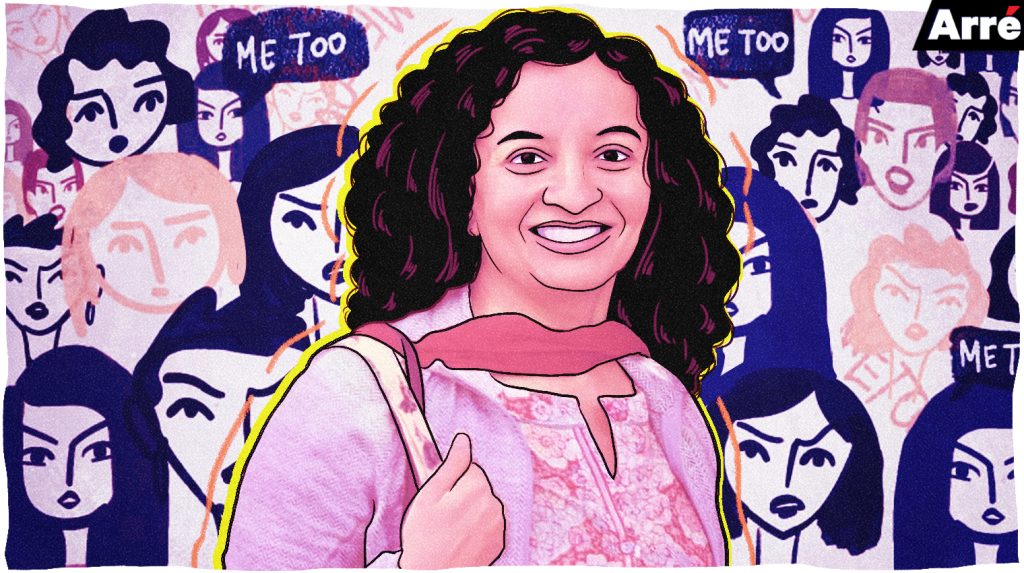
MJ Akbar believed that he was the victim too – that Ramani ended his political career, she tarnished his stellar reputation. Are we to assume that men learned nothing from MeToo? Am I wrong, then, in saying that we failed the women who used all the strength they could muster to come and tell us their stories? Why didn’t we talk to the women and why didn’t we talk to the men? Priya Ramani’s victory has given us all hopes, but I cannot shake the feeling that she succeeded in proving herself innocent and the man who assaulted her still is free. So it seems there will be other times when women will be forced to prove their innocence. And as a friend pointed out to me when I began writing this piece, she won the case, yes, but you certainly won’t if you were ever dragged to the court; so tread carefully. When I look at all the men around me, the ones whose cases I have cited and the ones who remain hidden, I have nothing but hopelessness and despair. Whenever I think about how difficult the period of MeToo was – a friend and I were laughed at by a fellow male writer who used words like “quacking” and resorted to making rape jokes – I am filled with anguish. One of the things that MeToo did was making objectionable language difficult. It made calling out a little easy, but it didn’t address the underlying issues. It isolated men like C and J: filled some with blind rage, like C; or made some of them improvise and come up with new ways of being creepy, like J. Once the excitement of the moment had died down, we should have paused to reflect. We should have written big editorials, maybe even books, on how we cannot lose the inertia, how we have to keep listening to women and keep talking to our boys and men, and how we might prevent the birth of more MJ Akbars. It is why I return to Ghazala’s words. Not a movement, but a consciousness. Now that Ramani’s victory has given us hope, let us build on that. There are three Dalit girls in Unnao – two of whom have already succumbed to death – awaiting justice, looking at us to change things for them. Let us begin?Are we to assume that men learned nothing from MeToo?