
T
oward the end of this year’s Oscars ceremony when the Best Actress winner was about to be announced, no one was counting on a surprise. Only two awards – Best Director and Best Film – were left to cap off the weirdly experimental ceremony that glided along with no hosts, insolent snubs, and its incurable thirst for Bohemian Rhapsody. And at the time, Spike Lee’s long overdue Oscar win for BlackKklansman that was followed by an exhilarating and politically conscious acceptance speech seemed to be the only plucky choice that the erratic Academy could afford to hand out. Lee’s win was instantly – and unanimously – lauded as the one indelible silver lining to the insipid ceremony.
So when Frances McDormand and Sam Rockwell took the stage to announce the award for Best Actress, it was implied that the honour would be Glenn Close’s for the taking. Beyond her stupendous turn in The Wife, the expectation was further bolstered by the actress’ win at the Golden Globes, a glittering body of work that fetched her seven Oscar nominations through the years, and the anticipation of witnessing Close snag her debut Oscar accompanied onstage with her dog. The actress herself was dressed in a golden, glittery gown that resembled the Oscar statue itself, almost like a little hint. Except, the winner – as McDormand announced a few seconds later – turned out to be Olivia Colman. If Lee’s win was the silver lining, then Colman’s felt like reaching the stars itself.
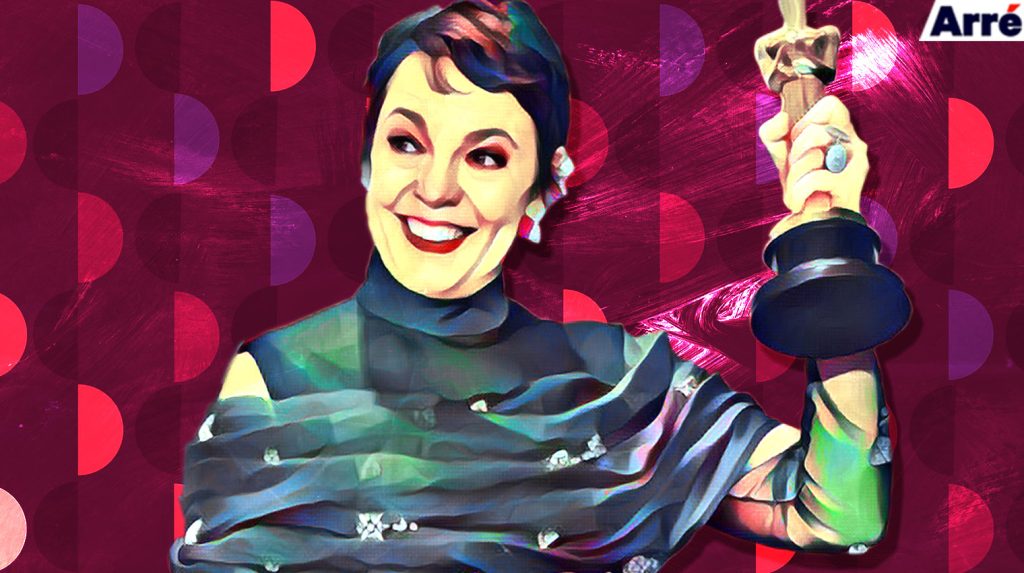
The Oscars still continue to appeal because they promise us surprising moments like Olivia Colman’s winning moment Image credit: The Academy
At a time when award ceremonies – especially the Academy – are proving to be woefully predictable while striving only for political correctness, the unrehearsed-ness of Colman’s winning moment felt a little too precious. Because even when award bodies seem to be bogged down while straddling the limitations of their legacy and misdirecting their need to adapt by awarding good intent, awards still continue to appeal because they promise moments like Colman’s win. Moments that render an artist impossibly vulnerable. Moments that genuinely surprise, at its perceived impossibility. And Colman’s acceptance speech – excitedly being regarded as the most endearing awards speech this year – only cemented the need for it. Colman’s speech started off an acceptance, “Ooh, it’s genuinely quite stressful” and ended with an impromptu air-kissing contest with Lady Gaga while blowing a raspberry at the infamous timer in between and finding time to apologise to Close for defeating her. Colman, who’d already garnered a reputation for endearing acceptance speeches after affectionately calling co-actors Emma Stone and Rachel Weisz “ma bitches” at her Golden Globes win a month ago, sobbed, sniffed, cracked jokes, and clung on to her Oscar while giving a speech that didn’t feel designed or even memorised. Instead it unfolded stream-of-consciousness, and felt genuinely reinvigorating for its emotional honesty, all under three minutes. It left the kooky Lanthimos sobbing, Colman’s husband teary, and Stone’s eyes glistening as she kept cheering Colman with a standing ovation. It’s rare to witness this lack of artifice in a winning moment that doesn’t feel the need to publicise its flawlessness. Maybe that’s why Colman’s win feels like the realest moment the Oscars have had in years. For the moments that encapsulated her win, it didn’t matter that the Academy is terrible with decision-making, that the Oscars came so close to getting Tina Fey, Amy Poehler, and Maya Rudolph host the ceremony, or that they weren’t good enough. Who’d have thought that was still possible?Olivia Colman started off her speech with “Ooh, it’s genuinely quite stressful” and ended with an impromptu air-kissing contest with Lady Gaga.