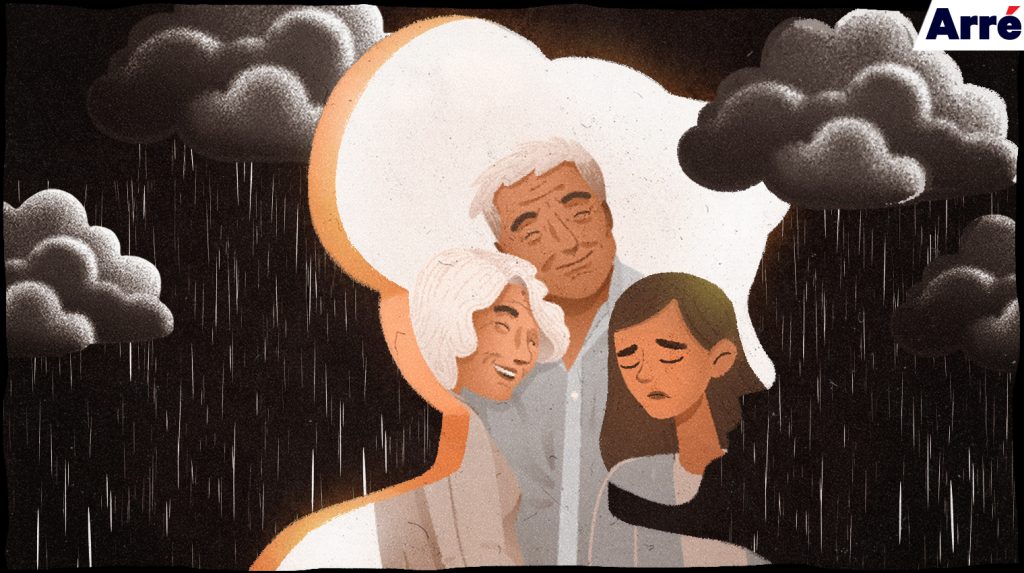

My parents had the same questions about therapy as any desi parent: “Why can’t you talk to us about these things?” “How often do you think you’ll have to go?” “Why isn’t talking to your friends enough? And we are also like your friends only na?” and “What are we going to tell Kimmi aunty?” Once I started going to the emotionally draining sessions, it didn’t take long for me to see that my seeking therapy had been interpreted as a personal failure by my parents. “Log kya kahenge?” I was told not to mention therapy to our cousins or relatives. So, I zipped it and went about my life. I didn’t suggest therapy if a relative was having a hard time. I sat at gatherings as I heard folks much older than me talk about therapy in demeaning ways, while my parents kept their head down. In our desi families, hiding the fact that you go to therapy is more important than hiding your sparkly bra straps. I wasn’t alone in feeling alienated by the ones dearest to me. Turns out, my friends were going through this too. Several of them never even told their parents about needing therapy, not for a lack of courage but for the expected aftermath of the conversation. The obvious generation gap has left us lost, wondering how to tell the older generation that they grew up in a toxic culture they’re not yet aware of. A culture where your mental well-being was viewed only through the prism of judgment. A culture that held you entirely responsible for your mental health without looking at your circumstances. A culture where it is easier to demean and gossip about something you don’t really understand. There’s only so much you can hold your parents responsible for. After all, when you grow up being told that men don’t cry or that women don’t have a place outside the four walls of their home, I doubt it’s easy to understand that words hurt and your feelings aren’t in your control anymore. Writer Sophie Cousins, in an article on The Tempest points out that parents often use their hardships as parameters to judge their child’s mental health concerns. “We lived through war/famine and you are having trouble in getting over a break-up?” she says, adding that, “If you’re acutely aware of what your parents have been through, you’re less likely to speak up.”The older generation grew up in a toxic culture where your mental well-being was viewed only through the prism of judgment.
All of this pressure had made me suffer. I’d just graduated and thought I was going to conquer the world. Then, life happened. I lost three of my grandparents. Sometime between the loss, the grieving, and trying to adult, some douche at work thought it’d be okay to kiss me because he was in a senior position. A few days after the fact, I was convinced that life was seriously going to shit and began questioning everything. So I did the only thing that seemed right in my head: I started going to therapy a lot more, I started reading about my condition, and I started educating myself. When family just doesn’t get it… It took three years, three different therapists and countless late-night calls to my friends for me to be able to come to terms with my anxiety and the general apathy in the older generation toward mental health. It’s been a slow process of talking and educating and acceptance, and I still don’t think we are on the same page yet. But every once in a while, my house is filled with enlightening conversations around mental health and therapy. India has over 10 million cases of anxiety disorder per year. That’s 1 with 7 whole zeroes. Yet, here we are, letting Kimmi aunty stop us from talking about it or seeking therapy. Maybe that’s exactly what we need, for aunties and uncles to talk about it and hope that one day, one of them will tell their own story and know that things can get better. Because if it is normal to see a doctor when your body isn’t functioning the way you want it to, it is perfectly alright to see a doctor when your mind isn’t doing the same. I know my mental health will soon be fodder for gossip for the Kimmi aunties in my circle. And that’s OK, even if the post-pandemic kitty party is all about therapy. Because we sure are going to need tons of it. If you or someone you know needs help, reach out to a professional. Mail icall@tiss.edu or dial 9152987821 (Monday-Saturday, 8am-10pm) to reach iCall, a psychosocial helpline set up by the Tata Institute of Social Sciences.But every once in a while, my house is filled with enlightening conversations around mental health and therapy.