Category: People

  • Arré Checklist: Ms Overfriendly & Other Oddities of My School Reunion

    Arré Checklist: Ms Overfriendly & Other Oddities of My School Reunion

    As I get older, nostalgia grips me harder.

    Growing up in the ’80s and ’90s had its moments. I was young; like, actually young, not “youthful”. Prince and Michael Jackson were alive. Global terrorism wasn’t blowing up in everyone’s face. And closer to home were truly priceless things: Capsicum-flavoured Maggi noodles, hip T-shirts sold for ₹20 at the Sarojini Nagar flea market, clunky landline phones without caller ID that meant one could anonymously dial their neighbourhood crush 17 times a day and hang up without ever getting busted. Facebook-less and X-box-oblivious, we owned and rode bicycles, trading slam books and Chandamama comics. We revelled in the kind of unfettered freedom that one can only have before true-blue adulthood shows up with its messy doses of reality. But here’s the thing: Most times, a clumsy attempt to recapture the old joy lands me right into the cloying honey-trap of the most dreaded phenomenon of our times – reunions. Reunions are strange things. They begin in good faith as an honest attempt to recapture lost times with childhood pals. But then they somehow morph into vaguely competitive events with people who you realise you never really liked. Each reunion begins with hope and ends with a headache and a promise that I will never, ever hang out with these losers again. A reunion, much like the sea, may throw up the occasional treasure of a long lost friend. It also throws up a hell of a lot of flotsam, characters of dubious intent and intelligence, who make these cesspools of our past nearly impossible to enjoy. Ms Overfriendly The first person you will invariably run into at every reunion is Ms Overfriendly. You know her. She’s the universal “pal” and has not only stayed in touch with just about everyone but knows everything about everyone too, from the principal’s secretary (“You know, she had bariatric weight loss surgery in 1996 and lost 120 pounds in two months…”) to the school janitor (“His son got a full scholarship to IIM-B, imagine that, and now he drives a silver Audi…”). Ms Overfriendly is big, bouncy, and dressed in something tent-like and floral. She’s also on some committee of every club and organisation in town. Just moved? Oh, are you getting divorced? Need help with renting a place? Looking for a new dentist? Searching for the perfect Pilates class? She’ll give you a solution to everything and a migraine to match.
    “The remembrance of things past is not necessarily the remembrance of things as they were.” Marcel Proust
    The Gusher The Gusher is someone who never really bothered with you through 12 years of secondary education, but who is now suddenly thrilled to see you. Like, where have you been???! Why did we lose touch?!! We. Have. To. Meet. (You’re meeting right now, but that doesn’t occur to the Gusher). She or he will instantly whip out a fancy remote-sized phone, demand your digits, type in your number right in front of you, give you a “missed” call, and then watch like a hawk while you save the number right back. A week later, when you actually do call the Gusher out of curiosity, boredom, or maybe even genuine affection, the phone will ring and ring. The call goes to voicemail. Months pass. The call will never be returned. But at the next reunion, the G will spot you and squeal in friendly outrage: Like, where have you been???! And why haven’t you called?!! The Overgrown School Boy Oh, and remember the Overgrown School Boy? This dude was once the pimply, horny misogynist who stole your knickers during gym and showed it to his gang of equally desperate buddies as proof of your intense desire for him. He hasn’t changed a bit. He’s married now, with a submissive-looking wife somewhere in tow, but he will leer at your neckline and drunkenly wonder aloud if you can hook up later. Unfortunately, the OSB is fat, balding, and has never read a book in his life, so his is an unattractive proposition. He’s also ungracious about handling rejection, and walking away from him will earn you the label of school slut all over again. The Sophisticated Bore Thankfully, the Sophisticated Bore won’t hit on you. He’ll do worse – wear you down with mind-numbing monotony. This person, back in the days of pre-lib India, was kind of edgy and cool. But now the SB has gently morphed into picture-perfect blandness. Professional degrees from a trail of Ivy League colleges. Check. A no-drama marriage. Check. A cute baby. Check. A house and two cars. Check. Annual holidays to Europe, Singapore, Dubai. Check. Wealth, health and the right outfit for every occasion – triple check. Sure he’s every parent’s dream come true for their offspring but all you can do is yawn and tune out. When the conversation turns to how the sincere SB “just wants to give back to the community”, you grab your cue and escape before the clichéd lament of all that’s wrong with the country can begin. You really need a smoke. The Self-Declared Rebel Chances are that you’ll borrow a light from a creature called the Self-Declared Rebel. This type can’t be missed. The SDR will purposely dress down and smoulder in a dark corner with a sarcastic smile. The Rebel has just gotten back from an Arctic mission on behalf of Greenpeace, and has no interest in parties of this kind, but what to do? He was dragged here against his wishes. Or the Rebel has just been asked to lead an international “think tank” (no one quite knows what this is or what it does) and now he’s considering whether he actually wants to be on a first-name basis with all these politicians and pseudo-celebrities that he despises so much. Of course, what you do is of no consequence to the Rebel, because aside from him, everyone else is an uninteresting sell-out.   We’re-Ordinary-and-Proud-of-It Gang Still, all is tolerable until you encounter the We’re Ordinary And Proud Of It gang. Get ready for a well-meaning moral lecture on the mistakes you’ve made by choosing not to be like these guys. The WOAPOI group includes housewives who feel sorry for you for not knowing the joys of ladies lunches and kiddy carpools, smug marrieds who ask where your partner is and how you’ll feel when you’re officially old and all alone, engineers/doctors/bankers who pointedly ask whether you’re able to actually make a living from… ummm… writing, and random zealous do-gooders who’ve quit smoking and discovered meditation and veganism, and now urge you to do exactly the same because it will change the meaning of your life and one day you’ll thank them for it because no one’s getting any younger, right? The Tight, Little Clique That Never Left High School A few days later, as you’re still wallowing in post-reunion blues, you will find yourself “added” to a WhatsApp group formed by the Tight, Little Clique That Never Left High School. This lot meets every weekend, vacations together, are married to one another, have kids who are each other’s classmates and best buddies, and still worry about who said what about whom and who punched out whom and who is actually in love with whom and who makes more money than whom. More than a mere yearning for yesterday, the Clique epitomises mass mutual suffocation and tons of judgment – and now it’s inviting you to be a part of it. Marcel Proust said: “The remembrance of things past is not necessarily the remembrance of things as they were.” Proust was a wise kind of guy, and to rephrase him less poetically: Glorifying yesterday, is, well, overrated. I’ll go to my next reunion, and the next and the next. And I’ll have fun, because reunions have their moments (and all the gossip, of course). But when Kris Kristofferson sings, “I’d trade all my tomorrows for a single yesterday,” I’m relieved to find myself disagreeing. I’m perfectly happy with my today.

  • Jab Main Office Baccha Tha Badi Shararat Karta Tha

    Jab Main Office Baccha Tha Badi Shararat Karta Tha

    I

    remember my first day at my first job very fondly. For starters, I was half an hour early at work, a feat I have never managed to repeat in the six years since that historic morning. But the real reason I smile when I think of that day, is because that’s when I was anointed the “office baccha”. I could show up two hours late and nobody would notice, because nobody pays attention to anything the office baccha does. We no longer live in times when the youngest of the lot is sent off to fetch coffee or is assigned to photocopy 5,863 documents. In modern, new-agey offices, like the ones I have had the good fortune of occupying, office bacchas slink into a corner, stoop low over their laptops, and spend hours trawling the depths of YouTube and Reddit. If you’re a fresher reading this, stop right now. Immediately go count your blessings. You’re in the charmed phase of your career. And before you know it, it will be gone. Most people are so caught up in the excitement of entering the working world for the first time that they never truly appreciate the beauty of being a greenhorn. This is the time when expectation levels are at zero and indulgence levels are set at max. The urge to impress higher-ups and score that tasty letter of recommendation often distracts office bacchas from the fact that they can probably get away with murder. In fact, the bar is set so low for you, that you’re expected to fuck shit up. So when you don’t, you’re a champ. At my first job, I emailed a press release to everyone on my team but the copy editor. She stormed over to my desk, demanding to know why the work wasn’t done. When she found out that it had in fact been done, but I was an idiot who couldn’t operate Gmail, her frown evaporated into a laugh.   It’s unfair, the way the bacchas get a clean chit for nearly everything. Late for a morning meeting? Your weak-ass excuses like “I’d to go pick up my younger sis from school” or “I took my grandma for a walk” elicit an unanimous “aww” from the team and you can settle in happily. Screwing up on deadlines? The stressed-out senior with thinning hair is going to take the fall, not you. Vanishing from office for a one-hour smoke break? Nobody notices you’re gone because your net contribution to the day’s output is the square root of fuck-all. These are secrets I wish I’d known when I was an office baccha, instead of worrying about whether HR would notice my jeans weren’t in line with the company dress code.

    Be ready to field questions as inane as “Who packs your dabba?” or “Are you eligible to drink” and as probing as “When was the last time you went on a date?”

    Such is the life of the office baccha – a happy, consequence-free existence that you’re too ignorant to enjoy properly, sort of like the life of a well-loved pet dog. The dog doesn’t realise how good he has it, with people on hand to take him for walks and literally clean up the shit he leaves behind. Instead of appreciating his sweet existence, he’s busy stressing about issues like whether he’ll ever catch his own tail or finally sniff the butt of that strangely familiar-looking dog in the mirror. Given how most HR departments (and landlords) won’t allow pets, office bacchas become workplace surrogates for pets seniors wish they could own. I remember being the focal point of all this pet-parent attention during my time as the office baccha. The only flipside to this role is that your private life is a matter of open discussion. Be ready to field questions as inane as “Who packs your dabba?” or “Are you eligible to drink” and as probing as “When was the last time you went on a date?” The blow is softened by the fact that no one asks you about work. I’m willing to bet that even at the launch of Apollo 11, the new joinee was asked where he bought his shirts from instead of his opinion on rocket thruster strength. This weird blind spot of your co-workers’ is going to play in your favour. Unfortunately, the perks of the office baccha position depreciate over time, and before you can learn to properly exploit it, your time in the spotlight is over. My paradise was lost during one of my epic smoke breaks, while I was on a stroll in the garden opposite the workplace. In the middle of the afternoon. My tranquility was shattered by the sound of my ringtone. It was my boss, calling me back to work. I’ll never forget those fateful words, which brought an end to my glory days as the office baccha. “The new girl is here. She’s your responsibility.” I had to head back, my tail between my legs, to give the latest hire a walkthrough of her roles and responsibilities. I knew it was all lip service, as the task of ensuring her job was done would fall to me. My time as the office baccha was over, and hers was just beginning. I’d no longer be able to watch music videos on the sly during our morning meetings, because I’d have to brief her for the day. If she decides to take breaks as long as mine, the task of coming up with an excuse would fall to me. After a few days of this, I began to miss being the office baccha, right down to the irritating, endless questions about what I planned to do with my weekend. What the people asking these questions and even I failed to realise is that when you’re the office baccha, every day is the weekend.
  • “to hate/ is an easy lazy thing”: Why You Simply Can’t Ignore Rupi Kaur & Her Instagram Poetry

    “to hate/ is an easy lazy thing”: Why You Simply Can’t Ignore Rupi Kaur & Her Instagram Poetry

    For as long as I can remember, poetry has been laden with pejoratives like “high-brow” and “convoluted”. For most people, poetry implied an unfathomable profundity but this changed with the advent of Instagram. Today, you need not have a deep understanding of TS Eliot’s “The Wasteland” or casually drop lines from WB Yeats’ “Byzantium” to call yourself a poet. Of this new breed of artists, Rupi Kaur emerged most popular. Currently flaunting 4.3 million followers, she has been vastly celebrated for her bite-sized poems complemented by self-made line sketches. Rupi Kaur is an Indo-Canadian “Instapoet” whose works include milk and honey, the sun and her flowers, and the latest, home body. (She’s not a believer of cases or punctuations.) She writes extensively on abuse, womanhood, trauma, and the diasporic experience. Her work which is described as “greeting-card verse” and hones simplistic ideas marks the defining reasons for her mainstream success dabbling in an artform that couldn’t keep up with the ever-changing pop-culture landscape. Whatever your opinions may be of her work, one cannot deny that it has brought poetry back in the spotlight. In a world that was obtusely thwarting it due to some misplaced sense of complexity, she has managed to make it accessible to readers of all ages and creeds. Kaur is not the first to explore these text message-sized poems. Before her, poets like Lang Leav, Christopher Poindexter, Beau Taplin, and Atticus had dominated the scene. Fortunately or unfortunately, their presence had secured a platform the summit of which Kaur has managed to scale. What makes her poetry stand out from that of her contemporaries is not only the fact that she is Brown but also her exploration of this very identity. She shot to fame when there was a glaring paucity in the representation of Brown voices – a fact that could be purely coincidental to her success but has expedited it nonetheless. Interestingly enough, the original plug to her page was not poetry. In 2015, Kaur’s Instagram post went viral where she’s seen lying down on her bed with a patch of period blood gracing her pants and her bedsheet. Instagram took it down for violating community guidelines which resulted in her criticising them and re-posting the image. This post was part of a college assignment about “challenging taboos”; she had no idea that it would bring her poetry in the limelight. She consolidated this journey best when she said, “They came for the photo, but they stayed for the poetry.” Having said that, the crown weighed heavy on her head when she met with plagiarism accusations from a fellow WOC (Woman of Colour) poet, Nayyirah Waheed. Waheed claims that she tried to reach out to Kaur but was met with a non-response. In a Tumblr post, she said (sic), “a general trust. artist to artist. woc writer to fellow woc writer. that trust felt it had been violated. and that boundaries were being crossed… this author has expressed on social media. and in professional interviews. that i am one of their main WOC writing inspirations. and i truly thought that they valued and respected my work… and i feel that i have been utterly blindsided…” Many critics have also distilled her work as “sad brown girl poetry” and called it formulaic. Eventually, her poetry that was previously lauded for its unconventional form with an aleatory sentence structure, lower case letters, and simplistic content was parodied. Facebook pages were replete with mockery of her work. Case in point, “loving you / was spring / and i went out / without a jacket / too early”. The latest addition to this mockery was provided last week by Kaur herself when she posted a video of herself reading a poem from her maiden collection, milk and honey, on her TikTok account. This video has since gone viral and has had the audience at loggerheads. While some appreciated her courage to unabashedly be herself, others were repulsed by her sexual elocution.

    Many critics have also distilled Kaur’s work as “sad brown girl poetry” and called it formulaic.

    In spite of this, Rupi Kaur’s fame has only augmented over the years. She has sold over 2.5 million copies around the world and given several TED talks. So what keeps people coming back for more? Even though her poems are riddled with clichés and propagate a kind of “fake deep”, the themes in Kaur’s poems have a universal appeal. However, it’s not just the content that makes her work so readable and relatable. Social media has radically transformed the manner in which written content is consumed. Poetry has leapt out of yellowing pages and translated to ubiquitous pocket-sized screens; size which has become characteristic of the content itself. But, it is within this translation that there has also been a loss and gain of measured proportions; anyone could be a writer and hence, not everyone was writing well. This transition to digital consumption also encouraged visual elements in the form of doodles or line drawings as are often seen accompanying Kaur’s works. Call it being at the right place at the right time but her online presence cements the fact that she has a sophisticated understanding of what works when it comes to Instagram poetry. What most watchdogs of literary canons fear is that Kaur’s opus is going to dilute the legacy of poetry that has been created before her. At the same time, her work offers relief to those who wish to indulge in this artform but may not possess the bandwidth to consume layered texts. As The Guardian succinctly put it, “Like many pop musicians before her, [Kaur] commits the sin of engaging with a demographic whose taste is often seen as a byword for bad quality.” Her work may not stand the test of time but by then, the audience will have found someone else to deprecate.
  • Aamchi Kaali Peeli

    Aamchi Kaali Peeli

    T

    he pre-dawn roads are empty, but Mushtaq Bhai is driving carefully. In the grey morning light, I roll my window down and breathe in the smells of the city. At this hour, the city smells sweet. Which is probably why, in spite of being an Uber slut, I have hailed this ancient metal box for my ride to the airport. A morning ride through the sleeping city is always a pleasure, and one doesn’t really call an Uber for pleasure. One calls an Uber for air-conditioning and a driver who doesn’t throw a bitch fit about your destination. Mushtaq Bhai has been driving his taxi for 23 years. Without GPS. He’s a taciturn, unsmiling gent of advanced years and I think I’m annoying him with my chatter, but I persist. These much-maligned, battle-scarred charioteers, who flip from snarling sadhus to poet-philosophers, fascinate me. To me, these migrants from UP and Bihar, who know the city and its secrets better than I ever will, are a lot like Aravind Adiga’s protagonist in The White Tiger – invisibles who’ve seen everything from furious fighting to desperate love-making in their rear view mirrors and lived to tell the tale. Life has played out in the furry, stained backseats of their taxis, and they’ve borne witness. My grandfather drove a taxi for a short while in the 1950s, a beat-up old Hindustan 14 with the plate BMR 1317. One night, he picked up a heavily pregnant woman and her frantic husband from outside their house in Vile Parle. The woman was in the backseat and screaming in pain and the man was sitting helplessly in front. My grandfather drove furiously to the Parel Hospital, not daring to look back until there was a final scream that made him pull over. Behind, in the backseat of his Hindustan 14, the baby had been born. Somehow, I can’t picture this in an Uber. Company policy may strictly frown upon in-car deliveries. I ask Mushtaq Bhai about Uber. Would he swap his battered Fiat and drive a new app cab instead? His answer is a derisive snort followed by a categorical no. His legs may ache after a day of pressing on a hard clutch and the heat-spewing Fiat may become an oven in October, but no he’s not going to swap. The kaali peeli, unlike the Uber, is everyman’s ride and doesn’t only serve people with smartphones and credit cards. He’s right. The rich and the poor, the rocket scientist and the roadside romeo – everyone sits in this taxi. Much before the Mumbai marathon usurped the title, the kaali peeli was the great equaliser for the city. They just didn’t have a brand campaign backing it.

    There are 30,000 of us on the streets at any given hour. We don’t need a smartphone, credit card, map, 4G-VG. Just lift your arm and yell ‘Taxi’ and we will be there.

    There is poetry in the way Mushtaq Bhai sees his job that won’t strike you, at least not in the rush hour. You will only see a grizzly, unsmiling old man driving a terribly outdated vehicle. But on this silent morning, we both have time to go beyond first impressions. Mushtaq bhai is warming up to his theme. He points to the “always there-ness” of his kind of cab. “There are 30,000 of us on the streets at any given hour. We don’t need a smartphone, credit card, map, 4G-VG. Just lift your arm and yell ‘Taxi’ and we will be there.” Sure, I say. But then you won’t go where we ask you to go, will you, I ask, referring to the 15,000 complaints lodged with the Taxi Union. He looks sheepish, as if caught out.  “We live in far away places. By the time I take my taxi, park it at Dadar, and take the train home to Bhayander, I can barely stand. At 8 pm if someone asks me to go to Malad, I just can’t do it.” Kaali Peeli

    The kaali peeli, unlike the Uber, is everyman’s ride and doesn’t only serve people with smartphones and credit cards. The rich and the poor, the rocket scientist and the roadside romeo – everyone sits in this taxi.

    Image Credit: Kuni Takahashi / Getty Images

    Mushtaq Bhai has a point. There are surcharge economics at play with an Uber or Ola, which means we pay peak prices when they find it inconvenient to serve us. But we are outraged when Mushtaq Bhai tries to charge over the metered fare for routes away from home, routes with no-return passengers, routes clogged with water. So passengers snarl and Mushtaq Bhai and his ilk, snarl right back, provoking slogans like “Get them off the Road!”’ We arrive at the airport just as Mushtaq Bhai dismisses my notion of the kaali peeli going off the roads. “It was here before I came to Bombay from Bihar and it will be here long after you’re gone,” he says, coming to a halt at Terminal 1. He pulls out my luggage in a much better mood than when we started. “See,” I tell him, “how nice it is when you smile. Do that more often.” His reply captures the malaise of Mumbai. “Madam,” he says, “talk to us more often.”
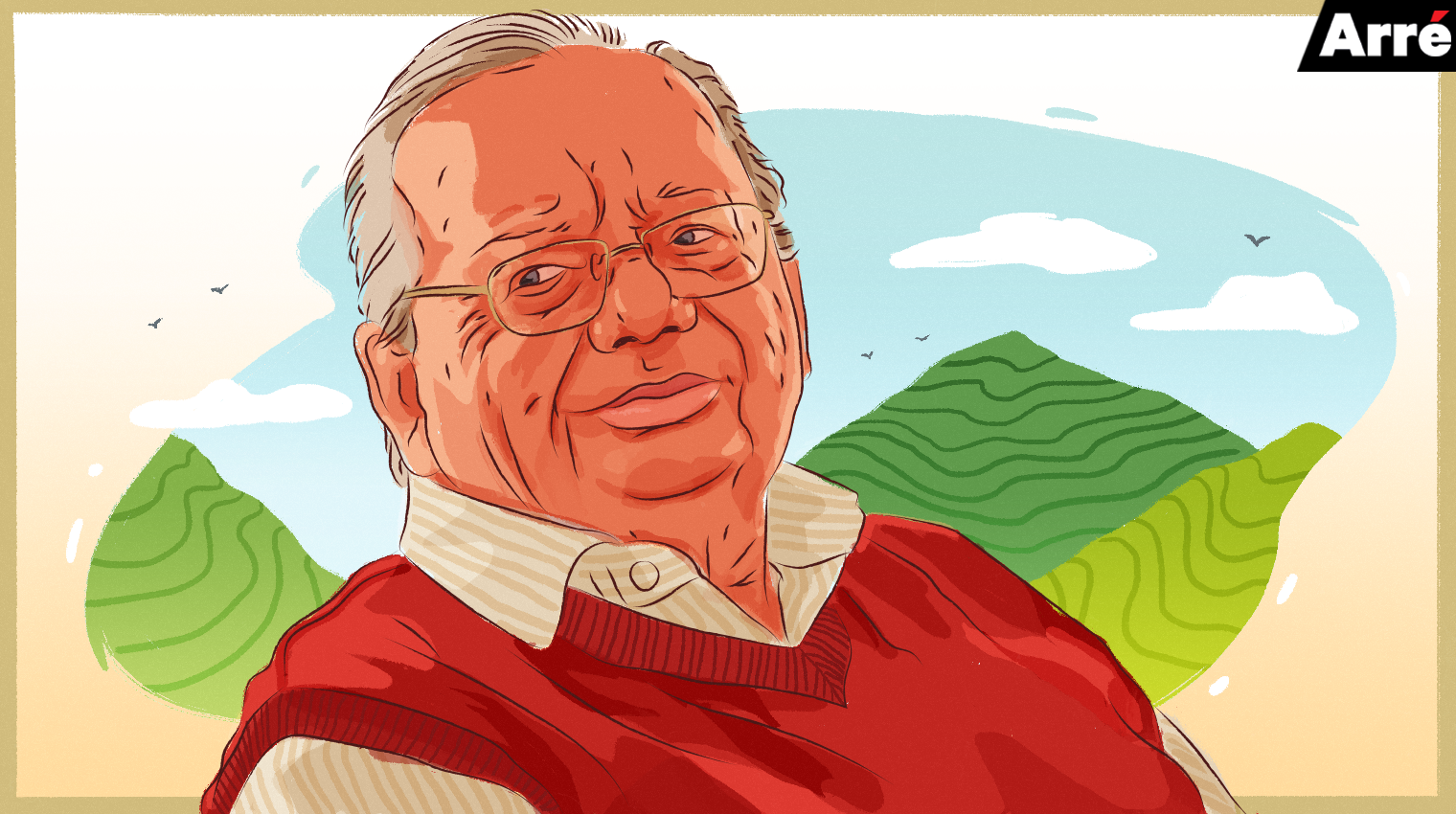
  • Ruskin Bond, the Storyteller Who Made Us Fall in Love with the Mountains

    Ruskin Bond, the Storyteller Who Made Us Fall in Love with the Mountains

    W

    hen it comes to planning a summer holiday, I’ve found that most people tend to have a marked preference for either beaches or mountains. There are those who find paradise in Goa or Bali, drinking in the sea and sun while contemplating the horizon, and there are the mountain lovers, who prefer to sip hot chai while clad in cosy shawls. For me, the prospect of a languid day on the hot sand is delicious. And yet, when I was booking a holiday of my own, I couldn’t resist the lure of a quaint hill station that somehow made the beach seem rather insipid. Like taking a train armed with fond memories of tomato soup in paper cups and shared dabbas instead of a flight, it’s hard to beat the nostalgia that the mountain air brings with it. Maybe it’s the majesty of rolling peaks and valleys, or the lush greenery that stands as a testament to the land’s history. Or maybe we have Ruskin Bond to thank for the romanticisation of the mighty mountains with its winding roads, sky-high deodar trees, and rhododendron shrubs.    The mountains provide a perfect backdrop for Bond’s stories and the celebrated Anglo-Indian author, who turns 86 today, has plenty more left to tell: The third and the final installment of his memoirs, Coming Round the Mountain, is set to hit the stands today. After Looking for the Rainbow, in which Bond studies the influence of his father in his early life and Till the Clouds Roll By, that trained its gaze on the author moving in with his stepfather, Coming Round the Mountain examines his experiences during Partition. Only 13 at the time, Bond was studying at a boarding school in Shimla. In an interview with Outlook India, he recalls the pomp and ceremony with which the boys celebrated Independence – until the civil unrest uprooted the lives of the school’s Muslim students. Bond’s friend was evacuated from the school by soldiers, and they never saw each other again. This narrative of loss and longing is profoundly familiar, so much so that a tale of two friends reuniting after Partition was recently turned into a viral ad for Google India. This story has been told a lot of times, in many different ways but it never fails to strike a chord.  It’s the same effect Bond creates with his literature – a universality that transcends age, gender, and backgrounds, despite being set in the specificity of rural North India.

    He knew that hill stations was where life happened in a way that it never unfolds in office blocks and five-star hotels.

    Bond’s cherished mountains were home to what he saw as everyday people and the hill stations represented an extraordinary cross-section of society. Back in the day, places like Mussoorie and Dehradun were bastions of the Raj and though a lot has changed, these hilly havens, with their quaint colonial houses and elite schools, recall a bygone era of India. These towns are now synonymous with a particular old-world luxury of simple living, a condition so sought-after that Netflix has a whole category of how-to shows on the subject. Think of the ubiquitous members-only clubs that still serve Anglo-Indian food, or the old-fashioned train stations that give hill stations their unique texture. More than enjoyment, a holiday to an old mountain outpost is in pursuit of appreciation. There’s history being told at every turn — all the better to imagine Bond’s classic stories playing out in the same places he described. Bond rarely wrote about hill station high-society. Instead, his narratives were of universal childhood innocence and exploration. As a seven-year-old visiting Mussoorie, I remember seeing the mist that cloaked the hills — the same mists that Binya saw in the forest where she lived, and where she came upon her Blue Umbrella. Dehradun in The Road to the Bazaar, where Koki won her beetle race and made the winning catch in her first cricket, has a similar classical charm. Of course, many hill stations now run on tourist industries, as stressed-out urbanites flock to return to a less complicated time. Famously averse to technology, Bond knew even in his day that he was writing of a world that was rapidly slipping away. In The Night Train At Deoli, he makes a case for the value of places where “nothing ever happens”. He knew that sleepy hill stations was where life happened in a way that it never unfolds in office blocks and five-star hotels. In the book, the train stops on its way to Dehradun, for a few moments in sleepy Deoli, Rajasthan, where a passenger falls in love with a girl selling baskets on the platform. But after talking to her, the narrator, whose name we never learn, doesn’t find the basket-seller on the platform again. He feels confusion, grief, and a disproportionate sense of loss. He also knows that he will not stop at Deoli to look for her. Instead, he clings to an impossible ideal, a hope that he might one day see her, unchanged, as his train passes through the same station sometime in the future. This is exactly how our love affair with the hills unfolds. We take to the beauty of the mountains and each time we say goodbye, we leave a part of ourselves behind. The girl in Bond’s story is incidental, she’s the symbol of everything we love about the ranges – simplicity, serenity, and the solace that they offer. And you and I, we are like the passenger who wants to hold on to the moment, knowing that it will slip away. Still, why should that stop me from trying the only way I know — finding tranquility in the pages of Ruskin Bond’s books, going back over his omnibus under a handy peepal tree at a hill station. In the words of Bond himself: Holidays can become tedious without something to read.”
  • The Wind Will Carry You, Abbas Kiarostami

    The Wind Will Carry You, Abbas Kiarostami

    I

    n the opening scene of Where is the Friend’s Home?, an early feature film of Iranian director Abbas Kiarostami, a schoolboy named Nematzadeh is brought to tears by his teacher. Nematzadeh has forgotten to do his homework in his notebook – a repeat offence. The teacher berates him, and rips up his loose-leaf work. Watching Nematzadeh attempting to hide his tears and hearing the nasal squeal that accompanies a suppressed sob was a visceral experience. My face knew that hot sensation of shame well, but I had either forgotten, or compartmentalised it. You become obsessed with the process of memory when your own goes missing. My childhood memories are a short collection of images and anecdotes, shared and retold, their details coloured in by friends and family. When I relive these abstracted, constructed scenes, it’s an out-of-body experience – in fact, it’s often like replaying a film in my head. Where is the Friend’s Home? didn’t remind me of particular incidents from my own youth, but it revived the sensory and emotional experiences of childhood. I found out about Kiarostami’s death in the worst way possible: via Whatsapp. I woke up to several messages from friends, some expressing sadness, some that just said “Kiarostami ☹” (or “Kiarostami?!”) I was grateful for people in my life who cared enough to send sympathetic messages, but it was surreal to receive condolences about the death of someone who wasn’t a family member, or even a pet. His passing took me back to the 1987 classic. Google’s plot synopsis of the film tells us: “An Iranian schoolboy scours a neighbouring village for a classmate’s home to return an important notebook.” It’s strictly accurate, and dismayingly boring. In truth, the film is a pint-size Odyssey: Its obstacles might merely be inconsiderate adults and impending nightfall (and certainly no sirens), but Kiarostami lets us see, and feel, the weight of these things from eight-year-old Ahmed’s perspective. Often, he just silently follows him, training his camera on Ahmed’s yearning reactions to the grown-ups around him. Kiarostami’s early films, like those of several Iranian filmmakers, were all about children. They were made for a governmental organisation called the Centre for the Intellectual Development of Children and Young Adults, whose mission was to teach children how to be morally and socially good. He worked with low budgets, in real locations, without professional actors. His subjects weren’t the overly quippy, frequently anthropomorphised lesson-bearers of contemporary children’s cinema – they were just kids. In his first-ever short, the gentle farce The Bread and Alley, a little boy happily kicks a paper bag home. On the way, he encounters a barking stray dog, which forces him to reconsider his route. Kiarostami shoots from the lowered angle of the child’s perspective, showing you what’s in his eyeline. He spends several minutes on the boy’s face, mapping the tension between his fear and his desire to go home (the child is briefly distracted from both by a giant yawn). Kiarostami has never been a political filmmaker in the way that his provocative peers and protégés, such as Jafar Panahi, are, but in his concern with duty and goodness, the personal becomes political. Dogs are considered haraam in Islam, but the child in Bread and Alley realises that his furry tormentor makes for a friendly companion. Ahmad, the protagonist of Where is the Friend’s Home?, defies rule- and custom-bound authority figures to do what he knows is right.

    This has been a year of thinking-person’s-celebrity deaths, and they’ve arrived in what seems like rapid succession: Alan Rickman, David Bowie, Prince, Muhammad Ali.

    Kiarostami focused on the experience of children for two decades; their pre-pubescent concerns qualified them as safe subjects under the Islamic regime. When he shifted his lens to adults (most often solitary, lonesome men, as in Close-Up and Taste of Cherry) his themes became darker – suicide, identity theft – but the films were as tenderly observant as any before. Kiarostami had a way of making his films feel lived-in: They began before you sat down to watch, and they continued long after you left the theatre or lowered your laptop screen. There were no three-act structures, no dramatic centres or satisfactory resolutions. Instead, Kiarostami followed his characters through short periods in their lives – often, just a day or two – as they talked, thought, and drove. Much of his footage was documentary, unscripted and unexpected. He presented the streets of Tehran and the hills of Koker so intimately, with such easy familiarity, that you felt if you visited, you might be able to find your way around. I’ve spoken to many people, and read many critics, who said that Kiarostami deepened their understanding of Iran and its people. It’s true for me too: Growing up during peak Axis of Evil rhetoric (and peak Friends popularity), Kiarostami’s films were the first exposure I had to Iran. It wasn’t quite the insular, shame-driven, nuke-hoarding country Western media made it out to be. Kiarostami’s films were a reminder – one we need often, it seems – that a state is not its people. For Indian audiences, in particular, the texture of the films can feel like home. I recognised much of Delhi in Kiarostami’s dry, dust-layered Tehran, with its faded stucco facades and cloudless, washed-out concrete skies. There were mustachioed brown men in unflattering knitted sweater-vests, and familiar words in every sentence – “bachcha”, “dost”, “dunya”. (“Che khabar?” a mother asks her son as she picks him up from school in Ten). Sometimes it seemed that Kiarostami’s Iranian cities and villages were a more realistic depiction of modern India than much of what Bollywood can offer. There’s a famous scene in Close-Up in which a man kicks an aerosol can on the street. Instead of cutting back to the action, Kiarostami follows its slow trajectory down a hill: for many critics, evidence of his audience-defying commitment to realism. When I saw it, it felt realistic too, but for another reason. Of course the guy wouldn’t bother to chuck the thing in a bin. I can’t help but think of this scene whenever I see some wanton littering. You can still see the polybag floating around, even when its owner has gone off-screen. Films that inhabit spaces with such depth, which are so dense with local detail, are often the most universal. Kiarostami never abandoned or betrayed his (or any other) national context, but his films brim with belief in a common humanity. “The teeth we have in our mouths – no matter what our nationality or background is – ache exactly the same way,” he said. His last two feature films were made outside of Iran – a way for him to focus on women, and sex, without fear of censorship. Kiarostami has never been one for sets, so instead of using one to recreate Tehran in Hollywood or elsewhere, he immersed himself in French and Japanese locations, languages, and cultures to make Certified Copy and his mysterious swansong Like Someone in Love. This has been a year of thinking-person’s-celebrity deaths, and they’ve arrived in what seems like rapid succession: Alan Rickman, David Bowie, Prince, Muhammad Ali. I’ve enjoyed their work, and their personalities, for many years. But when I read about their deaths, I felt sad for a moment, and then moved on to the next tab. I realise now that I reacted a little ungenerously to the flood of social media posts about them. Internet mourning can feel like a special opportunity to brag about your good taste. But when I heard about Kiarostami, I understood that outpouring of grief and the display of what many termed “a personal loss”. I might not have been in Kiarostami’s family, but he was certainly in mine.
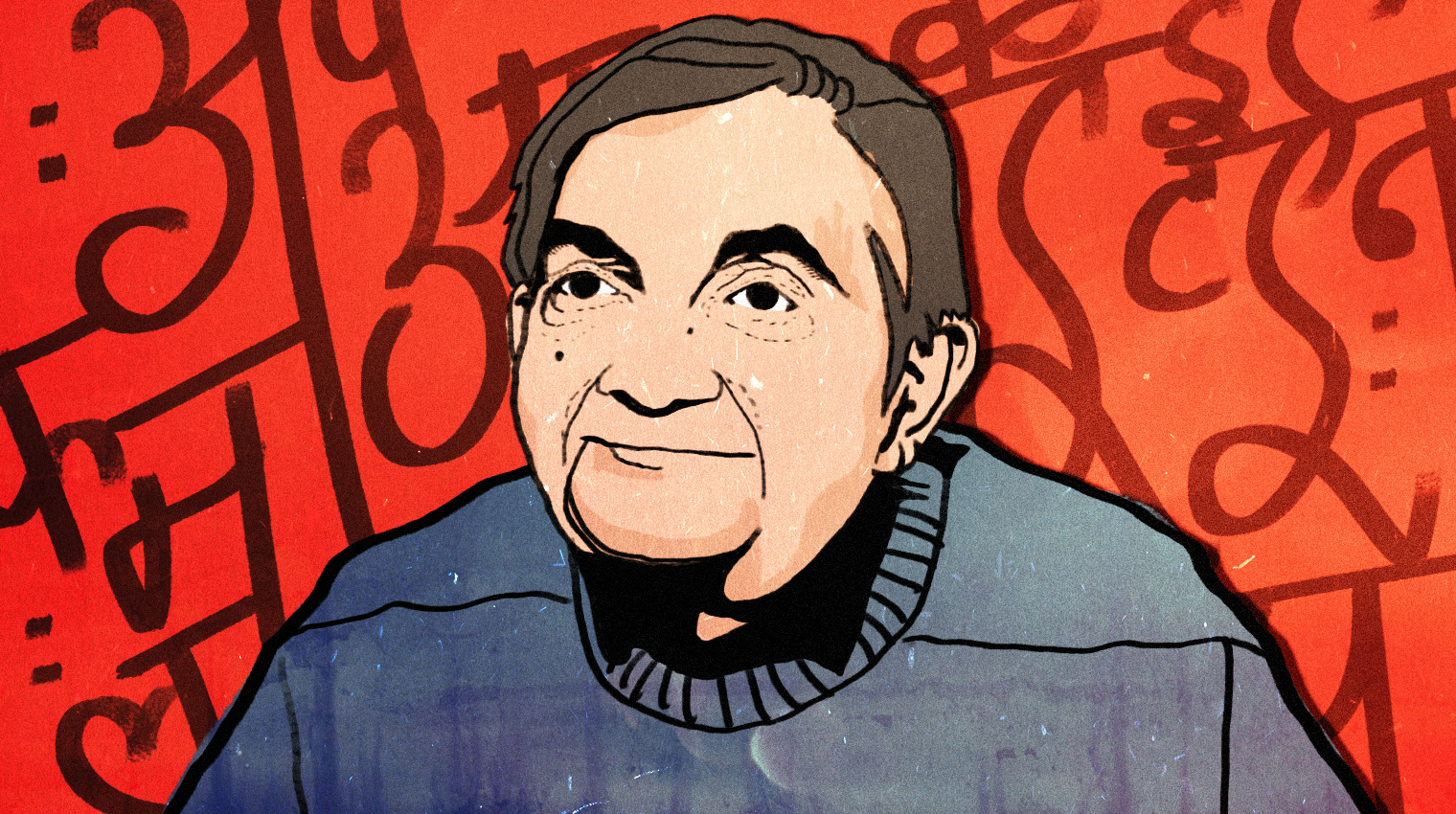
  • Nirmal Verma: Extraordinary Writer of the Ordinary

    Nirmal Verma: Extraordinary Writer of the Ordinary

    The obscurity of Shimla’s Kaithu area can be adjudged from the fact that it was most recently in the news for a leopard’s nonchalant stroll down a walkway in broad daylight, of which, the area receives a modest supply. Kaithu sits in the shadow of Shimla’s central hill, Elysium, below the main road, at a comfortable distance from both casual approach and coincidence. I was, I think 22, when I discovered that novelist Nirmal Verma was born and brought up in a little home on the second floor of a Raj-era house in Kaithu. A couple of days later, when I tried to look for his books in the only two bookstores in town, I couldn’t find any. Not one. Anonymity had consumed Verma in his place of birth, completely at odds with the stature he had earned in Indian literature. In death, Verma had become one of his own people: Somewhere and nowhere at the same time, feet dragging in a quest for the self, a lingering sense of un-belonging. I say people and not character because that is what Verma wrote – people. His eight short story collections, five novels, numerous essays and critical writings often deal with internal spaces, the little space between thought and action. But most intriguing to me were the personal anxieties of those who regularly appeared in Verma’s works, who embody the continual probing of place and time from a position of relative comfort. Some left behind, some forgotten either in person, or by the fulminating, magnetic narratives of the city. Whether it is Kaya from

    The Red Tin Roof, Mehra Sahib from The Last Wilderness or Bitty from Days of Longing, Verma’s characters are usually non-characters. Unremarkable people, who though not necessarily on the margins of circumstance, are often on the margins of their own self – wrought, displaced, homeless but not houseless, barely living and barely dying. The kind of lives that look good when they are read, and not lived. As Verma wrote of tragedy in Days of Longing.
    Verma was perhaps braver than he was authentic in writing these lives into his works. To understand his work is also to find him in it.
    Catastrophies have their own soul. This I have seen. I have seen, I say right, because even the things around become aware of their smell and get up from their place to circle around you… And you look at them with dumbfounded eyes as if you had never seen them before For Verma, contemplation is almost a condition. Far from the cities, or the rapidly expanding townships that are perforating with employable youth, there is a hollow silence, a sequestered, almost sedate life. These are the rooms filled with parents of children who have moved away, retirees who have been given the send-off, or children who are too young to become part of the soup. These are lives that though safe in a mathematical sense are un-adventerous to the point of being considered irrelevant, at times by people closest or responsible for them. A rustle of leaves outside the window, the ill health of a neighbour, a rare letter from a loved one are the only blips of life on a radar that either contemplates death or its relativity with time, age, and eventually place. A radar I now notice each time I return home, to aunts who share with me photographs of their children leading city lives, to grown men who take lonely walks on deserted roads. Verma was perhaps braver than he was authentic in writing these lives into his works. To understand his work is also to find him in it. Last year I met Verma’s childhood friend Rajesh Mehra. Apart from his elder brother, the artist Ram Kumar, Verma grew up in the company of artists, including Mehra and the late Jagdish Swaminathan. Their influence is evident in his works as he contemplates the earnestness of art in A Raag Called Happiness and the influence of architecture and place in Days of Longing. “You couldn’t move him if he started reading,” Mehra told me. “Not even by giving him an award right there and then. He always wanted space, and went to great extents to have it.” Both Mehra and Verma loved the mountains, but about these mountains what Verma loved most were the stories that no one was willing to write. “He could do ordinary, like no one else, because he looked where no one else would,” Mehra told me. He points to the ordinariness of both The Red Tin Roof and The Last Wilderness, in which people do nothing more than ask questions of each other or the self, whether it is about a sound in the attic, the sight of a neighbour’s guest, or a misplaced object. As Verma grew older, he loosened his grip on the steering wheel and retreated entirely to the back seat of the vehicle of narrative, writing about mortality and self-worth. In the short story A Day’s Guest Verma writes about the purposelessness of a woman after she sees her reflection in a television screen. That woman could be your mother or mine. She was crying; absolutely alone, with no connection to either past people or future hope. Tears — which come not for any one reason, but when the stone is entirely removed from one’s heart — flowing like a drain on some sloping life; again and again the woman brushed them away. Through Verma’s works, I have sought to pilfer a little bit of myself. I see his people around me. My grandparents who often spend months alone in an obscure village in Himachal Pradesh, my father who has been changing towns and cities for years alone, my mother who seeks to establish balance in all of this, and of course me. At one point in, I envied those who stayed away from the death-knell that is the economy of busied lives. But Verma helped me realise that though theirs are struggles not as vast or immediate as ours, they live in a state of suspension that neither relieves them from living, nor condemns to death at once. And memory only compounds the purposelessness: Less refuge, more abyss. To read Verma you just need the will to look into the remarkable challenges that unremarkable people face. Because for them, like my grandmother in the words of Verma, even expressing their little battles is a challenge: स्त्री की कांपती हुई आवाज ऊपर उठी, जिसके पीछे जाने कितनी लडाइयों की पीडा, कितने नरकों का पानी भरा था, जो बांध टूटते ही उसके पास आने लगा, एक एक इंच आगे बढता हुआ The woman’s voice rose higher, quivering, filled with the pain of who knew how many fights, with the water of how many hells, which approached him as soon as the dam broke, advancing inch by inch.
  • No Child’s Play: The Controversial Life of Eight-Year-Old Activist Licypriya Kangujam

    No Child’s Play: The Controversial Life of Eight-Year-Old Activist Licypriya Kangujam

    “Please don’t celebrate me if you are not going to listen [to] my voice.”

    That’s a bold statement for an eight-year-old to make. Manipur’s Licypriya Kangujam caught the attention of mainstream news publications over the weekend after she refused the government’s invitation to join the Prime Minister’s #SheInspiresUs social media campaign on Women’s Day. And she didn’t stop there. She even took on the Congress party for reducing her to a Twitter campaign after it praised her for turning down the Centre. 

    But who is this child and why does she find herself in the centre of a controversy right now? 

    Last year, the young environmental activist from Manipur spent weeks in front of Parliament House with a placard, urging the Prime Minister and his MPs to pass a climate change law to control and regulate carbon emissions. She reportedly dropped out of school, travelling within the country and the world over, for multiple environment projects.   

    As a very young girl with a voice and an agenda to present, Kangujam has been compared to Sweden’s Greta Thunberg for campaigning against climate change, something that she does not appreciate. “If you call me Greta of India, you are not covering my story. I have my own identity…” she told the BBC. According to Kangujam, she started campaigning two years ago at the age of six, much before Thunberg. 

    Kangujam claims that part of her fight is to ensure that climate change is added to curricula in schools across India. After Rajasthan, she told the BBC, the state of Gujarat will be the second in the country to agree to educate children on the climate crisis.

    The child might be a pawn in a campaign that her father started.

    At the World Economic Forum earlier this year, alongside activists Greta Thunberg, Luisa Neubauer, Isabelle Axelsson, and Loukina Tille, Licypriya also published a letter calling out global industries and governments at the forefront of climate change to immediately stop funding fossil fuels, asking that they act now. In an article in The Guardian, they emphasised, “Short-term profit should not trump long-term stability of life.”

    That is quite a fight for an eight-year-old, and it should come as no surprise that she was nominated by the PM. But now allegations have surfaced that claim some of Kangujam’s achievements might have been exaggerated. And that the child might be a pawn in a campaign that her father started.  

    In a Twitter thread on Sunday, political activist and founder of an NGO, Angellica Aribam, pointed out that not everything that Kangujam claimed was correct. Last year, news of the girl being invited to UN headquarters in Geneva, Switzerland, to address a “global UN session” for Disaster Risks Reduction made the rounds on social media and was published by several media houses. However, Manipur’s Imphal Free Press (IFP) reported that the news was false. 

    The deceptive story was originally sourced from International Youth Committee (IYC), an organisation that lists Kangujam Kanarjit aka Dr KK Singh (Kangujam’s father) as its chairman. The man has a dodgy reputation – he was arrested in 2015 over charges of “fraud, assault and criminal breach of trust”.  

    Kangujam, of course, is only eight and cannot be held accountable for the conduct of her family.

    Licypriya’s profile earlier mentioned that she had won the “Peace Award” by the Global Peace Index. But when former journalist Kumar Manish got in touch with the organisation, it clarified that they do not give out such an award. The “Indian Peace Prize” that the young activist bagged was handed out by a committee chaired by her father and the “APJ Kalam Award” could be traced to a “Khwaab Foundation” which seems to have no online presence.  

    Kangujam, of course, is only eight and cannot be held accountable for the conduct of her family or for the claims that she has made. Her Twitter account is run by her “guardian”, after all. Journalists and activists have alleged that it is her father who has been making all the fraudulent claims. 

    All of which teaches us one lesson. We waste no time in turning child activists into heroes. But sometimes, maybe we need to pause… and run an old-fashioned fact check. 

  • The Last Brigade Call

    The Last Brigade Call

    On a typically warm summer night last May, there was a casual get-together in the compound of the Chembur fire station. A few firemen were sipping drinks and catching up after a hard day’s work. The Chembur fire station is a fairly large open space, surrounded by trees, living quarters of the resident firemen, and shiny red fire trucks. The mood was relaxed. As the men swapped stories from work, their wives socialised, and the children chased a young litter of kittens. In one corner, Ravindra Nikam and his mentor Sudhir Amin were having a quiet drink. They’d known each other for years, ever since Nikam was a freshman. Nikam says he’d always looked up to Amin and had heard stories of the exemplary courage his mentor had shown during the horrific 26/11 attacks. While the group of firemen attempted to fathom the extent of the massacre on that fateful November night, it was the heroic Amin who led from the front. He climbed through a window, entered the fourth floor of the Taj hotel and rescued several trapped guests. For this act of bravery, he was honoured with the President’s Medal for Gallantry. Amin was a legend both on and off the field. At the fire station, he was known fondly as “Parade ka Baadshah”. Nikam snapped out of his thoughts as the conversation shifted toward Amin’s birthday. He was never the kind to have a big celebration, opting instead for the token cake-cutting. But for his 50th birthday, Amin wanted something grand – with all his family, friends, and colleagues in one room, maybe at a nearby resort. “After all, it comes only once,” Amin had told the young Nikam. He agreed wholeheartedly and resolved to make Amin’s birthday special. He would speak to all the other officers in the department. Everyone was fond of “Amin Sir”, and together they would make sure that the celebrations were grand. The men had raised a toast and drank to life, not knowing that the next day their lives would change.


    The Chembur fire station is a fairly large open space, surrounded by trees, living quarters of the resident firemen, and shiny red fire trucks.

    Naimish Keswani/Arré

    Nobody could have guessed that the fire at Gokul Niwas in Kalbadevi would be a fire they would talk about for years to come. Gokul Niwas was an old residential building that had long since been converted into an illegal commercial centre. This ugly urban settlement with crisscrossing wires was full of shops selling everything from sarees to silverware. Nestled somewhere on the third floor was a row of tiny gold workshops that stacked gas cylinders and chemicals for polishing gold. Later, it was found that these chemicals and cylinders combined with polyester from the saree shops had led to the horrifying blaze. The fire, which started at noon, was set off by a spark in the electricity meter room on the ground floor, and spread quickly to the first and the second floors. The occupants didn’t need smoke sirens to signal that something was wrong. The corridors filled with the smell of burnt electric wires and the heat began to spread. Smoke – so grey and thick that even sunlight couldn’t penetrate – began to fill the tiny rooms. The terrified residents, blinded by their stinging eyes, relied purely on instinct to somehow reach the terrace. From there, they frantically dialled the fire station. The first officer on the scene was Amol Mulik. A fresh-faced 30-year-old, he laid the groundwork for the rescue effort. A team of officers got to the second floor with the help of a firetruck ladder and used the hose to get the flames under control. Another team was sent to the terrace of the opposite building to help stranded residents. Curtailing the fire was important, but saving lives was the need of the hour. It is set protocol in the department — first get the people out, and then strategise on how to douse the fire. The latter usually involves senior officials assessing the situation, locating the source, and directing all outside resources toward it. By 4 pm, all the residents of Gokul Niwas had been rescued. Chief Fire Officer Sunil Nesrikar, Amin and two other officers made their way into the building, carefully dodging the burning debris and muffling their mouths against the bitter, acrid smoke that was just as likely to kill them. Armed with a water hose, Mulik entered after his seniors. But as soon as he walked in, a strong pair of hands pushed him down onto the floor. As Mulik fell on the ground, a loud bang filled the air – a cylinder had exploded on one of the upper floors. Within seconds, he was surrounded by a wall of debris, dust and fire. Mulik was on his back, unharmed. Amin had saved his life, but was nowhere to be seen. The cylinder blast had made the fire fiercer. The on-site officers decided that they needed additional resources and begun making brigade calls, commandeering all resources from surrounding areas. Officer Nikam was on his way when one of the drivers called him from the scene. “Amin saab phaslele ahet,” Nikam heard over the static of the phone. His heart skipped a beat as he pressed down hard on the accelerator.  


    Nikam says he’d always looked up to to Amin for his exemplary courage.

    Courtesy: Ravindra Nikam

    By the time Nikam reached Gokul Niwas, Chief Nesrikar had walked out of the building – engulfed in flames – and had collapsed on the ground. The other firefighters ran toward him, covered him with blankets and doused the fire. Quickly, they despatched him to the National Burns Centre in Airoli where he would be treated for third-degree burns. Nikam turned his attention away from Nesrikar, and entered the building to rescue Amin and the two other officers. After a few minutes of stumbling in the dark, fiercely hot interiors of the building, he caught sight of Amin trapped waist down in debris. A team of men was frantically trying to pull him out and Nikam joined them immediately. It was over 100 degrees in the cavity and Amin’s body was already covered with blistering red burns. He was shouting for help as scorching remnants of the building continued falling on him. His wails slowly became softer and softer. Nikam ignored the roiling in his stomach and dug with all his might. Once they were able to uncover the upper layer of the debris, they discovered that Amin’s right leg was stuck underneath an i-beam, a piece of metal that weighed over 20 kilogrammes. Just then, there was another blast upstairs and the team knew that they’d have to work fast. They had very little time left before the entire building would collapse on them. Now, instead of trying to lift the i-beam, they dug the debris underneath it. After fifteen minutes of digging with streaming eyes, the officers made just enough space to pull out the leg from under the massive beam. An almost unconscious Amin was brought out of the building by a frantic team of firefighters, most of whom he had coached over the years. They looked helplessly distraught, as his now-charred body was taken to the ambulance, which screeched off into the city traffic. As the men watched their leader go, Gokul Niwas collapsed behind them. There was no trace of the two other officers. Now all they could hope was that they’d managed to save Amin.

    ***

    On May 14 last year, 28 days short of his 50th birthday, Officer Sudhir Amin succumbed to 90 per cent fourth-degree burns and multiple organ failure. A year later, tales of his bravery are still passed down as legends to young recruits. On June 11 this year, Nikam and Mullik will raise a toast in honour of their brave mentor on his 51st birthday. They just wish he’d got his grand celebration.
  • Gone Too Soon at 95, Ram Jethmalani

    Gone Too Soon at 95, Ram Jethmalani

    “O

    h, please!” said that soft but conclusive voice, “You can’t stop at one! Cognac with warm water is the best drink to have because it has practically no sugar.”  “Yes sir,” I responded feebly, looking around for support. With me was director Hansal Mehta, the mentor who I thought would be the saviour. The best he could do was negotiate on the quantity of Cognac in his next drink, not even mine, offering his beatific smile in return. I felt betrayed, but that’s another story. The drink that followed, and the two after it, were inevitable. We were not going to win against the persistence. In any case, how do you win any argument against the man who cannot be defeated, and who, touching 95, was handling more alcohol than you ever could! The man was Ram Jethmalani. Perhaps the youngest and the oldest practicing lawyer of the country, starting way back in 1941 and continuing until 2017. Former Law Minister of India. Troublemaker. Troubleshooter. Rebel without a pause. And the man behind high-profile cases ranging from Nanavati to Harshad Mehta, Hawala to 2G scam, Ramdev to Asaram Bapu, and lots more. We had gone to see him for a film project. The conversation had extended from late afternoon to evening. He was in his element, complete with the very many stories of his life. Alert and attentive, he knew everything, and then some, about holding court. There were some tales that he had forgotten, some that he was repeating, some that he was making up, but the narration was equally astounding for all of them. He had his retinue around. The bar and the library were neatly stacked. The case files were there. But on display wasn’t just Ram Jethmalani, the ace lawyer, this amazing nonagenarian kicking some serious ass with the rendition of his professional life, complete with all the bawdy details. We were seeing Ram Jethmalani, the person, the chronicler and creator of the contemporary History of India, reflecting upon and recounting India’s last seventy years to us lesser mortals, overflowing with genuine affection and love for everybody around him. ram-j

    Ram Jethmalani, the person, the chronicler and creator of the contemporary History of India, reflecting upon and recounting India’s last seventy years to us lesser mortals, overflowing with genuine affection and love for everybody around him.

    Vaibhav Vishal

    Ram was every inch the man he was when I had last seen him way back in 1988.  Rajiv Gandhi had just botched up on Bofors. Congress could see its massive victory turning into a defeat within three years of Gandhi coming to power. VP Singh was becoming the contender to the top job. The regional satraps were finding their voice. The third front was coming together. Some brave journalists were exposing the scams of the day. But the first person to take Rajiv Gandhi literally head-on was the firebrand Mr Jethmalani! He teamed up with Arun Shourie and Ramnath Goenka of The Indian Express to do what must have been the first-ever trial by media in the country, shooting 10 Questions every single day for 30 continuous days aimed not at the Rajiv Gandhi government, but directly at Gandhi himself. The questions ranged from the sublime to the ridiculous. Some did focussed damage, some were incisive, some uncomfortable, a lot just for effect. This was showmanship backed by hard facts. This was the quintessential Ram Jethmalani at work. And it had its desired impact. Suddenly, the Prime Minister of the country had very visible feet of clay. Ram followed that up with events across the country, mobilising support for Singh who had not even formally asked him for help. He believed in the cause and he gave all his time, energy, and resources to spread the word.  All of 13 years, and learning to find my politics, I had pedaled down 10 kilometres to Shri Krishna Memorial Hall at Gandhi Maidan in Patna to interact with him. After his brilliant speech was a Q&A session with the audience, and I managed to attract his attention, despite my puny self literally hidden amongst the sea of people. I would be embarrassed to remember what I had asked, because a kid can display only a certain level of maturity/gravitas while questioning the biggest lawyer of the country. But what I do distinctly remember is how respectfully he reacted to my point of view and me. He heard me out, looking at me into my eyes, treating me as an equal. He could have very well dismissed the question, given a cut-and-dried answer to whatever I had posed. But he indulged me, keeping me in a sincere, positive space. He answered me and asked if I had any more questions. “Oh, please!” said that soft but conclusive voice, “You can’t stop at one!” I came back home a more confident person.

    Even if he half-lived the life I have constructed in my writings, it breaks my heart to think of those moments, and how he braved all odds to live them, still leading from the front.

    Maverick, temperamental, eccentric, non-conformist, the permanent dissenter… There are lots of adjectives used for Mr Jethmalani. In my interactions with him, he was none of it. He was only a man who had utmost belief in himself and what he did. And that’s what made him what he was. Had he not been a lawyer, but a cricketer, he would have given Don Bradman and Sachin Tendulkar a run for their money. Had he been a scientist, he would have discovered newer galaxies already. He believed in law, and he believed in being the best goddamn lawyer that one could be. The histories of the kind of people he defended – some good, some bad, lots ugly – didn’t matter to him as long as it was an opportunity for him to do good lawyering. That’s what he lived for. It sounds too simplistic a conclusion for the life and times of one of the most celebrated lawyers of India. But he actually was a man just doing his job. That’s it!  As I wait for what I have written on Ram to take a formal shape, I continue to marvel at the detours and travails of the man. Even if he half-lived the life I have constructed in my writings, it breaks my heart to think of those moments, and how he braved all odds to live them, still leading from the front. When he gave his daughter away to somebody else because he couldn’t take care of the child after coming in as a refugee to India. When he got married a second time despite a wife and two children at home because he believed in love. When he confronted his personal demons living through the Partition, Emergency, and Blue Star. When he defended what the world thought were undefendable, from Haji Mastan to Manu Sharma. When he stuck his neck out to do what he thought was right, his political and personal affiliations notwithstanding, during his victories and defeats… during his life. I was there with Ram. I could see a life well-lived. With Cognacs, warm water, warmer vibes, and warmest conversations.  Not cool, sir. 95 is not the age to go. Not for Ram Jethmalani.