
T
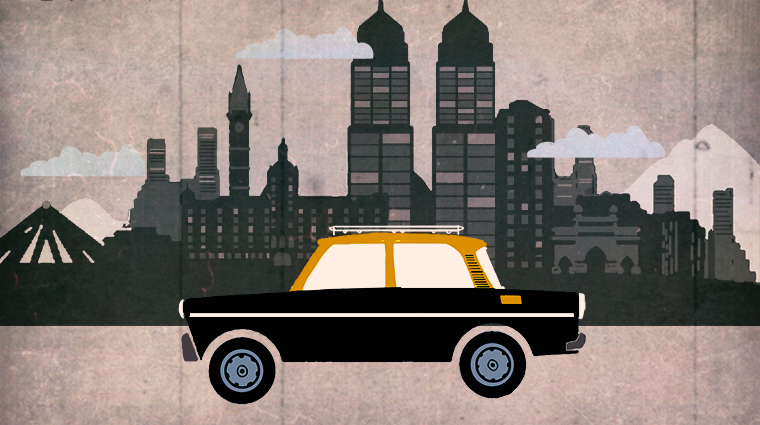
he pre-dawn roads are empty, but Mushtaq Bhai is driving carefully. In the grey morning light, I roll my window down and breathe in the smells of the city. At this hour, the city smells sweet. Which is probably why, in spite of being an Uber slut, I have hailed this ancient metal box for my ride to the airport. A morning ride through the sleeping city is always a pleasure, and one doesn’t really call an Uber for pleasure. One calls an Uber for air-conditioning and a driver who doesn’t throw a bitch fit about your destination. Mushtaq Bhai has been driving his taxi for 23 years. Without GPS. He’s a taciturn, unsmiling gent of advanced years and I think I’m annoying him with my chatter, but I persist. These much-maligned, battle-scarred charioteers, who flip from snarling sadhus to poet-philosophers, fascinate me. To me, these migrants from UP and Bihar, who know the city and its secrets better than I ever will, are a lot like Aravind Adiga’s protagonist in The White Tiger – invisibles who’ve seen everything from furious fighting to desperate love-making in their rear view mirrors and lived to tell the tale. Life has played out in the furry, stained backseats of their taxis, and they’ve borne witness. My grandfather drove a taxi for a short while in the 1950s, a beat-up old Hindustan 14 with the plate BMR 1317. One night, he picked up a heavily pregnant woman and her frantic husband from outside their house in Vile Parle. The woman was in the backseat and screaming in pain and the man was sitting helplessly in front. My grandfather drove furiously to the Parel Hospital, not daring to look back until there was a final scream that made him pull over. Behind, in the backseat of his Hindustan 14, the baby had been born. Somehow, I can’t picture this in an Uber. Company policy may strictly frown upon in-car deliveries. I ask Mushtaq Bhai about Uber. Would he swap his battered Fiat and drive a new app cab instead? His answer is a derisive snort followed by a categorical no. His legs may ache after a day of pressing on a hard clutch and the heat-spewing Fiat may become an oven in October, but no he’s not going to swap. The kaali peeli, unlike the Uber, is everyman’s ride and doesn’t only serve people with smartphones and credit cards. He’s right. The rich and the poor, the rocket scientist and the roadside romeo – everyone sits in this taxi. Much before the Mumbai marathon usurped the title, the kaali peeli was the great equaliser for the city. They just didn’t have a brand campaign backing it.
There is poetry in the way Mushtaq Bhai sees his job that won’t strike you, at least not in the rush hour. You will only see a grizzly, unsmiling old man driving a terribly outdated vehicle. But on this silent morning, we both have time to go beyond first impressions. Mushtaq bhai is warming up to his theme. He points to the “always there-ness” of his kind of cab. “There are 30,000 of us on the streets at any given hour. We don’t need a smartphone, credit card, map, 4G-VG. Just lift your arm and yell ‘Taxi’ and we will be there.” Sure, I say. But then you won’t go where we ask you to go, will you, I ask, referring to the 15,000 complaints lodged with the Taxi Union. He looks sheepish, as if caught out. “We live in far away places. By the time I take my taxi, park it at Dadar, and take the train home to Bhayander, I can barely stand. At 8 pm if someone asks me to go to Malad, I just can’t do it.”There are 30,000 of us on the streets at any given hour. We don’t need a smartphone, credit card, map, 4G-VG. Just lift your arm and yell ‘Taxi’ and we will be there.

The kaali peeli, unlike the Uber, is everyman’s ride and doesn’t only serve people with smartphones and credit cards. The rich and the poor, the rocket scientist and the roadside romeo – everyone sits in this taxi.
Image Credit: Kuni Takahashi / Getty Images