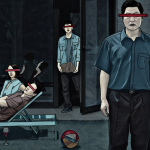
The pricing of travel in Mumbai never fails to baffle me. To be able to commute across cities for less than a hundred rupees, I mean, come on! If you were to look at this factor from the lens of gender, you would realise the true importance of subsidy. It isn’t a secret that women get paid less and are therefore prisoners of the system that allows them a token – like the ladies’ compartment. The cost of safe travel is thus a key factor for women who want to have the life they desire. No other mode of travel can potentially give them this allowance, definitely not to this degree. Till about class 12th, my school was five minutes away and I had never taken a bus or an auto alone. I had so many protective layers of privilege on me that I never quite understood the toll even getting from point A to point B can take on a woman. It took me to step into a local train to learn that to be a woman is to have every layer of your being unpeeled with each step you wish to take forward.A big chunk of what makes this city unique is its capacity to accommodate women and all the cultural, societal, political and economic baggage they bring with them. The railways perhaps, embodies this idea the best.
Today when I look back my first ride seems ‘the’ moment of liberation. In all honesty, it wasn’t the case because it took me years to become comfortable with the idea of commuting alongside a sea of people, but that first carefree plunge might have done the trick. The way I travel today would shock a younger me and well, I guess that’s what the system does to you. It grows on you while letting you grow. I felt it the most a few weeks ago when after quite a few sleepless nights over ‘How will I handle a saree in a local train’, I finally wore one to work on Diwali this year. The fact that women around me were handling their own sarees with aplomb only confirmed the ordinariness of my challenges, which in turn felt comforting. With half a decade of life spent catching the right train(s), I truly believe this system has shaped my adult life like nothing else ever can. And I am just one among millions of women with different yet essentially the same stories. To me, Safeena portrayed this phenomenon best in Gully Boy. There is a moment where she sits on a bench, all decked up, waiting for a train. She gets aboard the train, and in the next scene, the train is snaking into the night. The illumination of the running rake is tearing through the darkness around. It takes Safeena to a place of her choice. It’s her haven, carrier and companion. Just like her, millions of women can have a life after sunset because of local trains. I am one of them, especially when my journey begins early in the morning or after midnight.It took me to step into a local train to learn that to be a woman is to have every layer of your being unpeeled with each step you wish to take forward.
Not everything is fine with this system, because life just isn’t that simple. But for all the things it lacks, it more than makes up for by just being there for women like me. When I travel late at night, I find comfort in seeing khaki-clad beings around. I also question why we need them there in the first place. When I can’t reach the handlebar of the general compartment, I feel unwanted by design — not just of the coach but the world around me. It acts as a cruel reminder that I am trying to exist in a world that wasn’t built for me. There are so many ironies and lessons to be learned on these trips. It’s funny how a space that gives me so much joy is filled with darkness too. I guess that is life, speckled with hope and harshness in equal measure, but to me Mumbai’s railways will always be a train half full.Not everything is fine with this system, because life just isn’t that simple. But for all the things it lacks, it more than makes up for by just being there for women like me.