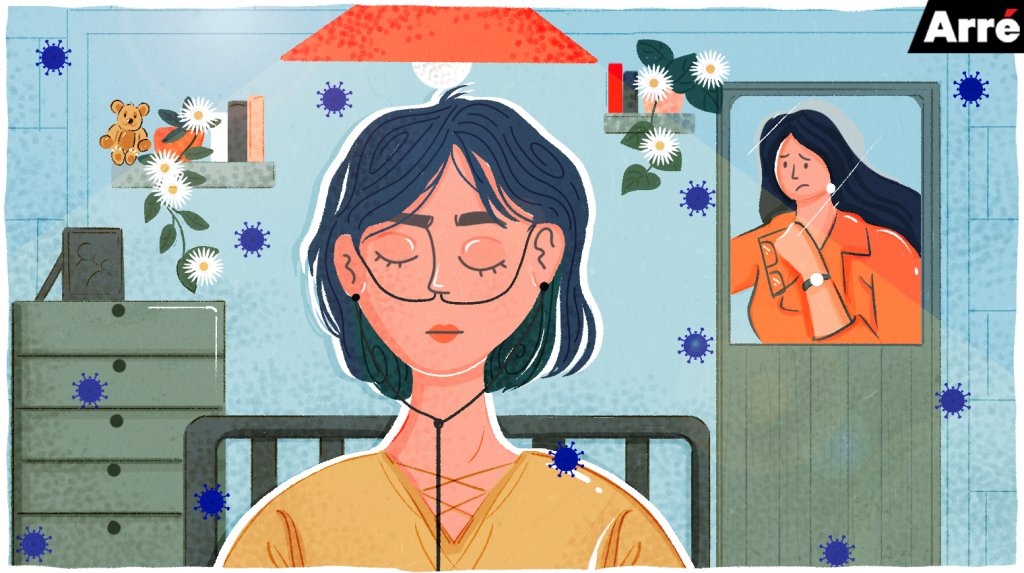

Like many who have family abroad, I hadn’t seen my sister in over two years, until restrictions lifted and she finally came to visit. April was meant to be for quality time together, celebrating both our birthdays, eating her favourite home foods and catching up with relatives. Instead, she has spent the past two weeks in bed, more often than not with an oxygen tube in her nose to aid a pair of lungs that are trying valiantly to sustain her, but falling short. She has had no appetite for maa ke haath ka khana and no strength to walk around her sickroom. Our late-night conversations will have to wait – as long as she is quarantined, she is only visible to me from three-feet away over the top of a mask. For most of us, it is not the first time we’ve had to see a beloved family member go through biomedical hell. Sickness and death come to everyone, and those on the other side have little say in the matter. But the sheer, undiluted fear of the coronavirus was new to me. I had never experienced the helplessness of looking for hospital beds that didn’t exist; of spending hours making calls – calmly, with only an edge of frantic hysteria – to procure the laughably simple yet elusive, life-giving canister of oxygen. I was prepared to beg, borrow, or steal medicines — not even knowing if they would work but unable to let go of any shred of succour in an apocalyptic world where none was going spare. This is a war and we are soldiers whose fear is cloaked in courage, using our desperation as fuel in combat. Each time I struggled to find some fresh mana for my sister to turn her condition around, I wondered: if privileged urbanites like me can’t access the basics, what must be happening in the trenches, to those who don’t have Twitter accounts to appeal for help or funds for expensive private care? The answer that has come from ground reports is horribly clear. They wait, and they watch. And then, too often, they grieve.This is a war and we are soldiers whose fear is cloaked in courage, using our desperation as fuel in combat.
This is a war, and it can feel like we’ve been drafted in without backup. We are simultaneously together and on our own, all of us waiting and watching, praying because it’s all we have. We have become amateur doctors, pharmacists, and epidemiologists, clutching onto the straws of an article touting the benefits of eating beets or a yogi who gives us breathing exercises for weakened lungs. When one system fails us, we fall back on whichever one is available. After all, even in the face of senseless, preventable deaths, in a rampant plague that suffocates our loved ones, we can’t give up. Too many of us are survivors, not of COVID-19, but the trauma of racing against a body’s ability to survive without drawing breath. Godspeed.After all, even in the face of senseless, preventable deaths, in a rampant plague that suffocates our loved ones, we can’t give up.