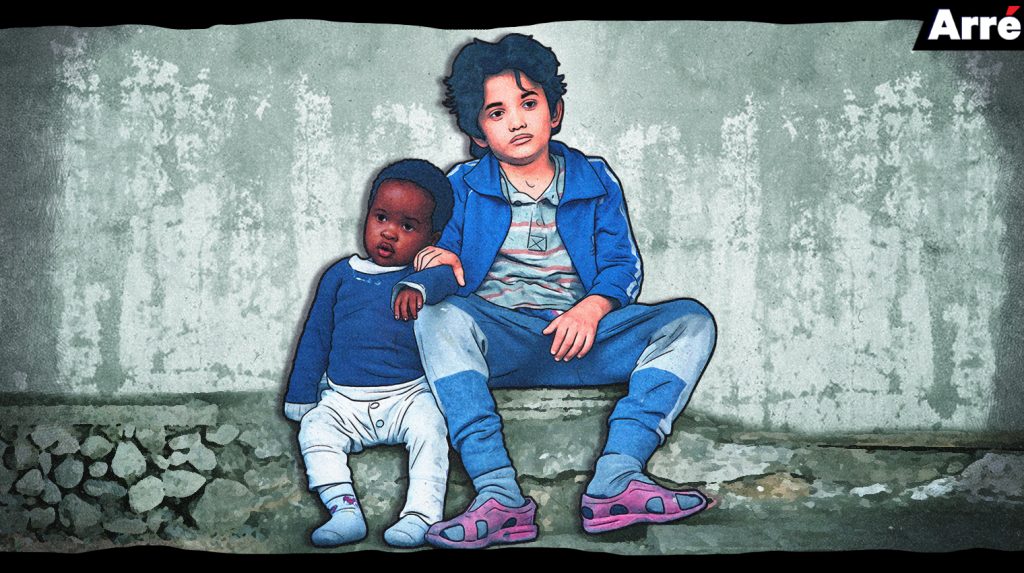

The boy who sued his parents Initially we see the family making money smuggling opioid drugs into the prison where Zain’s elder brother is stationed as a convict. Zain helps out at the shop of their landlord and then turns street hawker with his 11-year-old sister Sahar selling fruit juices by the dozen. But things take a dramatic turn when Zain’s parents sell Sahar off as a child bride to their manipulative landlord when she reaches puberty. Before Zain can hatch a plan to escape with Sahar, his only confidante, they’re torn apart in a claustrophobic sequence that is equally heart-wrenching and relentless. Grief-stricken, Zain runs away from his abusive home and ends up forming a makeshift family with Rahil, an undocumented immigrant and her baby son Yonas, whom he tends to in an almost paternal devotion. But when one day, Rahil doesn’t make it back home, detained by the authorities for working without a permit, Zain once again finds himself back in the streets with a toddler in tow. The final nail in the coffin that leads a furious Zain to the courtroom to launch a battle against his parents is a sudden tragedy involving his beloved sister Sahar which compels him to demand accountability from the adults who passed on their suffering to their kids as inheritance.Capernaum is one of those films that is at once difficult to watch and impossible to look away from.
Should adults be accountable to children? Throughout the 120-minute runtime, Capernaum becomes one of those films that is at once difficult to watch and impossible to look away from. Aided by the suffocating cinematography and a documentary-style narrative approach, the film racks up misery by the minute, capturing the plight of hundreds of undocumented children whose existence is nothing but a series of never-ending tragedies. The scale of injustices stacked up against Zain is nothing short of inhuman and yet there’s no way out. For better or worse, his future will be spent paying the price for the mistakes of his parents and his present is marred by an awareness of the terrible choices that one resorts to when faced with starvation. For a film that could have easily been reduced into suffering porn, Labaki’s assured direction and the wonderful performances of the child actors (most notably Al Rafeea who brings a steely toughness to his premature adulting, lend Capernaum an emotional truth. There’s an angry energy in the narrative that mimics Zain’s internal fury at being handed a raw deal and the hyper-realism of the streetside proceedings is another considerable achievement given that it transforms the film into a war-cry for dignity. By the end of its potent climax, Parasite that focused on the obstacles that societal hierarchies presented in front of people incapacited to fight them, seemed to suggest that you don’t choose your suffering the same way you don’t get to pick your family. But Capernaum, dressed as a brutal protest against survival, goes one step further to wonder if lives are even worth anything anymore. Capernaum is screening on Netflix.Capernaum, the highest grossing Arabic film of all time and Lebanon’s official entry to the Oscars that year.