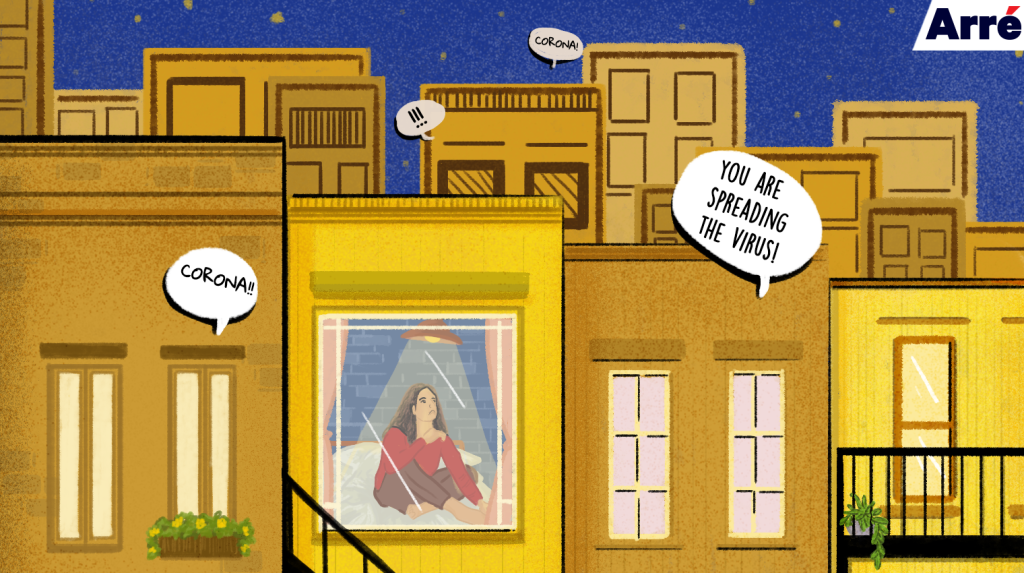

In another society in Kolkata, a healthy young woman who arrived from Mumbai to stay with her senior citizen parents during the pandemic, is being continuously harassed after news spread on WhatsApp. The entire neighbourhood is pushing the girl’s family to get tested just because she flew from Maharashtra, the state with the highest number of cases. This online mob of dangerous idiots feeds on rumours. This was made abundantly clear when a 22-year-old returned from New York and tested positive, becoming the first in Ahmedabad to do so. People in her neighbourhood ravaged her social media profiles, saved her photos and made a quick WhatsApp forward message maligning her name and family, even though she was in self-isolation. The forward gave out all her details, from how she looks to where she lives and who her extended family members are. This went to a few thousand mobile sets within a few hours and the family has been suffering hell ever since. In a bid to quell numerous rumors, the patient, instead of resting, has been taking calls, writing elaborate posts on Facebook, and has even given an interview to the local radio channel. Sure, there are privileged idiots like Kanika Kapoor who escaped testing and endangered a list of high-ranking politicians, and several others along the way. There are also those who are still attending weddings and funerals instead of staying in. Still others are hoarding groceries. An entire population is out beating thaalis, not from their homes but out in hundreds.Our democracy will crumble if violence and fake news decide to rear their ugly heads right now.
However, it is the online mob, graduating from the dreadful Whatsapp University that is the biggest cause of concern to a country like India. 450 million people in India are supposed to be using WhatsApp by 2020, and as we well know, the medium has done tremendous damage in the past. That danger is compounded in the hands of neighbours and people who are next door, who have the ability to inflict maximum damage. It takes minutes for a bloodthirsty crowd to mobilise, and WhatsApp is the mob’s handmaiden. This isn’t merely restricted to the hinterland, populated by low-income groups with lower education. It doesn’t take much for supposedly educated people to turn into murderous monsters. Just ask the Chinese man who feared he was going to be lynched by the locals and had to lock himself in his house in Greater Noida, even though he had completed the mandatory 28 days of isolation. We are subject to many kinds of fear and loathing on our mobile phones 365 days a year. But in the time of the coronavirus, it has the potential to devolve into some very serious harassment – a life and death situation for some. In the case of my building, what started out as misplaced concern steadily blew out of proportion and ended up morphing into an attack in mere minutes.Word travels fast on WhatsApp.
We are a country that may be entering the third stage of the pandemic spread – with pressure mounting on hospitals, health-care workers and a myriad number of essential services, our democracy will crumble if violence and fake news decide to rear their ugly heads right now. The need of the hour might be tremendous amounts of patience. As Confucius said, “nine thoughts for one word”, people can judiciously use the online medium to say words of care, to share verified information and little else. It will not just eliminate wrongful news from spreading through idle hands but also help with the mental health of many, especially the vulnerable who are constantly feeding on news and rumours of the disease coming too close to homeAn entire population is out beating thaalis, not from their homes but out in hundreds.