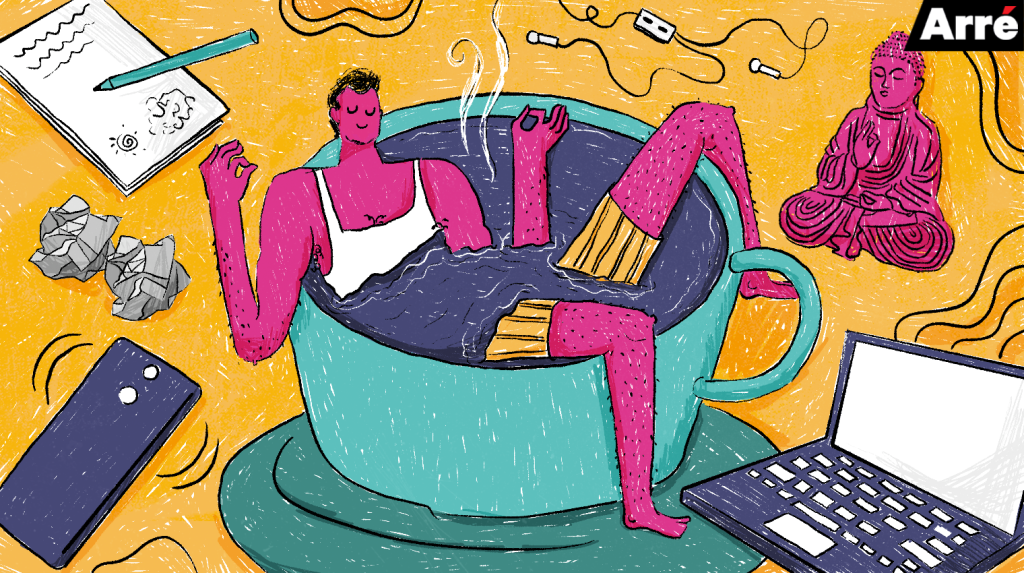

Secondly, I get to choose what I work on. No matter how much you love your job, chances are, there are some aspects of it that you don’t enjoy. I liked my time in advertising, but wasn’t very chuffed about some things — for example, I always needed to sell services that I wasn’t entirely convinced about myself because the company needed the revenue. Now, I can be selective about what or who I work with. I can take on new projects for the sole purpose of learning something new. The obvious flipside to this is — you need to hunt and relentlessly pitch to get the kind of work you’re good at and enjoy. I’ve sometimes done work well below what I should be paid, in calculated risks for getting more work done later. It’s worth remembering though, that when you freelance, you will have only yourself to blame for headaches. In a corporate setting, your colleagues, boss, clients, or a substandard coffee machine could serve as suitable alibis for your own incompetence or laziness. Not any more! You get to choose how your career goes. I remember once, after getting a promotion, I felt chuffed — I had a salary hike, and would be responsible for a lot more. But soon I realised I was going to need to slog a lot more. That evening, I had a hard conversation with myself asking whether it would just be better to be where I was. Was I at that point where I’d willingly give up 10 per cent of my salary to have 10 per cent more free time? (Yes, it was one of those existential moments). Eventually, my debate concluded with the reminder that I would never fucking need to travel in Mumbai anymore. If long meetings don’t get ya, Dadar station will, as the saying goes. If I were to take out-of-work reasons to freelance, not needing to commute tops the list by a mile (or 22 km, to be precise). Traveling by road, while bereft of sweaty armpits and stampedes, has its own problems, and even if you choose to distract yourself with books and podcasts, could get infuriating. Avoiding the mental and physical trauma associated with just getting my arse to work is worth a lot to me. Good riddance, Western Railway! While this should not be your primary reason to quit employment, it’s a bloody good addition to the “pros” column.The best thing for me, really, is the ability to have control over my time.
Another pro: I can stop making excuses to not go to work parties. Okay, we might be scraping the bottom of the barrel here, but being an introvert, I genuinely loathe “social” time. One of the things that drove me to take up freelancing was, strangely enough, an article that highlighted the downsides of working from home, which warned that you wouldn’t have anyone to talk to. I thought that was great! If you’re the type that needs people around, then freelance might drive you nuts, or at least make you take up a coworking space. Still it’s not all rosy in the freelance garden. You need to hustle every single day. Even one rejected pitch can discourage you. In my first semi-freelance stint (when I was moonlighting along with my day job), I lost two of my longest and most lucrative clients in the space of two weeks, and that took a lot of wind out of my sails, and made me scared to go back to freelance for a while. Eventually, I learnt the art of not putting too many eggs in one basket, and the need to do your own finances (learn Excel!). Oh, and you will need to have tough conversations with yourself. If you thought an annual review with your boss was tough, wait till you speak to yourself in the mirror. You can’t fool yourself. For many, the ups and downs of freelancing can be enough to drive them back to full-time employment. But thankfully, my life has been pretty decent since I went independent and have no plans to go to a place where I need to use one of those ruddy biometric scanners. Now if only someone can tell me what to do with those work pants which have been lying unused for the better part of a year.No matter how much you love your job, chances are, there are some aspects of it that you don’t enjoy.