
It gets bleaker when you start looking at those who dissent. Anyone high-profile trying to make change is either mercilessly trolled (Atishi Marlena), those trying to raise their voices are intimidated. Ravish Kumar, winner of this year’s Ramon Magsaysay award, told Reuters that he constantly receives threats by pro-government activists. If you need more examples, The New Yorker has more in a fantastic recent long-read. Given the above, could the rest of us be blamed if we don’t want to raise an opinion? India has reached the point where regular people are told by friends to be careful about what they post on social media, in case they’re being watched (if we weren’t, the upcoming Data Protection Act should take care of that). So, where does that leave the well-meaning Indian who doesn’t have the stomach for a fight like, say, Rana Ayyub? After having lost all hope, will he or she just become more selfish? Probably yes and that, to me, is the saddest outcome of them all — a compliant kind of apathy borne out of self-preservation. Take the case of Atishi. She worked selflessly to improve the standard of education in Delhi, and succeeded. But then she lost the election to someone with no political credentials (Gautam Gambhir), and to add insult to injury, was abused IRL with the kind of vitriol that seems to be the sole domain of the online troll. When this happens in broad daylight, what motivation is there for someone of lesser steel? Who would blame Atishi if she were to throw up her hands in despair, give up her career in policy-making, and decide to become an educational consultant? It’s something she now has excellent credentials for, and something that would compensate her handsomely, without any of the hate. She tried to do her job, but virtuously doing your job seems to be the best way to get punished in this new India.I hate myself for writing this, but the irony is that as more of us become politically aware, we will also choose to become more silent.
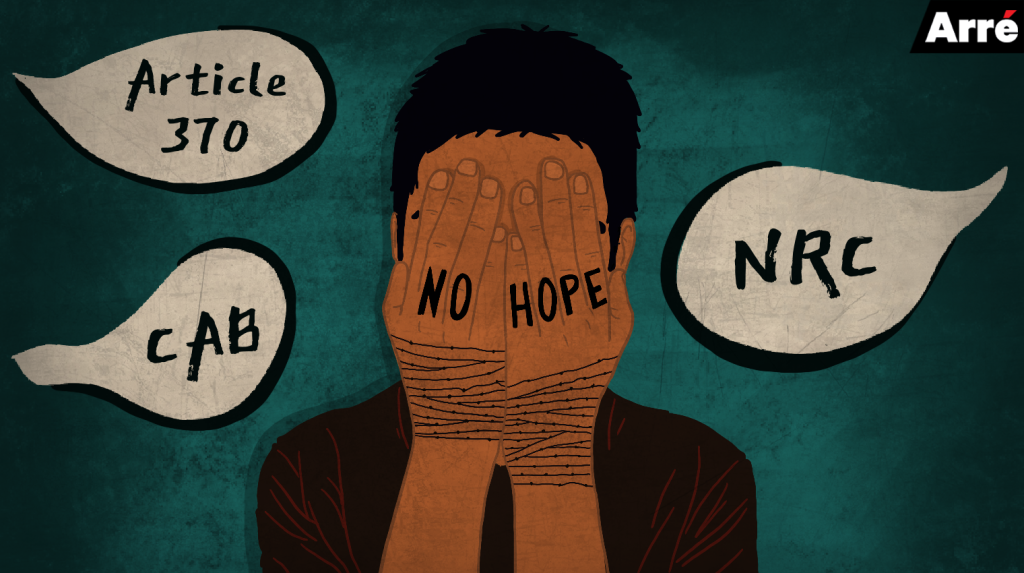
And it’s not the ever-complaining liberal who is flustered. Anyone who argued in favour of the BJP, saying, “Let them come to power, it’ll ensure they become more centrist” should now be eating their words. Even centrists who voted for Modi & Co with the hope that he’ll put India on the path of development seem to be losing all hope with the economy in the grip of a slowdown. It’s clear that our country in 2019 is not headed toward any constructive change, and new political entrepreneurs are going to be those who realise that spin and optics are everything. We’re going to see many more Shahs, not more Atishis. Increasingly, those with a liberal mindset will realise this fight is not just dangerous but pointless. They will look out for themselves, and I refuse to blame them for it. Devoid of all that’s happening, India is still a reasonably good place to live in, earn, and entertain yourself, provided you have the privilege and increasingly, a moral vacuum. I hate myself for writing this, but the irony is that as more of us become politically aware, we will also choose to become more silent. People will increasingly say, “Hey, listen, I’m just here for my paycheque. I have no opinion on this, please let me live, here’s my Aadhaar card, BMKJ and all that, sure.” If 2019 was the year the Indian liberal lost hope, 2020 will be the year they will start losing out on the little optimism they had. While I won’t blame anyone who decides to retreat into their bubbles and gated societies, I hope we appreciate and support those who do have the stomach for a bigger fight. It might not be on the streets, but it could simply be monetary support. There are lawyers. Fact-checking publications. Actual reporters. All potentially risking careers and lives by fighting the good fight. Giving them a shout-out is the least we can do. Until then, all that we so-called liberals can do, as the tension engulfs Assam over the Citizenship Bill and with the NRC soon being rolled out in the rest of India, is to resign ourselves to the fact that we’re living through a pivotal era in the country’s history. Whether this era will eventually be looked back upon with regret or pride, is still undecided.We’re going to see many more Shahs, not more Atishis.