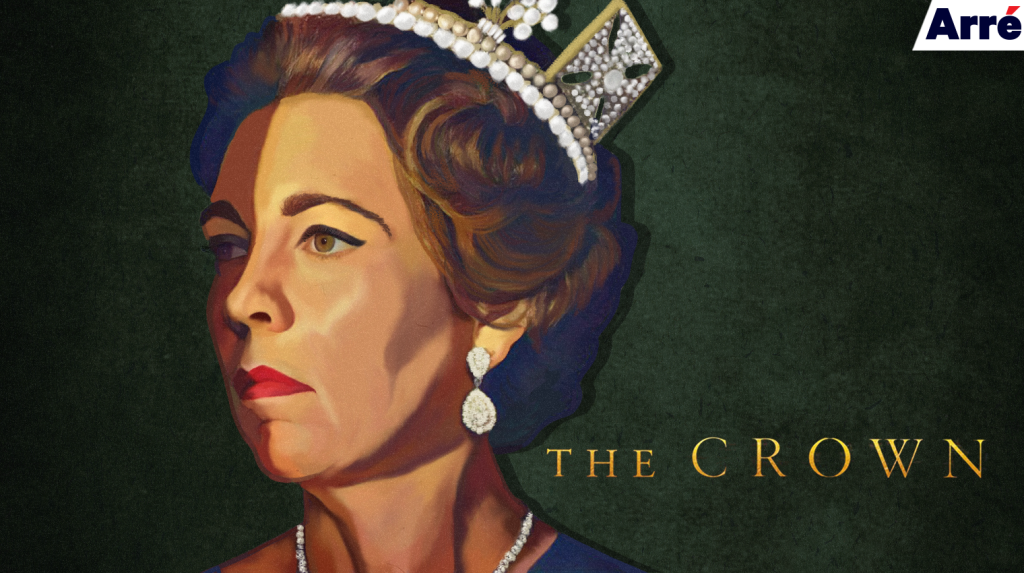

 For the first two seasons of The Crown, the Queen struggles to embrace this prospect of intellectual inertia. But the third season begins with a woman woefully accustomed to being an ideal instead of an individual. She has long sacrificed her truth at the altar of the throne. Each member of the royal household has settled into a role that should not have been theirs: Elizabeth, a simple civilian with a passion for horses and farms, is the Queen. Her sister Margaret, a born leader with a passion for people, is a trophy civilian. Her husband Philip, an alpha-male with a passion for flying and adventure, is a grounded placeholder. Her son Charles, a sensitive boy with a passion for passion, is a suppressed successor. Even her brother-in-law Antony, a photographer with a passion for peril, is a monochromatic portrait of commitment.
In that sense, The Crown tells the story of reluctant artists. Artists who must abdicate the fundamental core of art – passion – in order to lift a nation torn between the old and the new. The filmmaking of the series merges so seamlessly with its storytelling because every character is an actor by default. The cameras are always rolling, even when they’re not. The new season captures this phase, between 1964 and 1978, in which the shackled Royals are not only irrevocably immersed in a life they resent but must also battle to uphold the relevance of this life. The family has spent so long being people they are not that it has no choice but to justify its existence by being territorial about tradition. This includes a primitive gaze towards human emotion. The irrationality of love (King Edward quitting the throne to marry a divorced woman) is what put them in this position, and so love in any form – Margaret’s suitors, Charles’ romance, Philip’s ambition, Elizabeth’s parenthood – is exiled in favour of clinical functionality.
But the reason this third season manages to be so singularly evocative is not because it’s a survival story. It’s because the main survivor – despite a desensitised disposition – is at odds with the futility of her mask. Good entertainment hinges on ordinary humans trying to be great performers. But a good drama hinges on great performers yearning to be ordinary humans. Olivia Colman as Queen Elizabeth II is a heartbreakingly tender manifestation of this trait. Colman, an actress par excellence, essentially plays the role of an actress who needs to be so competent at not emoting that even a semblance of expression on her face feels like both a triumph and a tragedy. Her silence is both assertive and artful, and achieves a kind of camouflaged duality that cannot afford the privilege of self-awareness.
For the first two seasons of The Crown, the Queen struggles to embrace this prospect of intellectual inertia. But the third season begins with a woman woefully accustomed to being an ideal instead of an individual. She has long sacrificed her truth at the altar of the throne. Each member of the royal household has settled into a role that should not have been theirs: Elizabeth, a simple civilian with a passion for horses and farms, is the Queen. Her sister Margaret, a born leader with a passion for people, is a trophy civilian. Her husband Philip, an alpha-male with a passion for flying and adventure, is a grounded placeholder. Her son Charles, a sensitive boy with a passion for passion, is a suppressed successor. Even her brother-in-law Antony, a photographer with a passion for peril, is a monochromatic portrait of commitment.
In that sense, The Crown tells the story of reluctant artists. Artists who must abdicate the fundamental core of art – passion – in order to lift a nation torn between the old and the new. The filmmaking of the series merges so seamlessly with its storytelling because every character is an actor by default. The cameras are always rolling, even when they’re not. The new season captures this phase, between 1964 and 1978, in which the shackled Royals are not only irrevocably immersed in a life they resent but must also battle to uphold the relevance of this life. The family has spent so long being people they are not that it has no choice but to justify its existence by being territorial about tradition. This includes a primitive gaze towards human emotion. The irrationality of love (King Edward quitting the throne to marry a divorced woman) is what put them in this position, and so love in any form – Margaret’s suitors, Charles’ romance, Philip’s ambition, Elizabeth’s parenthood – is exiled in favour of clinical functionality.
But the reason this third season manages to be so singularly evocative is not because it’s a survival story. It’s because the main survivor – despite a desensitised disposition – is at odds with the futility of her mask. Good entertainment hinges on ordinary humans trying to be great performers. But a good drama hinges on great performers yearning to be ordinary humans. Olivia Colman as Queen Elizabeth II is a heartbreakingly tender manifestation of this trait. Colman, an actress par excellence, essentially plays the role of an actress who needs to be so competent at not emoting that even a semblance of expression on her face feels like both a triumph and a tragedy. Her silence is both assertive and artful, and achieves a kind of camouflaged duality that cannot afford the privilege of self-awareness.
In Colman’s grasp, the Queen becomes a lady that has the mind of a sheltered little girl and the soul of a stubborn old woman. Her eyes glimmer with curiosity and candour, but her gait bristles with preordained purpose. She must appear uninteresting so that her family members have the luxury of surrendering to the eccentricities of existentialism. Hence, the best episodes of the season revolve around others: Prince Charles is taught by a Welsh nationalist in The King’s Speech-ish episode six, the moon landing triggers a moving mid-life crisis for Philip in episode seven, Philip’s whimsical mother (how appropriate that someone whose history is a wonderland is named Alice) is integrated back into the palace in episode four. But the best moments of the season are owned by Colman – or the sight of Colman’s Queen erring at her job by locating her inner Elizabeth. Her weekly meetings with Prime Minister Harold Wilson unfurl like thinly veiled therapy sessions. At one point, in the wake of a national disaster, she confides in him that she had to fake tears for the cameras. She is visibly worried – have I forgotten how to feel? She has seen each of her loved ones break down over the course of the traumatic week. “Did you weep?” she asks her husband, oddly and enviously, after he returns from a mass funeral, as if a long-term prisoner were asking a visitor about the smells of freedom. For a brief but beautiful minute of selfish sadness, the Queen defies her duty so that Elizabeth can will an elusive tear to roll down the driest cheek in the world. She cries like nobody can see but everybody can watch. She cracks like someone who is forced to use death as a device to feel alive. She breaks like someone who discovers that the fourth wall cannot be broken. She feels, fleetingly, like someone who recognises how the more modern background music scoring the stories of her middle-aged self works as a metaphor for how maladjusted the monarchy is with the concept of evolution. And she looks – finally – like the Queen who once played Olivia Colman. In the lifetime of a performance.The Crown tells the story of reluctant artists. Artists who must abdicate passion in order to lift a nation torn between the old and the new.