
T
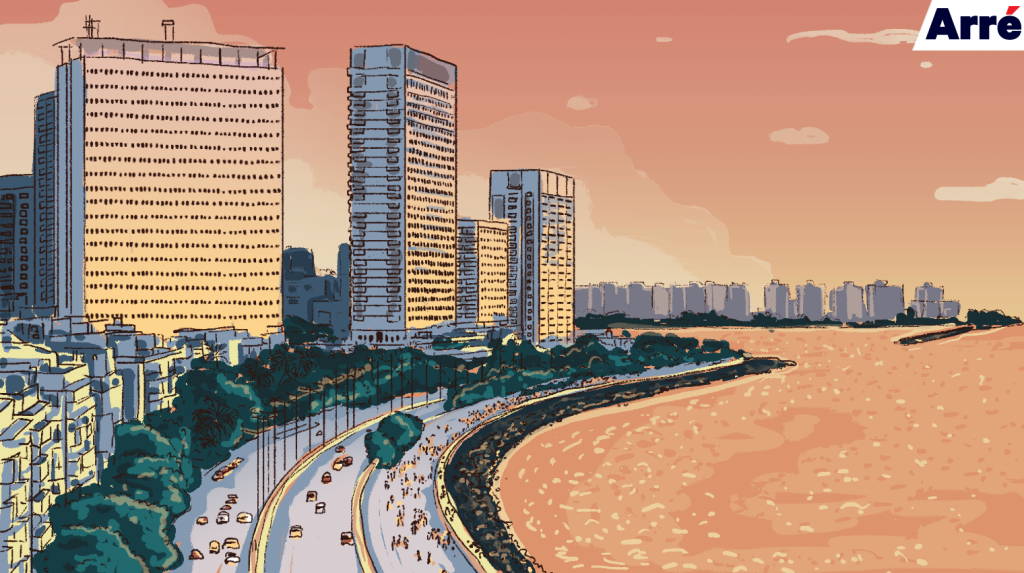
here are many flattering words that describe Mumbai’s famous Queen’s Necklace and Nariman Point: majestic, grand, and iconic all spring to mind. But four years ago in 2015, the municipal corporation made a change that seemed to rob the neighbourhood – immortalised in film, print, and song – of its glory. It was a small change, but when the BMC replaced the old, yellow, sodium vapour lamps that illuminated the stretch with white LEDs, the sea-facing precincts became more energy-efficient… but they did lose their glow.
As someone who has lived on Marine Drive their entire life, it was a depressing sight to see streets that once bathed in a luxuriant golden radiance now lit by a cold, unfeeling white light. I wasn’t alone; within a year of the change, after agitation by the Shiv Sena and citizen activists, the white LEDs were replaced with equally efficient yellow ones, and all was right with the world again. But though the Queen’s Necklace and Nariman Point getting their groove back might have felt like a return to status quo, it was just another chapter, and another change, for a district that has seen many in the years since it was willed into existence against the wishes of the Arabian Sea a century ago.
As the city has expanded on all sides, Nariman Point has found itself tucked away in a quaint corner, cut off from the maddening hustle that defines the rest of Mumbai. With the city expanding hungrily toward the north and Navi Mumbai coming up to the east, Nariman Point’s south-western address, which once made it the city’s busiest business district, now serves as a protective bubble, keeping the precinct less crowded and peaceful. The newer developments like Navi Mumbai, built with the vision of architect and civil engineer Shirish Patel, are an emblem of the city’s future, while Nariman Point remains a shining reminder to Mumbai’s glorious past. The two precincts have had varied histories, with Navi Mumbai coming into being after careful planning and foresight, while Nariman Point was fashioned over decades, after a story with many twists and turns. A video interview with Shirish Patel, carried out by Mumbai Mirror, sheds more light on Navi Mumbai and its inception, which also throws the contrasting history of Nariman Point into focus.
In this episode of the #MumbaiMirrored video series, architect and civil engineer Shirish Patel discusses his role in the construction of India’s first flyover as well as his vision for the burgeoning city of Navi Mumbai.
Video courtesy Mumbai Mirror
The Nariman Point we know is a mythologised place – a place where characters in Bollywood films come to celebrate, or have life-changing epiphanies. Real and reel imitate each other closely in this corner of the city, as you can visit Nariman Point on any given day and see hundreds of citizens, gazing out contemplatively over the water or just rejoicing in being alive in the busiest metropolis of the world. The instantly recognisable buildings, from the Air India tower to the Hilton (formerly Oberoi) Hotel, make up an indelible part of Mumbai’s skyline. This picturesque setting belies how in 1968, there were reports that the state government had allotted plots of land on 99-year leases even before they had been reclaimed from the sea. But much the same way Khurshed Nariman’s gripes against the reclamation project that led to the creation of Queen’s Necklace were forgotten because of its awe-inspiring vista, the charm of Nariman Point soon scrubbed any stench of corruption from the area. The ’70s, ’80s, and ’90s were the halcyon days of Nariman Point. Small businesses, MNCs, eateries, and entertainment establishments all sprung up thick and fast. The bubble was growing. “Nariman Point could have been considered the commercial hub, right up to the ’90s,” said Mumbai historian Deepak Rao. However, the rise of districts like Lower Parel and Bandra-Kurla Complex have seen offices shift their bases over the last two decades. “Today, the mill workers you used to see at Mahalaxmi station have been replaced by office goers,” said Rao, painting a picture of the city’s changing complexion. Perhaps when the new Metro line, which will end at neighbouring Cuffe Parade, becomes operational, the crowds might return to what once was the beating heart of the nation’s commercial capital. But even though the bustle of working Mumbaikars might have died down, Nariman Point remains the crown jewel at the end of the Queen’s Necklace. As long as no one messes with those street lights again!As the city has expanded on all sides, Nariman Point has found itself tucked away in a quaint corner, cut off from the maddening hustle that defines the rest of Mumbai.