
M
y most vivid childhood memories involve getting up at 10 am on a Saturday morning and rushing to the TV room to watch one of my favourite cartoons of all time: Scooby-Doo, Where Are You? Created by writers Joe Ruby and Ken Spears back in 1969, it was a show that sent me quivering with fear, every time Shaggy yelled “Zoinks!” to signal that the monster was on the attack. I didn’t want to look at the screen and yet I couldn’t stop myself from looking – it simultaneously scared and elated me. Sure, the show followed a formulaic arc, but that hardly stopped it from being engrossing: Velma’s glasses always got knocked off at a critical moment, Scooby could always be lured to participate in some ridiculous plan, the gang’s plan to trap criminals was always necessarily complicated and failure-prone, and the villains always complained at the end that they “would have gotten away with it if it hadn’t been for those kids and their scabby dog”.
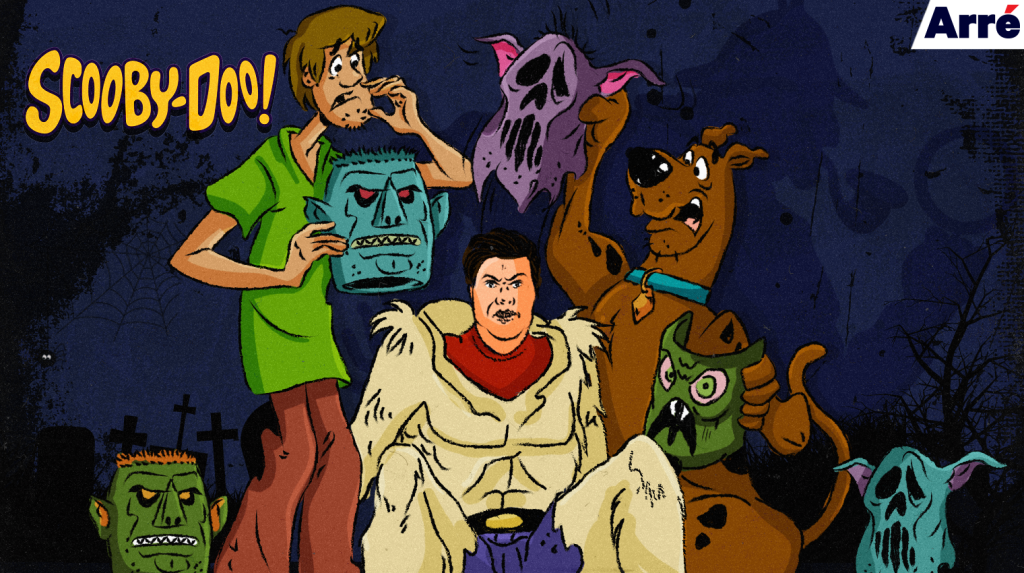
Times have changed now. I have grown up and cartoons don’t have as strong a hold on me that they used to, once upon a time. But recently on a listless afternoon, one thing led to another and I ended up revisiting the show. It’s during this rewatch that I was stuck by an epiphany. As it turns out, Scooby Doo, might have revolved around a gang of misfit teenagers and a talking dog who fooled villains with their cheap, impromptu disguises, but it wasn’t just about solving mysteries. What most of us failed to discern at the time was its subversive skepticism: a gang of teenagers debunking the superstitious beliefs of people by unveiling the masked ghosts. Now that I think of it, Scooby Doo has always been a show about the triumph of reason over superstition and credulity – about finding a rational explanation for everything.
Scooby Doo has always been a show about the triumph of reason over superstition and credulity – about finding a rational explanation for everything. Hanna-Barbera Productions
For me, Scooby-Doo then, stands as a victory of science and reason over sorcery and occultism. It’s the reason why when someone knocks on the door of my room in the middle of the night, I don’t instantly panic. I know that evil is real, that fear is real, but I also know that it’s not necessary that supernatural powers lie behind them. Only a human, just like us. At the end of each episode, Scooby-Doo made me realise that reason and curiosity will always triumph over fear. And it proved time and again, that those monsters are just the products of people who want to make us too afraid to see through their lies. It also provided a blueprint that shows exactly how to defeat them. Today, thanks to Scooby-Doo, the 10 year-old kid, who was once scared to enter the dark alleyways and feared the demons under his bed, is no longer scared to walk around alone at night.Scooby Doo proved time and again, how needless the idea of fearing the unknown really is.