
I
n
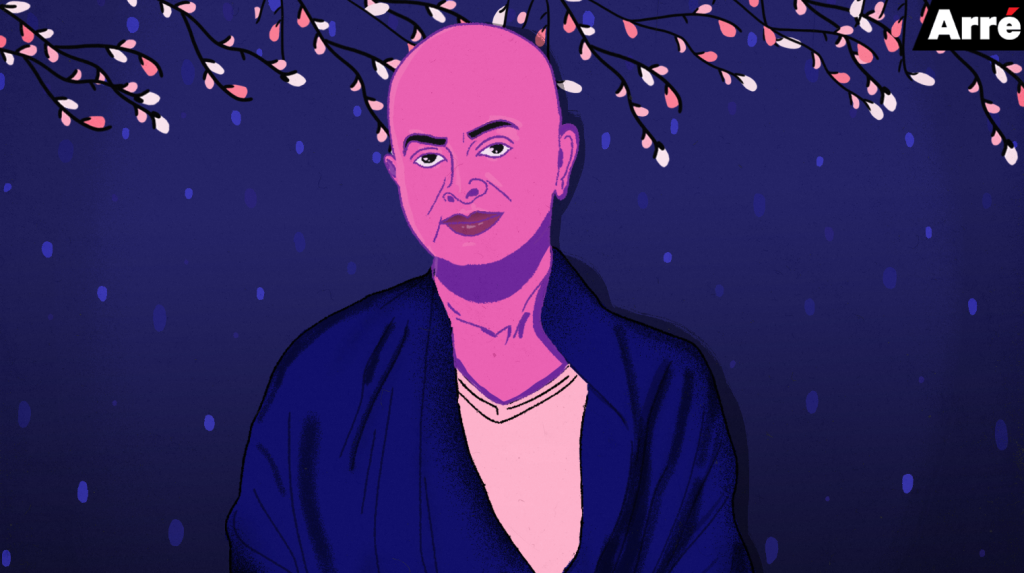
Rituparno Ghosh: Cinema, Gender and Art, Ghosh succinctly sums up the price that artistes often pay when the personal becomes political.“My city, I know, can neither handle me nor ignore me. I have indeed estranged a section of my audience. I am aware of the loss. A lot of them are wary of my cross-dressing in public! In fact, the respect I used to command has been seriously affected by my decision to proclaim my sexuality,” he confesses. Rituparno Ghosh, who died at 49 in 2013, was one of the few openly gay figures in Indian cinema, operating at a time when mainstream Bengali cinema was reduced to churning half-baked commercial potboilers. His films had recognisable themes: they revolved around the complexities of relationships, gendered desires, and the intricacies of emotion. Even though, the later films in the multi-hyphenate director’s illustrious career feel evidently informed by his own public outing as well as by the emerging narratives of sexual and gender identity in Bengal and India. But the torment of being in the closet is even detectable in some of his earlier films, including Raincoat (2004) and Noukadubi (2010), where he employed queerness from behind the scenes, invoking the metaphor of the “closet” to characterise the ways in which desire is confined and repudiated in arranged marriages. In a way, his sexuality has always been present in his films as an absent performer. Take Asukh (1999), which revolves around a father who is forced to depend on his daughter’s earnings. Rohini’s (Debashree Roy) half-lit and over-furnished room is cut-off from the world outside, metaphorically and literally becoming a “closet” in which she is entrapped in all her gloom. Similarly, in Chokher Bali, Ghosh effectively deploys the male body as a spectacle – there are several shots in which the camera affectionately captures the intimacy between Mahendra and Ashalata or Binodini and him, the film’s three leads. But it was in the last three films of his career – Kaushik Ganguly’s Arekti Premer Golpo (2010), Sanjoy Nag’s Memories in March (2011), and Chitrangada (2012), his last directorial outing – that sexuality is almost a living, breathing character. It’s worth noting that these three films were released in the backdrop of the changing scenario of LGBTQAI+ movement in India, right after the Delhi High Court read down Section 377 of the Indian Penal Code in 2009. Arekti Premer Golpo revolves around a Delhi-based transgender documentary filmmaker Abhiroop Sen and his bisexual lover, a cinematographer who wants to make a documentary on the life of the famous “jatra” actor Chapal Bhaduri. In the process, Sen comes in terms with how much of his life mirrored with that of Chapal. Chitrangada, on the other hand, focuses on Rudra Chatterjee and Partho who slowly get attracted to each other. And Memories of March tells the story of a divorced mother who comes to terms with her late son’s sexual identity.In Arekti Premer Golpo, Ghosh plays Abhiroop, the English-speaking middle-class transgender director from the metropolis who faces discrimination and mental trauma owing to his sexuality. Cinemawalla
In a country where the stigma around homosexuality has for long been perpetuated by pop culture and Bollywood, Ghosh’s films humanised queer living. He brought the “third gender” to the mainstream and gave voice to an entire community, way before it was fashionable to tick all the boxes. If not for Ghosh, gender and identity might have never gone from being “issues” to “drawing room conversations”. By giving a face to queerness and lending authenticity to the struggles of not identifying with an assigned gender, Ghosh chose to blur the lines between himself and his art. He might have not lived long enough to be an activist, but his films will continue to remain crucial expressions of his activism.In a country where the stigma around homosexuality has for long been perpetuated by pop culture and Bollywood, Ghosh’s films humanised queer living.