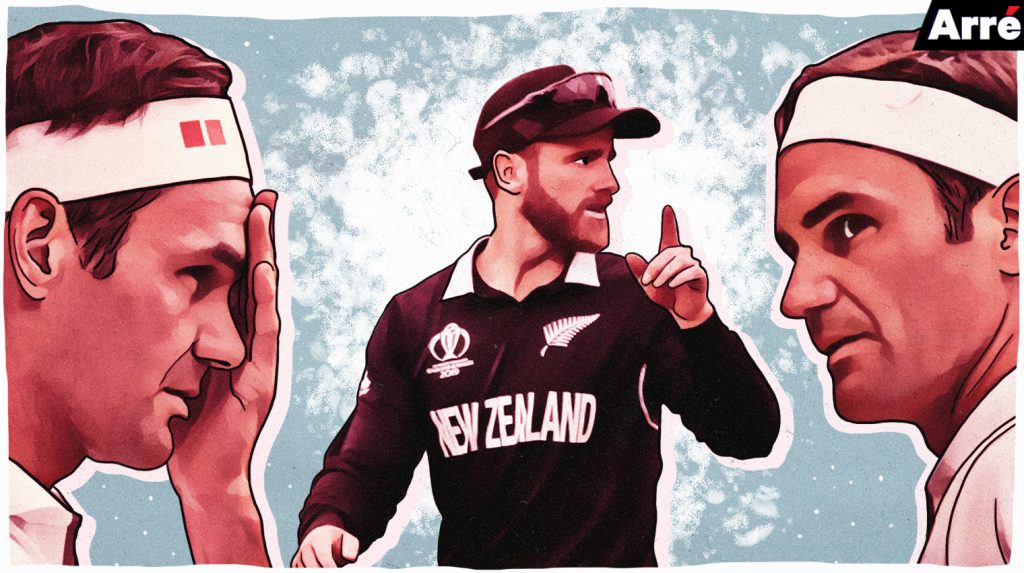

Cricket is a game of obituaries.
Every other day, a new one is written about the demise of one or the other of its formats. Test cricket has died a thousand deaths. One Day International cricket, the shortest format until T20 usurped it and sent it to sulk in a corner, has constantly been fighting for life. Even the ICC World Cup, its showpiece event, came in for criticism because it featured only nine nations. After a tepid start, the excitement picked up toward the end, but it was the final that cut human emotions into a million pieces. Until Sunday, we were mourning India’s exit from the tournament, as if it was some sort of travesty that we were robbed of a third World Cup triumph. After Sunday, we grudgingly accepted that New Zealand deserved a spot in the final more than India. The finale of the 2019 World Cup will be recounted for years and years to come. It single-handedly lifted the format and made us realise that it isn’t going anywhere just yet. It will be dissected and justifications will be sought. But it will never be comprehended. Trying to analyse it is like trying to analyse a miracle. Moments like these in sport are few and far between, when there was almost no margin between the victors and the defeated. There were certain things we learned as the match was progressing. It was as if someone was writing rules on the fly, trying their best to write a conclusion to a script that had no logical end. Did you know that if the ball ricochets off the bat and goes for a boundary, it’s four runs? I most certainly didn’t. Did you know if the Super Over ended in a tie, the side that scored more boundaries is declared the winner? That’s like going to the gates of heaven and letting your entry be decided by how many cartwheels you did in your life. The rules deciding the final seemed like rules written for a moment no one thought would ever occur on a cricket field, like terms and conditions that no one has ever read suddenly coming to life.>What if England and New Zealand shook hands after the tied Super Over, called it a day, and both teams lifted the trophy? Stu Forster-IDI/IDI via Getty Images
Roger Feder, 37 years old and raging against the dying of the light, decided to have another go at Wimbledon glory. Laurence Griffiths/Getty Images
We are drawn to sport like moths to a light bulb, because on some level, it represents the zenith of human potential and emotion. There is no extent to which one can try and engineer the rules to ensure a victor emerges at the end of it. But in sport, as in life, the goal isn’t to always have a victor. Sometimes, we just need to celebrate performances so great and let the moment of victory be shared among all the worthy competitors. All this while, we thought sport can’t exist without a winner. But two matches on a Sunday we will never forget and will go down in history as two of the greatest ever to be played in their respective sports, made us realise something else — sport can exist without a loser. In his retirement speech, a tearful André Agassi told the crowd, “The scoreboard says I have lost but it doesn’t show what I have won.” Roger Federer and Kane Williamson could have reprised those words. And truer words could not have been spoken.But in sport, as in life, the goal isn’t to always have a victor.