
T
here’s a moment in the fifth episode of Prime Video’s stirring Laakhon Mein Ek that manages to distill the extent of self-destruction that the country’s broken systems inflict on individuals.
In the episode, a distraught mother scoops up her son’s almost lifeless body in her arms and finally runs to the local government hospital, three weeks after his feverish state starts taking a turn for the worse. Her decision betrays the wishes of her jaded father-in-law, whose past is marked by the loss of a son owing to the negligence of one such hospital. “I don’t want to lose my grandson as well,” the old man offers at the beginning of the episode, scoffing at the mere idea of depending on the country’s healthcare system. So, the family continues putting the boy’s life on the line by subscribing to the village’s unspoken medical code: Relying on superstition and the local quack for cure. What is even more remarkable – and devastating – is how the writers contextualise the texture of the distrust that rural India harbours against the country’s medical system: For these villagers, even going to the hospital is both an act of rebellion and a lost cause. The boy’s life is cheap, and it isn’t an exception – his cursed fate is afterall, the story of one in a million.
It’s this thread that informs the narrative of Laakhon Mein Ek’s impeccably crafted second season, which underlines the dissonance between democratic mechanisms that are meant to serve the public and their actual capability of being saviours. Created by comedian Biswa Kalyan Rath and co-written by Rath, Hussain Haidry, and Abhishek Sengupta (who also serves as the director), the new season of Laakhon Mein Ek comes across as a rarity in the Indian landscape of fiction series. For it refuses to drag season one’s immensely resonant storyline – a searing commentary on the ruthlessness of India’s blinkered education system – to inspire the second season. In doing so, the series effectively strays away from limiting its vision; instead, it crafts a completely new universe that acts as a companion piece and not a middling sequel.
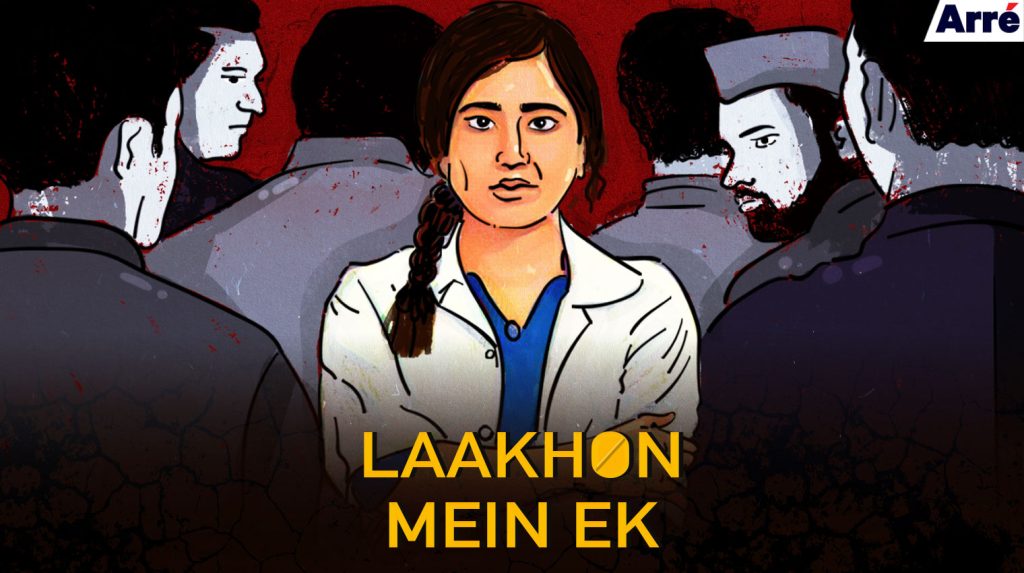
It’s a move that guarantees that the new season of Laakhon Mein Ek has the freedom to adapt life itself: The tightly edited eight-episode series (probably the only recent show whose plot doesn’t feel like it overstays its welcome) follows Dr Shreya Pathare (Shweta Tripathi), a sincere junior doctor who is learning the ropes at a modest district hospital. Soon, an accidental breach of boundaries leads to Shreya being chosen to organise a cataract camp in Sitlapur, a sleepy Maharashtrian village. But because her one-month assignment exists to primarily fulfill vapid electoral promises, it becomes both a responsibility and a punishment. The makers underline Shreya’s predicament with clever montages that lend purpose to her routine domesticity, whether it is her uncomplicated craving for the canteen samosa and pakora or her uncensored nightly rants.
Tripathi, an evocative actress – consistently misspent in roles that do little justice to her talent – brings out this dichotomy through her informed body language. From the minute she reaches Sitlapur – wearing a saree, no less – Shreya remains aware of the battles she can afford to pick: Despite her throroughness as a doctor, she instinctively lowers her eyes while facing the villagers or her male senior, as if resigned to the fact that her idealism will inevitably have to take a backseat. And in the latter half of the show, the actress contrasts that hesitation with a brand of aggression that most women who are routinely taken less seriously than men in their profession often internalise. And yet, she feels like a female protagonist who isn’t curated to just make a grand statement, for even the gendered specificity of her conflicts – like worrying about a clean washroom – is rooted to reality.
Just like the rookie Newton Kumar in Amit Masurkar’s Newton, Shreya, the show’s proverbial underdog, operates on the assumption that her idealism can counter the constraints of reality. And like Newton, even the show is concerned with highlighting the distance between an underdog and a victim. Yet where Laakhon Mein Ek differs from Newton is that it doesn’t outrightly villianise the flawed system. Instead, Laakhon Mein Ek humanises the disillusionment that contributes to its exploitation: It instantly distinguishes the series from routine underdog tales that isolates the hero’s triumph from the system that is designed to delay it.
Shweta Tripathi’s informed body language enlivens the universe of Laakhon Mein Ek. Image credit: Amazon Prime Video