
I
n 2019, Bollywood gave us one of its most innovative films ever: Gully Boy. The Zoya Akhtar film explores the seething underbelly of Mumbai’s grassroots rap scene. It’s a film that doesn’t inhabit the upper-class, slightly dysfunctional world her previous films have, but in many ways this story of ambition and self-esteem might be very close to her first film – which completes 12 years today.
For many of us, Luck By Chance was Akhtar’s finest work, a subtle drama exploring the meaning of ambition and happiness in the film industry, before she internalised the need for conventional happy endings and (at least) a small degree of formulaic storytelling. Ten years ago, as now, Luck By Chance remains path-breaking, but in a quiet, understated way. Its popularity has only grown, mostly through word of mouth – first, on Torrents (remember those?) and then on online streaming platforms.
Today, Luck By Chance enjoys a cult status and gets better with every viewing, because it is rare to find a film this self-aware about the film industry. It looks inward like no film ever has before, and examines what makes the industry tick – from its film families and producers, to the underpaid crew members, to the thousands of struggling actors with no connections whose headshots often languish at the bottom of a pile somewhere, forgotten.
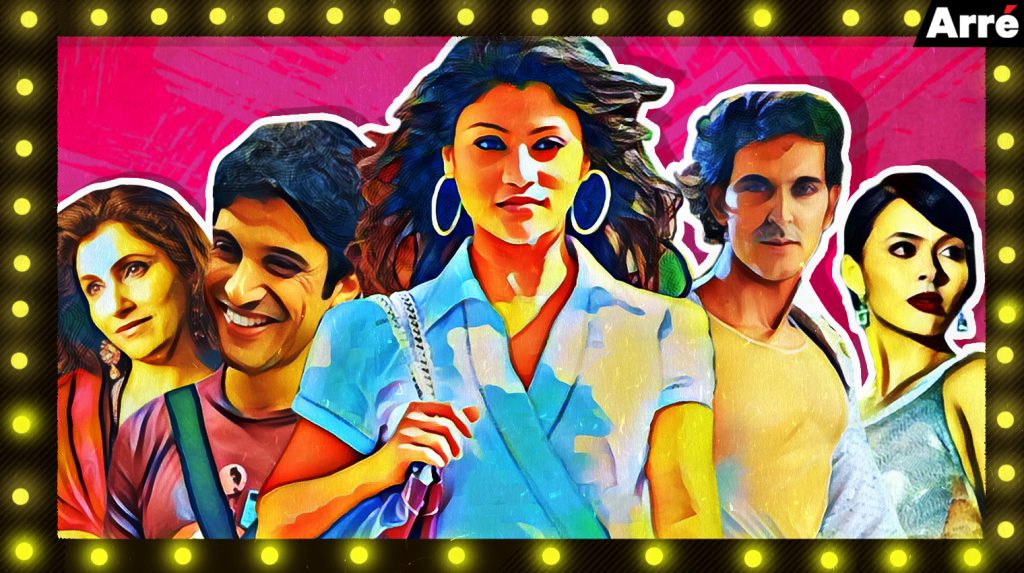
While both the leads deliver fine performances, the film belongs as much to them as to the rest of the large ensemble cast.
One of the things that stands out for me, is the humour with which the film views the constant seeking of self-interest by everyone in the industry. It sees hypocrisy and vanity through an indulgent lens, rather than judgment. It smiles when a film shoot is moved to Ooty from Europe when the big-budget star is replaced by a “new face”, as Rishi Kapoor declares him a “vulcano of talent” over and over to a befuddled reporter even though he wasn’t his choice. Vikram personifies this pursuit of ruthless self-interest, a part of his character that ensures both his professional success and personal failures. Well before Kangana Ranaut put it under the spotlight, nepotism was already a recurrent theme in the film. Zoya and Farhan are both from a prominent film family, as are many of the actors in the film – yet thankfully, the film doesn’t try to excuse or justify it, merely presenting facts as facts. Isha Sharvani’s opening scene (where she narrates how she was offered a massive break because the producer called her mother) is eerily close to Jahnvi Kapoor’s narration last year of how she was picked for Dhadak. And Sona’s annoyance at this narration – which she watches while eating Maggi in a one-room house with a broken fridge – is palpable. Luck By Chance looks at nepotism as a fact of the industry – as normal as junior artistes getting no attention whatsoever, as common as sexual harassment, as routine as the stuntmen who die on set. And it isn’t going away anytime soon either, the film says; a new face might get a break because the star dropped out (as Karan Johar expounds), but usually when a producer goes looking to cast a new hero, he speaks to a Bachchan, a Kapoor, a Khanna, an Oberoi.Zoya and Farhan are both from a prominent film family, as are many of the actors in the film – yet thankfully, the film doesn’t try to excuse or justify it, merely presenting facts as facts.

One of the things that stand out is the humour with which the film views the constant seeking of self-interest by everyone in the industry.