
T
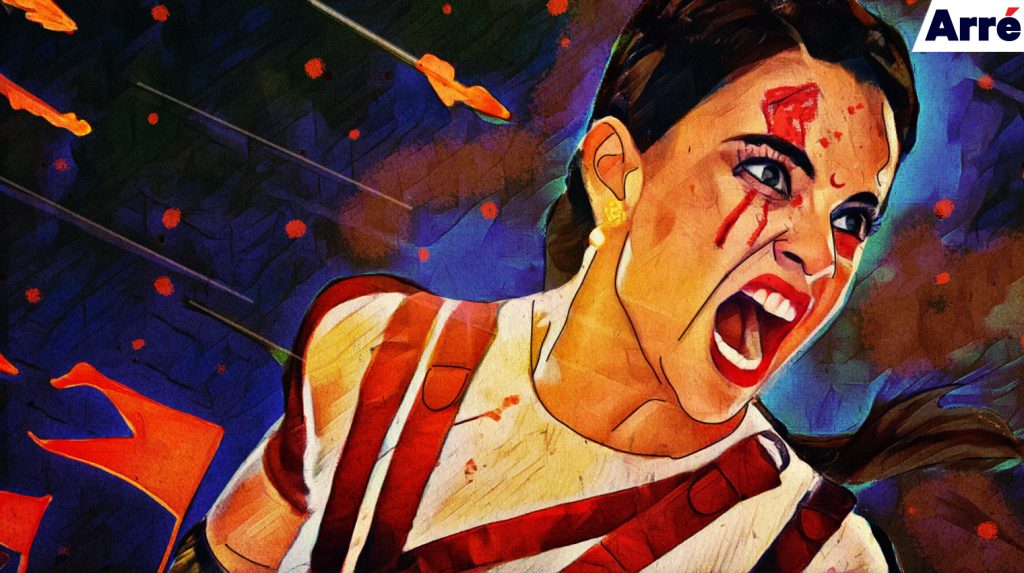
he thing about a movie like Manikarnika: The Queen of Jhansi, or any biopic on the life of a celebrated freedom fighter is, you already have an audience eager and willing to like the film — even at the cost of overlooking obvious inaccuracies in the screenplay for the sake of dramatic effect and turning the other way when the desh bhakti sentiment is unabashedly dialled up. It’s tough to mess up a film when you have so much going for it — Kiran Deohans and Gnana Shekar VS’ cinematography is hauntingly beautiful; Nick Powell’s action direction is purposeful, precise and thrilling; and Kangana Ranaut’s body language (if not dialogue delivery) is urgent, unyielding, and on point. And yet, Manikarnika somehow manages the task… Somewhat. I came away from the two-hour-28-minute saga about the young warrior queen and her heroic exploits on the battlefield in 1857 and 1858 against the British only fleetingly impressed — the overarching sentiment was that of disappointment, and the vague feeling of having just sat through a long, oversimplified, un-nuanced retelling of one of the most important chapters in India’s freedom struggle. If after watching an entire full-length film about a person your knowledge and understanding about said person is exactly the same as what it was after you spent 10 minutes memorising the highlights of her life for a history exam in school, the makers have a problem. There’s no delicate way of saying this — the person that directors Radha Krishna Jagarlamudi and Kangana Ranaut’s Manikarnika lets down most spectacularly is Rani Laxmibai, the legendary queen of Jhansi, herself. It’s a pity really, given that in the hands of a more exacting scriptwriter Manikarnika had enough potential to elevate it from the ranks of a good-looking war drama to a biopic for the ages. After all, in a sea of men who martyred themselves for the nation, how many feminist queens has history done justice to? The film opens with Amitabh Bachchan’s gravelly voice giving us some context about the circumstances of the birth of Manikarnika (Laxmibai’s name before she was married). Within minutes, the film moves on to forced, often exaggerated, scenarios to establish Manikarnika’s fearless and free-spirited nature. Within the first few minutes alone, we watch Kangana Ranaut take on a ferocious tiger as villagers look on nervously from behind a wall. Next we are subjected to a long fencing sequence where she mock fights three men, including the brave Tatya Tope — played with restraint by a tragically under-used Atul Kulkarni — to confirm her superior sword-fighting skills. She gets noticed by a minister from the royal court of Jhansi, who quickly proceeds to arrange a match between Manikarnika and King Gangadhar Newalkar, the Maharaja of Jhansi.Rani Laxmibai’s valour doesn’t need crutches or hammy plot devices; what it needed was a richness of detail that has eluded the stories of women warriors in history.The first half of the film deals with Manikarnika’s marriage and renaming as Laxmibai, the birth and death of her son, the adoption of a cousin’s son, and the death of her husband. The second half is dedicated to her ouster from the palace under the Doctrine of Lapse that rejected an adopted son’s claim to the throne, the subsequent siege of Jhansi, and the bloody battles she fought in Jhansi and Gwalior in 1857 and 1858.

The first half of the film deals with Manikarnika’s marriage and renaming as Laxmibai, the birth and death of her son, the adoption of a cousin’s son, and the death of her husband.
Image Credit: Zee Studios

The overdone theatrics could have been ignored if the movie had been about a lesser hero.
Image Credit: Zee Studios