
Out of context, the name Manoj Nelliyattu might sound like the clickety-clack of a keyboard in Silicon Valley, churning out lines of code for the next big disruptive ride-sharing app. But with the addition of the last name Shyamalan, you’re hit with a sudden jolt of realisation that feels all too similar to, shall we say, a twist ending.
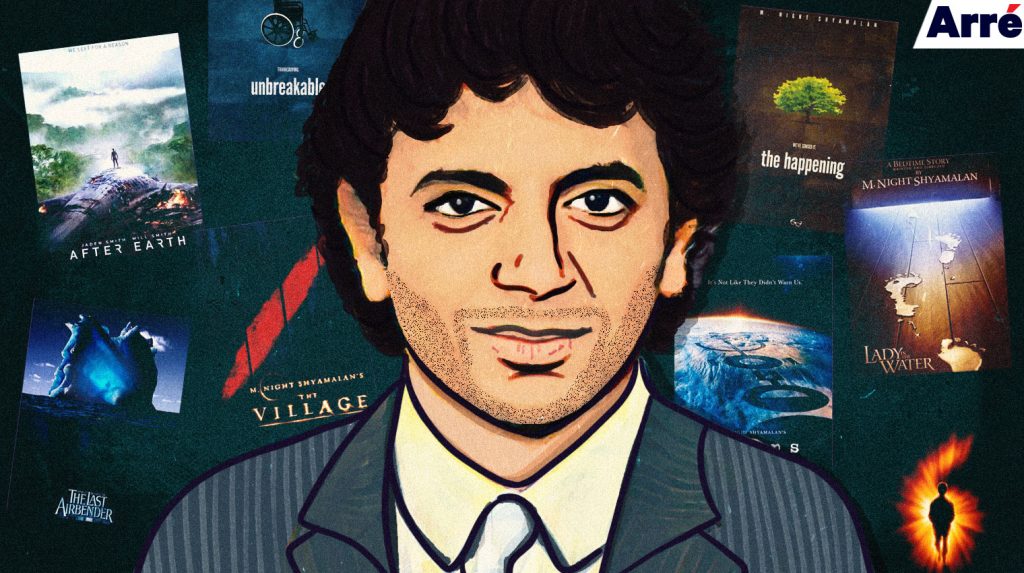
The Sixth Sense, Shyamalan’s debut feature film, offered a plot-warping mind enema of a finale that made “Kajol is the killer” look like an episode of Teletubbies, and hasn’t really been matched in the 20 years since. Back in the ’90s, endings like these were de rigueur for cash-strapped directors when the X in SFX stood for expensive, and filmmakers had to rely on ingenuity and good old storytelling to make their wares stand out. At this same time, while films like Titanic, Waterworld, and Armageddon wowed us with their 150-million-plus budgets, we now look upon them as nothing but heavily censored shells of their former selves, relegated to Sunday afternoons and Christmas movie marathons, with a viewership of exactly 10 bored housewives with broken vibrators. M Night Shyamalan can take some credit for the decline of the visually awe-inspiring but intellectually hollow blockbuster. He made The Sixth Sense in 1999, with a 40-million budget, and earned about 650 million dollars worldwide. His maiden cinematic voyage cemented him among names such as, dare I say, Steven Spielberg, as a director who could deliver big-rig, 18-wheeler blockbusters synonymous with the excess that is America, paired with serious, thought-provoking scripts. Then came Unbreakable, Shyamalan’s take on a superhero movie, and what would be, unbeknownst to us at the time, the beginning of Shyamalan’s “Eastrail 177 trilogy”. Unbreakable, more specifically its first 60 minutes, is Shyamalan’s Pietà, his magnum opus that put his visual aesthetic, refined compositional, and meticulous eye on a pedestal for the world to see, giving him serious cred as an auteur, a term you don’t hear much any more. Before we saw Stan Lee sneak in clever little cameos into Marvel films, there was Shyamalan, sneaking into his own films, as Dr Hill in The Sixth Sense and Ray Reddy in Signs. The latter, some argue, was also the beginning of his downward spiral.At this point in his career, the scorn of critics is Shyamalan’s cross to bear, and there will be some who argue that he’s certainly earned it.Hubris is a very potent drug that sometimes makes you see, do and say things you normally wouldn’t. With Signs it was evident Shyamalan was freebasing hubris with aplomb. A movie about aliens who didn’t do their research and were defeated after playing Holi with Mel Gibson and Joaquin Phoenix was followed by The Village, which is what happens when you mix magic mushrooms and hubris. The Lady in the Water and The Last Airbender sealed his fate and robbed him of all the good Hollywood karma he accrued with Signs and Unbreakable. It got so bad that Walt Disney Studios parted ways with the director. Shyamalan was discounted as a has-been, with people forgetting that everyone from Alfred Hitchcock to Christopher Nolan have had slumps.

Blumhouse Productions