
A
round the time that Narendra Modi, the Prime Minister of the biggest democracy in the world mistook gender inequality as a marker of “tradition” in the year’s definitive interview, women in Kerala decided to point out the irony. Almost five million women lined up on the streets across national highways in Kerala, from Thiruvananthapuram to the northern district of Kasaragod to form a 620-km human wall.
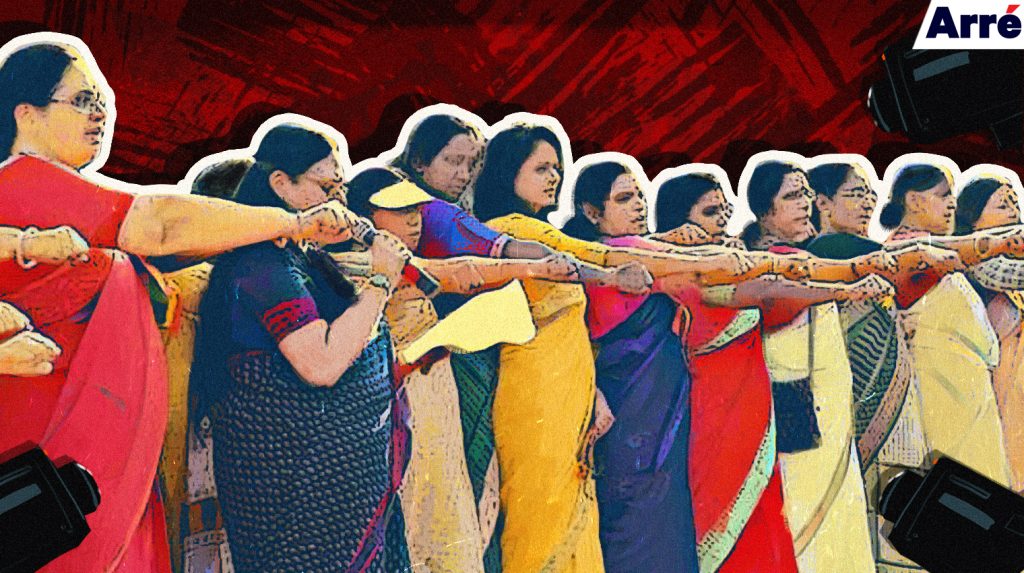
Around 4 pm on the first day of this new year, women from different walks of life – homemakers, women in hijabs, students, middle-aged women, teachers, farm labourers, doctors, actors, lawyers, and transwomen– stood holding hands for 15 minutes in a historic display of protest against India’s patriarchal culture. A culture that still bars the entry of women into a temple despite a Supreme Court order. A culture that encourages violent protests and shutdowns in the state. A culture endorsed by India’s Prime Minister.
The lakhs of participants also took a pledge at the event, which read, “Kerala was once called a lunatic asylum. Today it’s known as God’s own country thanks to the social reformation movements. Orthodoxy had always stood against our surge towards a progressive society. But we had thwarted their plans.” And in some parts of the state, men too formed a human chain on the opposite side of the road in a display of solidarity.
The Communist Party of India (Marxist) leader Brinda Karat termed the state-sponsored Vanitha Mathil (Women’s Wall) as a resistance against “the dark forces that want to push women back into the dark ages”. Presumably, the wall was a response to the BJP-backed “Ayyappa Jyothi” event, where right-wing supporters formed a chain to protest against the Supreme Court’s Sabarimala verdict that lifted the temple’s age-old ban on women.
The sea of women who came out to demand equality resulted in the fourth largest human chain ever, one of the oldest peaceful forms of protest. It’s also touted as the arrival of a new brand of progressive and feminist politics in Kerala, backed by leaders from political parties, socio-political organisations, and ordinary people.
The sea of women who came out to demand equality resulted in the fourth largest human chain ever, one of the oldest peaceful forms of protest. Getty Images