
I
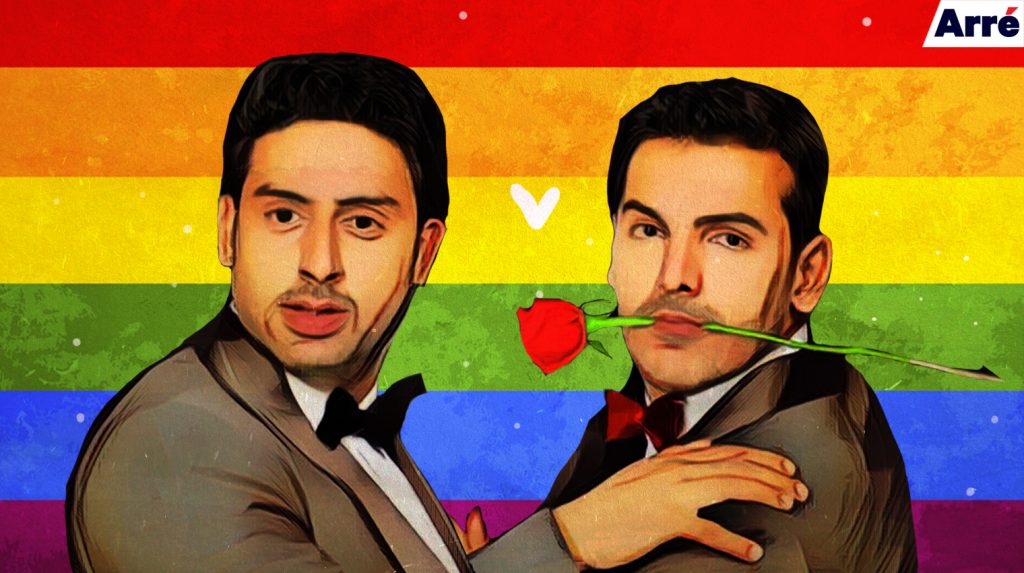
Despite the obvious flaws of the overarching narrative, both Abraham and Bachchan, as actors, display none of the film’s anxiety over sexuality.With Dostana, producer Karan Johar, costume designers Manish Malhotra and Aki Narula, went on to define both the fashion sensibilities of the decade, and the mantra of the LGBT community: sexy, fabulous, and deeply individual. Despite being very much an item song, “Desi Girl”, with its instantly clockable silver sari, was not designed solely for straight male moviegoers. Instead, it was a joyful celebration of Indian womanhood. And then there was the equal-opportunity thirst trap: an impossibly buff John Abraham, emerging godlike from the sea in minuscule yellow trunks. Similarly, Abhishek Bachchan’s floral shirt-and-scarf combo felt true to his character, serving as a symbol of self-expression that went beyond Bollywood’s usual machismo. Despite the obvious flaws of the overarching narrative, both Abraham and Bachchan, as actors, display none of the film’s anxiety over sexuality. Instead, they slip comfortably into homoerotic scenes. Even Kirron Kher’s character, the most obvious representative of society’s homophobia, exists only to be talked into acceptance by Neha. In a country where, only a decade prior, Deepa Mehta’s Fire, about a lesbian romance within a middle-class joint family, was rioted out of theatres, perhaps Dostana was the baby step we needed. With its theme of LGBT acceptance and its nods to gay culture that only those in the know would appreciate, even 12 years on, Dostana is one of the few Bollywood films that’s not just for “the straights”. Yes, it hasn’t aged well – but have you tried watching Student of the Year?