
A
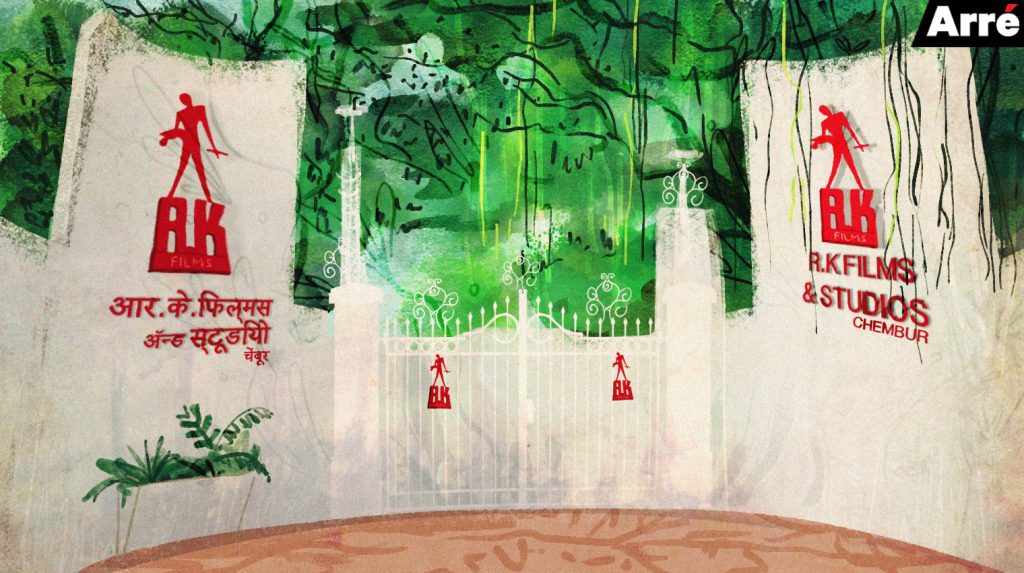
s the city geared up to welcome Lord Ganesh last year, the announcement about the sale of the famed RK Studios kept ringing in my mind. As one icon of the city made his annual return, the other would leave – forever. I walked inside the red-and-white gates of RK Studios for the first time on an afternoon in September 2006. There was immense excitement in the air as the Kapoors were getting ready for their annual Ganpati celebrations. For me, it was all new; as new as the frenzied coverage of Ganesh festival that had just begun gripping the imagination of TV channel editors sitting in Delhi. And as a young reporter, all of 22, sneaking inside spaces you were not invited to, was like sugar rush. In this case, sugar was venturing into a small-ish room with a lot of “samaan”. This samaan – when the guard broke for chai – turned out to be a joker mask – the legendary one worn by Raj Kapoor in Mera Naam Joker and a few other clothes. I later learnt those were the precious costumes worn by Nargis and Padmini in several RK productions. Even then, I wondered why all of this was just dumped together in a musty room, instead of being preserved like the precious artefacts they were. Those thoughts soon dissolved in the loud sounds of the aarti and hysteria from the assignment desk demanding footage upload. This was followed by a spectacular visarjan procession, where all three senior Kapoors – Randhir, Rajeev, and Rishi – danced their way to the immersion venue, something of a Kapoor tradition. The dhols, manjiras, and the sheer energy of the aam janata always made these yatras such a delight to watch and cover.There’s been a lot of chatter about what the Kapoors could have done to preserve Raj Kapoor’s legacy – maybe, by opening a part of the studio complex to the public and arranging regular guided tours.But today, as the iconic RK Studios makes way for apartments and retail space, I wonder if the boisterous visarjan yatras had become more relevant than the studio itself. If the place had become a mere emblem of the days gone by, like the faded paint on an old sign, instead of a living, breathing entity. By the Kapoor family’s own admission, the studio business had been suffering for years now, with only a few TV shows being shot there. Unlike a Film City or a Filmalaya, shouldn’t RK Studios have meant more to people who make and consume cinema? Built by Raj Kapoor, the man labelled the Showman of India, barely a year after India embraced its Independence, and witness to the production of films like Sangam, Jis Desh Mein Ganga Behti Hai, Mera Naam Joker, and Satyam Shivam Sundaram, RK Studios is what we like to call an institution. An institution that was born in the State of Bombay and went on to become the pride of Maharashtra. It’s a revered slice of cinema history. Could we not have treated it better? Given it a new lease on life, possibly as a contemporary cinema history museum? Until the dastardly fire that broke out last year, RK Studios was a treasure trove of cinema memorabilia. Costumes of almost every RK film right from Nargis’ Aag (1948) to Aishwarya Rai Bachchan’s Aa Ab Laut Chalen (1999), jewellery, furniture, props from various films, like the piano from Awara, were all preserved as memories. A lot of these were charred in the fire, but we have a precedent in Hollywood’s Universal Studios.

The spectacular visarjan procession, where all three senior Kapoors – Randhir, Rajeev, and Rishi – dance their way to the immersion venue from RK Studios, is something of a Kapoor tradition.
Image Credit: Vikas Khot/Hindustan Times via Getty Images