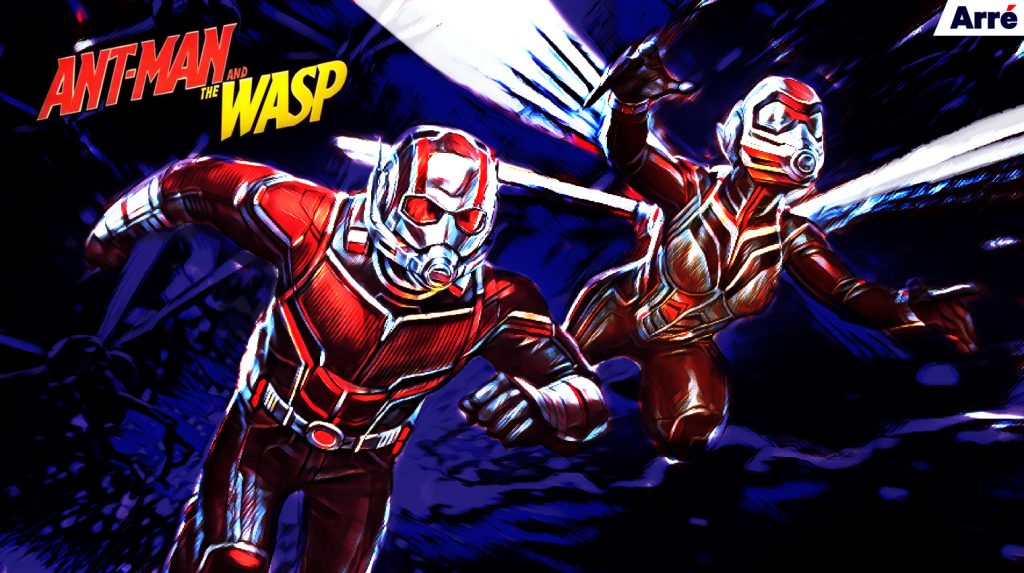

A
nt-Man and the Wasp is Marvel’s first Avenger offering after the bleak Infinity War, a movie that didn’t just shatter countless box-office records, but also all our hearts. For a franchise whose memoir could be Genocide (And Other Existential Crises), the frothy Ant-Man and the Wasp provides its fans some much-needed respite. Scott Lang/Ant-Man is perhaps the only remaining Avenger who we can turn to for some casual, irreverent fun where no one dies. The film’s second installment features predictably rock-solid performances (Michael Douglas, Randall Park, Michelle Pfeiffer) and the introduction of a fantastically spooky baddie, Ghost (Hannah John-Kamen). Besides, is it possible to not like the ever-enjoyable Paul Rudd? But the reason I was looking forward to Ant-Man and the Wasp was to witness the transformation of Hope Pym (Evangeline Lilly) into the Wasp. Ending 10 years of speculation over Black Widow and Scarlet Witch, Marvel had at last zeroed in on a headlining superheroine in Wasp: the perfect no-nonsense foil to Ant-Man’s wisecracking charm offensive. In the film’s first edition, we’d seen Hope van Dyne — who refuses to use her father’s last name — betray him before joining forces with Scott. Her return to the family fold set up the kind of compelling, complex hero journey that Marvel does so well, but it’s the emotional heft I was looking forward to. I couldn’t be any more disappointed. From its very beginning, the film advertises Hope as a much better superhero than Scott: She punches faster and kicks harder, transforming from life-size to wasp aided by stunning effects. She’s the superior driver, serving up some enthralling chase scenes with her F1-level skills, a brilliant quantum physicist and inventor in a plot that – what is now a Marvel Universe staple – relies on a lot of wibbly-wobbly sci-fi where the word “quantum” is appended to everything.
As we’d learnt in Ant-Man, Hope’s singular aim was to rescue Janet van Dyne from the quantum realm where she’d been trapped decades ago.Hope proves that Marvel’s superheroines can be just as impressive and engrossing. And this film offered the studio the perfect playground to fix its infamous “woman problem”. So why does the film feel like Ant-Man and the Afterthought, rather than Ant-Man and the Wasp? In the last decade, we’ve all been acquainted with the makings of a Marvel hero and have been emotionally invested in their personal lives: Whether it’s Bruce Banner’s perpetual struggle against his uncontrollable Hulk self or Tony Stark coming to terms with a trigger-happy government. It’s here that Ant Man and the Wasp fails. Hope never gets the heroic treatment that Marvel has consistently set for its male players, leaving Hope little room to be anything except a plot device. It makes the film’s claims to reset the gender dynamic look like a promotional facade.

It takes an ample amount of audaciousness to breathe a female character into a film only to shut down criticism of the franchise’s sexist treatment of women.
Image Credits: bcheights