
A
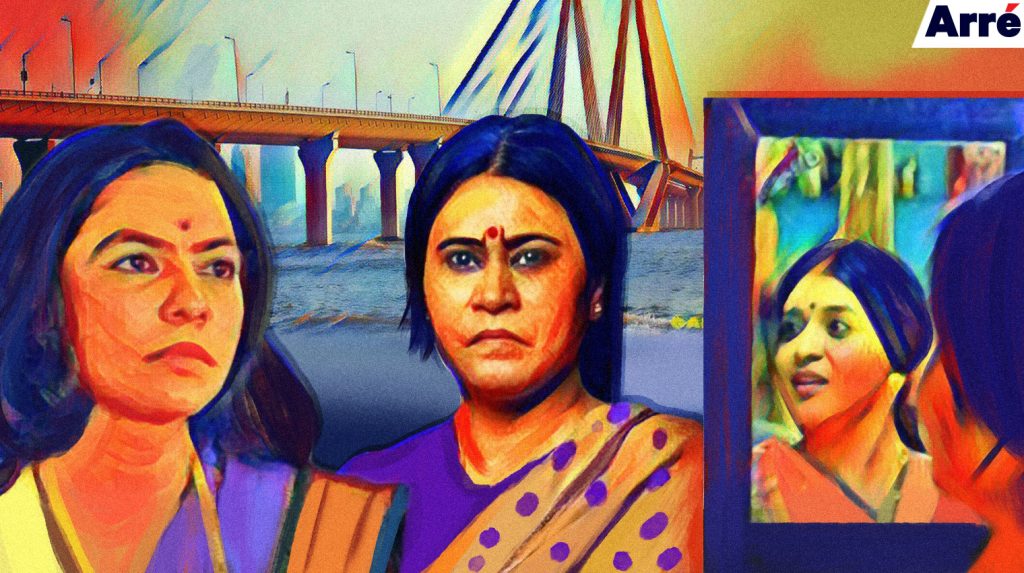
tiny scene featuring secondary characters in episode four of Sacred Games, is an excellent demonstration of Shakti, the divine feminine energy, according to Hindu mythology. Bada Badariya and Bunty, gangster Ganesh Gaitonde’s men on opposite sides of the Hindu-Muslim divide, get into a communally charged scuffle in Kanta Bai’s adda. Right before the whole thing escalates into a bloodbath, we see Kanta Bai hurl a handi of hot water at the hot-headed belligerents. Shocked beyond belief and with a new target to their anger, the men turn to her – she tells them she’ll pour scalding hot oil on them the next time. Bunty and Badariya, both seasoned killers with hair triggers, cower away with a look of embarrassment and shame. These are uncontrollable men with an uncontrolled appetite for violence, who slink away like timid stray puppies when she-wolf Kanta Bai bares her teeth. Cinematically speaking, few gangland experiments manage to really capture the essence of Mumbai. Netflix’s Sacred Games, Vikramaditya Motwane and Anurag Kashyap’s adaptation of the mammoth Vikram Chandra novel, is one of them. Capturing lightning in a bottle isn’t easy, especially when the lightning in question is this over-exposed but storied metropolis. And one of the key elements of this sprawling narrative, are the women of Sacred Games. Over the past few days, multiple debates have sprung up on Twitter. Users of the micro-blogging platform have called out the series’ “trans representation”, the lack of backstories of the female characters, and the fact that some of them… die. I’ve scrolled through these perspectives, but that is not the one that sticks out for me. For me, most of the women characters in Sacred Games are powerful in big and small ways, that go beyond the constraints of the narrative, the men they are surrounded by, and the time they spend on the screen.
Let’s start with the most obvious ones: RAW agent Anjali Mathur, essayed by Radhika Apte. The upper-class, no-nonsense career-focused woman holds her own in a world where the air is equal parts testosterone and oxygen. You’ll occasionally catch a glimpse of a deer caught in the headlights on her face, but she’s no Bambi. There’s the enigmatic Kukoo, the wily seductress, who holds the jewels of erstwhile Bombay’s erstwhile bad boys firmly in her grasp. She has them convinced that their power stems from some magical place between her thighs. But the ones that have me by the gullet are the women on the opposite end of the spectrum from the Anjalis and Kukoos of the world. Sacred Games’ Plain Janes, Maharashtrian women who negotiate oppressive structures with an unexpected aplomb. Kanta Bai, Subhadra, and Shalini are your typical, dyed-in-the-wool middle-class tais. Their hopes and dreams might be at the polar opposite of their more modern counterparts. But they’re no less ambitious, even if that ambition is to have a sukhi sansaar. Take Kanta Bai for instance. She is the epitome of the dheeth Maharashtrian kaaki you’ve inevitably encountered if you’ve lived in Mumbai. She manages pretty well by herself and has either lost her husband or didn’t need one to begin with. In the series, she’s the virgin Mother Mary to Gaitonde’s mobster Jesus: You see him touching her feet before killing someone. She’s also as progressive as they come, unafraid of exhorting Bunty to get his sister married to the man she loves, even though he is Muslim and Bunty a hardline Hindu.Kanta Bai, Subhadra, and Shalini are your typical, dyed-in-the-wool middle-class tais.

You can find a Shalini Katekar everywhere – in Mumbai’s slums, chawls, and tenements, managing the homesteads of a new generation of blue-collar workers.
Image credit: Sacred Games/Netflix