
“L
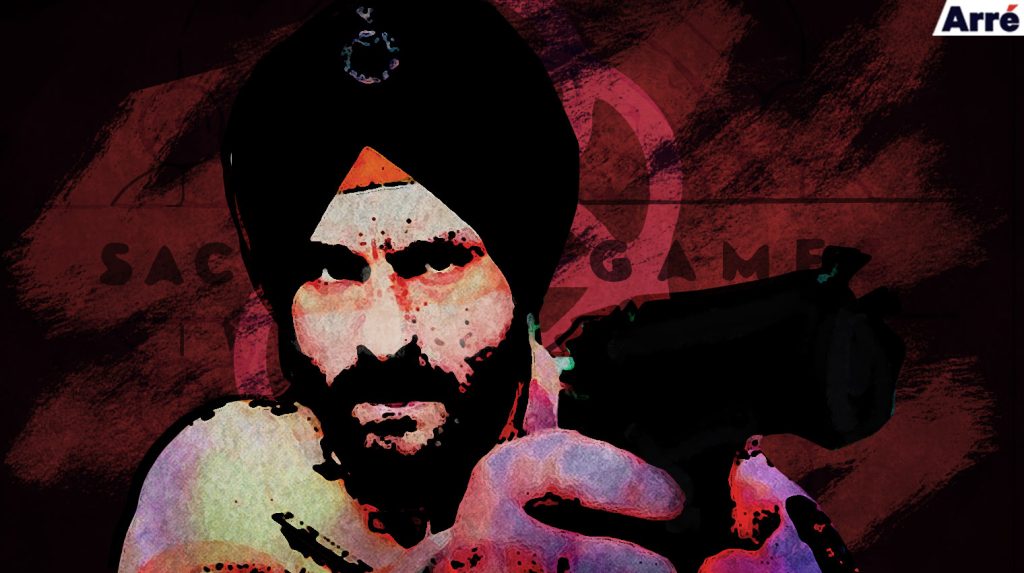
ove is a murdering gaandu,” says the taciturn sardar, hero of Vikram Chandra’s epic novel, Sacred Games. Until this line is uttered, you’ve pretty much ignored Sartaj Singh, the cop who has arrived at a home where a man has cruelly flung a pomeranian from the balcony, in the opening scene of the novel. The owner of Fluffy the pom, is the adulterous Mrs Kamala Pandey, an overly made-up woman who annoyingly calls herself the mummy of Fluffy, and who Sartaj cannot bring himself to like despite her grief. “Love is a murdering gaandu,” he says softly as he looks down at the tiny, white dead body of the dog who has become a casualty in the bitter love story of this husband and wife. But the moment he says these five words, Sartaj Singh begins to emerge, faintly but surely. This fascinating man who will carry this mammoth novel on his wholly able shoulders. Sartaj is not a new character for Chandra. We last met the turbaned police officer in the short story “Kama”, part of his collection dedicated to the city, Love and Longing in Bombay. After having delivered divorce papers to his former wife’s home, Sartaj stood on the streets, in the middle of the evening rush hour and Chandra writes, “He could feel the size of the city, its millions upon millions, its huge life and its unsolved dead… and Sartaj knew that nothing was finished.” It clearly wasn’t finished because, nine years later, Chandra brings him back to us, this time as one of the central characters of what was to become his career-defining work. Sartaj Singh is a flawed but immensely self-aware character, staggering under the weight of his own fallibility (and that of the human race). He is unquestionably the hero that Chandra offers us in Sacred Games, even though Sartaj himself seems reluctant to take up the mantle. It’s simply not his style. Sartaj Singh fits the mould of the classic hero of a police procedural, way before police procedurals had their moment under the web-series sun. The detective of a police procedural has a pattern. He is often a socially awkward, dour creature – some are downright misanthropic – with a past that inevitably bleeds into the case(s) that he is consumed by. He’s a hero alright, but he’s what you’d call a Byronic hero.
The Byronic hero is an aberration to the romantic hero, a deeply cynical, melancholic man. He exhibits a sense of disillusionment with society, born of Lord Byron’s own advanced levels of victimhood, thanks to his club foot, which imbued his heroes with the same qualities he identified with: idealism, a distaste for social institutions, dysfunction, rebelliousness… and a sweet, sweet melancholy that was immensely seductive for women. Sartaj Singh is created with spadefuls of this same sweet melancholy. A courtly, middle-aged divorced cop, who is morally compromised and who once lived off the wealth of his affluent ex-wife should not be hero material. And yet he most definitely is and by the end, all you want is to know a man like Sartaj in real life and make his world more bearable. Rarely has a Sikh hero captured our imaginations before – certainly no cerebral ones. Sikh heroes are usually imbued with overtones of excessive physicality (think Sunny Deol in Border) or used for comic relief (think of Diljit Dosanjh in his “pendu” avatar), rather than the aching vulnerability and emotional intelligence that is the hallmark of this one. Perhaps it is this subversion that has made him an enduring cult hero. All through the landscape of this massive, incredibly detailed book, Sartaj is trying to prevent a nuclear calamity, but he also has other, relatively minor cases of casual cruelty to deal with on the side – Fluffy is one of them. They are devastating on a smaller scale but you sense that it is these minor cases that sustain him through the long haul of his goal. He is a noble man, deadened by the soul-crushing work that cops have to do in this merciless city, and who have to see the worst that humanity has to offer.Sacred Games with its supremely Sikh hero and a dead gangster whispering wisdom into his ear like a modern-day Betaal, is the stuff great stories are made of.

It remains to be seen, of course, if the Netflix series will capture this intangible essence of both the book and its brooding anti-hero.
Image credit: Netflix