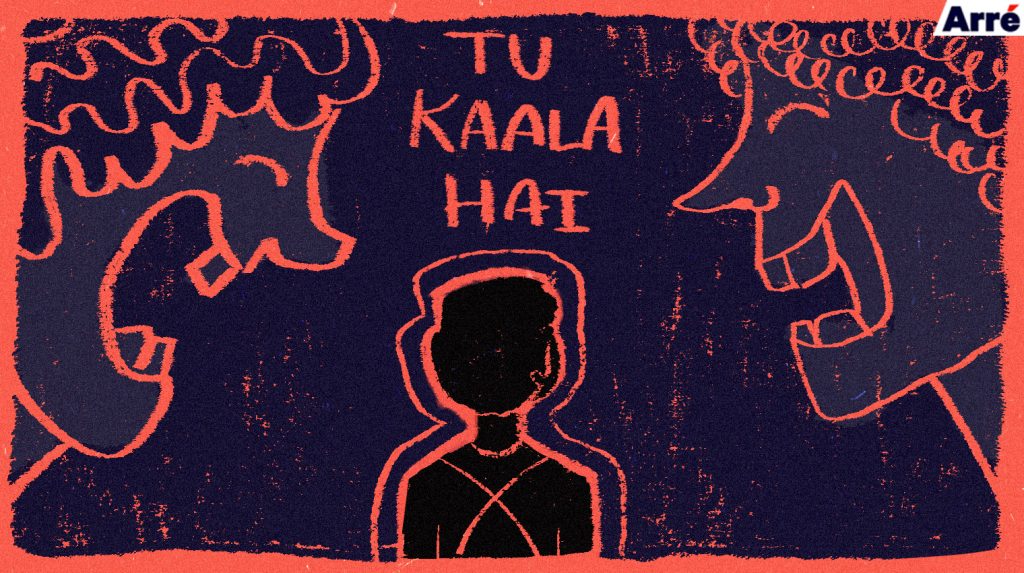

I
Even if I met a girl with whom I shared chemistry, I could never consider her a dating prospect if she were dark-skinned.It’s with a grudging self-awareness that I admit that it’s not uncommon for me to get worried if someone tells me that I have become a shade darker. I used to treat swiping on Tinder like a game of dark or fair. Even if I met a girl with whom I shared chemistry, I could never consider her a dating prospect if she were dark-skinned. Horrendous, I agree, especially when I’d periodically remind myself that I’m not the smartest or fairest man myself – and certainly not worthy of being considered date-able for holding such hideous biases. I no longer treat my dating life as a casting call for a Fair & Lovely commercial but I know I’m a work in progress – a recovering racist / colourist of sorts. It’s been a conscious effort in these last few years to ensure that such biases don’t subconsciously colour my decisions. But my family is another matter. In my household, there’s still little awareness about Gandhi’s less-than-savoury actions in South Africa. The speeches of Martin Luther King are still unheard of. Would they be happy if I got married to a dark-skinned girl someday? Or would there be conversations around how I could’ve “done better”? Sadly, such ignorance isn’t restricted to my household. In 2017, a tenth-standard student in West Bengal consumed poison and killed herself, because five prospective grooms rejected her for being dark skinned. Even foreigners have to pass the colour test. While white tourists are usually treated with great reverence, the experience of an African-origin visitor to India is greatly different. I am not sure we can continue to call it a colonial hangover – at this point, it seems like plain social stubbornness. But it’s clear that the fairness of your skin determines how fairly you are treated. Obviously, it’s not just India. According to The Atlantic, black people in the USA are less likely to get married overall, and when compared to other groups, a college-educated black woman is much less likely to marry a man with the same level of education. In a nation that battles issues like communalism and poverty, issues like racism and sexism are always tagged with the prefix “casual”. It’s brushed aside, often with the flimsy defence of “How can it be racist when we’re the same race?” No wonder, then, that we fail to see any fault in the fact that Indians spend more on fairness creams than Coca-Cola, simply because of the way they were born. We use the word “casual” to soothe our consciences, pretending that because an issue is insignificant to us, it’s insignificant to everybody. Except when the lights go out and we’re making jokes about how we can’t see people in the dark. For people like Chaitanya, this is anything but casual.