
T
here’s a pre-interval scene in Pa Ranjith’s Kaala that cements its place as the most timely socio-political film to have come out of Tamil Nadu right now.
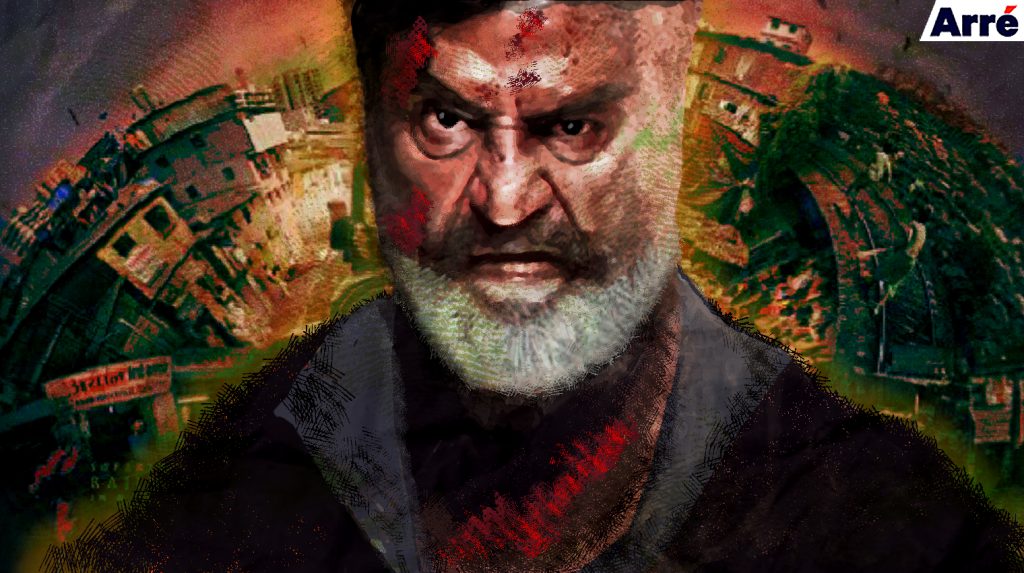
Haridev Abhayankar (Nana Patekar) aka Hari Dada is blocked by the residents of Dharavi, as he tries to leave Kaala Karikaalan’s (Rajinikanth) house. They pull carts in front of his motorcade, drop overhead lamps, and other heavy things on the way out, creating an insurmountable barricade. When they fall short of arsenal, they put to use their bodies, to close off the way. The residents unite to stop Hari Dada only because Kaala hasn’t given him permission to leave Dharavi. It’s an exceptional scene that is seemingly built up purely for style – worthy of Rajinikanth, the Superstar.
But what happens next has Pa Ranjith’s fingerprints all over it. A police officer comes to Hari Dada and asks, “Shall we open fire?” To that, Hari Dada sarcastically replies “Do you have enough bullets?” There are two things to note here: First, the question is framed in a way to imply that firing on innocent people is considered the most obvious way to clear a gathering. And second, the primary conflict for Hari Dada isn’t the human rights violation (if he does decide to give the green signal) but the lack of artillery.
This scene is an instant reminder of what unfolded in Tamil Nadu last month, when thirteen people were killed after the state police fired on protesters seeking the shutdown of a Sterlite plant in Thoothukudi.
Kaala couldn’t have released any sooner.
Kaala, Pa Ranjith’s symbolism-loaded work isn’t afraid to point fingers at the state of the nation today Image credit: Wunderbar Films
There’s more. Vemula, a member of Ambedkar Student Association, was labelled an “anti-national” when the association screened the film Muzaffarnagar Baaqi Hai, and was attacked by Akhil Bharatiya Vidyarthi Parishad (ABVP) members. Eventually, he was suspended after pressure from the central government, and soon took his life. The name of the character in Kaala who suffers this fate? Beemji. In the film, the men behind that public execution cease to matter once Kaala and Hari Dada clash head on. Similarly, in our country, these are the same men who are otherwise labelled as “fringe elements” and whose violence is casually brushed off as an anomaly. Except, Ranjith is having none of that. In Kaala, he wants you to register that there is no difference between these men and the men who protect them and asks you to label the deaths for what they are — institutional murders. It’s a powerfully evocative point to make. But, he doesn’t just stop at that. For most of the film’s first half, Hari Dada lives only on posters and banners proclaiming that he is a patriot and promising to make the state pure and clean. The parallels with Prime Minister Narendra Modi are unmissable. Kaala is where Pa Ranjith takes the Hindutva brigade head on. His Dharavi has Buddha temples and mosques while Hari Dada’s home has a statue of Krishna and holds readings of the Ramayana. Kaala is an open challenge to Hindutva from Pa Ranjith, an indictment of the burgeoning oppressive Hindu Rashtra.In Kaala, Ranjith goes a step ahead and juxtaposes human body with the one thing that it is inseparable from: the land that it stands for.