
I
n his profile in The New Yorker, Donald Glover spoke about “Trojan-horsing” his show Atlanta to FX network executives. It’s a term that’s gained popularity among writers and creators where a niche, seemingly unpopular non-viable idea is wrapped in a creamy outer layer made of popular, marketable flavours. Jenji Kohan, the creator of Orange is The New Black, used the same tactic and pitched her show around Piper, a privileged, attractive white woman who finds herself in prison: the Trojan horse to tell the stories of a diverse group of black and Latina women.
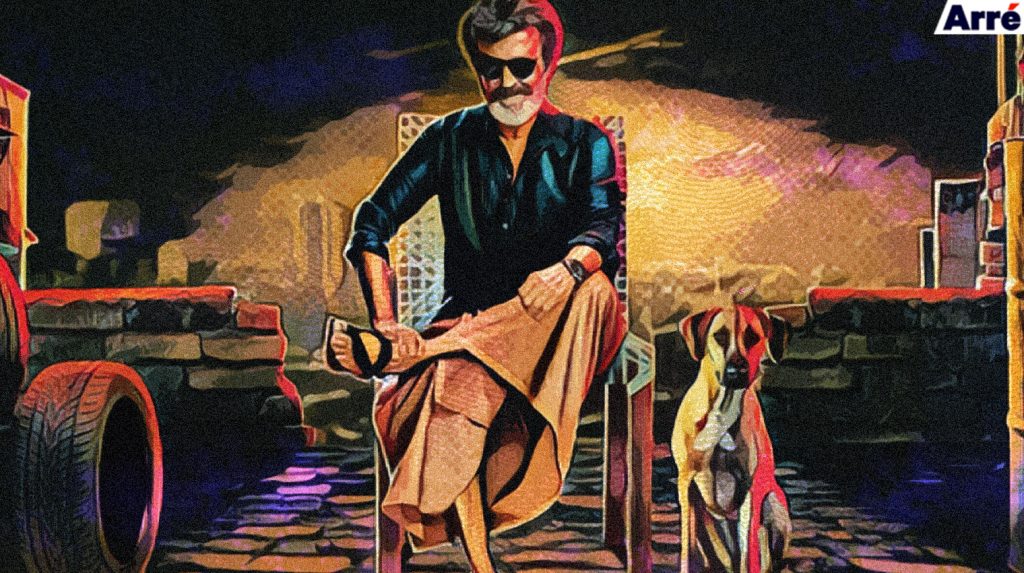
Likewise, Rajinikanth is director Pa Ranjith’s Trojan horse. A superstar that the director uses to tell stories of significance.
In the Kaala trailer, black is the colour of labour, Raavana is the saviour, and streets are spaces that must be occupied. Rajini the actor talks to a crowd of disenfranchised slum dwellers about their bodies being their only weapons and reiterating the need to occupy the streets to fight the establishment. This is a man whose words onscreen and offscreen weigh the same.
Take a look at the soundtrack of the upcoming Kaala, for instance. Nearly half of the tracks are dedicated to the lower-class; their lives, spaces and their calls for revolution. “Theruvilakku” (Streetlight), is a rousing anthem celebrating the ghetto, its unity, and aiding its citizens’ progress. It begins with an extended rap section with lyrics like “Welcome to my hood” and “Hip-hop kalaacharam inge” (Hip-hop culture here).
In Kaala, Rajini the actor talks to a crowd of disenfranchised slum dwellers about their bodies being their only weapons and reiterating the need to occupy the streets to fight the establishment. Image credit: Getty Images
When the Rajinikanth-Ranjith collaboration was announced three years ago, it felt like a course correction for the star – a chance to move away from decades of roles that celebrated sexism, misogyny, and the messiah complex. The desire to maintain Rajinikanth’s aura meant that he was reduced to the dialogues his characters uttered in films. But getting together with a progressive director like Ranjith enabled the star to use his voice to further progressive ideals. Naturally, such a figure’s political aspirations blurs the lines – between Ranjith’s Kaala and Rajinikanth, the spiritual politician. Yes, it might be cinema and yes, the character he plays onscreen is allowed to be different from the actor, the man, and the politician. But unfortunately, the timing of the film’s release has ensured a cognitive dissonance in Tamil Nadu. It’s a dichotomy that will be harder to miss with each passing day. It makes one wonder about the role that Rajinikanth is actually playing offscreen. If he is the Trojan horse for Ranjith in films, is he the Trojan horse for right-wing nationalists in the real world? The idea – a mere speculation in the recent past – has moved beyond something innocuous in recent weeks. On June 7, we’ll know the extent of one Rajini experiment – with Pa Ranjith. And, hopefully soon, we’ll unmask Rajini’s other experiment in politics. Will that end his run as Ranjith’s Trojan horse?Rajinikanth is director Pa Ranjith’s Trojan horse. A superstar that the director uses to tell stories of significance.