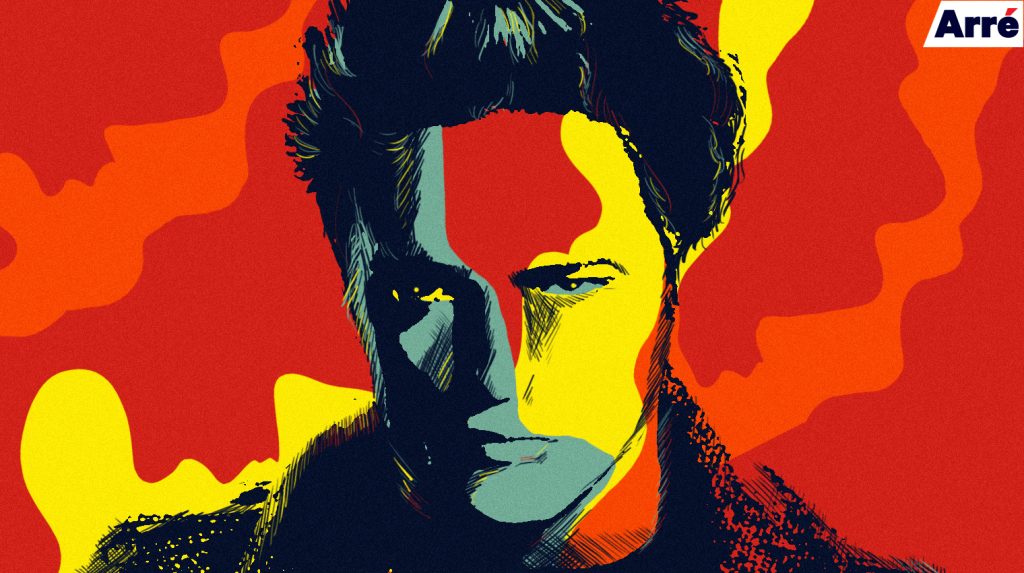

This year’s winner of the Best Actor Oscar ought to be Robert Pattinson. Except, he hasn’t even been nominated.
Tomorrow, when the ceremony begins in the wee hours, we’ll all probably guffaw to the usual delivered-as-anticipated battle between two modern giants of acting, this time in the form of Gary Oldman and Daniel Day-Lewis. Both Oldman and Day-Lewis are anachronistic, vintage models in a contemporary setting that roll along the tarmac, laying their own carpet as they go. Not setting the bar, but defining measurement in personal terms. You can’t help but be in awe of the pedigree. Compare that to a young, yet fastidious, Robert Pattinson, who is seen through the gleam of the Twilight films, those awfully stylistic idylls erected in cinema’s graveyard. The fact that you might still be wondering what performance by Pattinson was Oscar-worthy last year is testament to the fact that once you’ve sold the “good looks” charm, it is especially difficult to sell the acting chops. Even if you give the kind of swashbuckling, revelatory performance that he did last year in Good Time (2017). I admit I’m a bit of a denial-ist when it comes to acknowledging shifts, whether they occur in the outlook or in the grain of depth. It is like being unable to accept that the same raw vegetable can taste good in something else. Pattinson is the antidote to that assumption. In Good Time he hooks and drags you along for the length of the film, from the very moment he bursts on to the screen, as the ragged, off-the-street, hard-to-classify anarchist Connie.Through his dirty, unkempt hairdo, his baggy trousers, and his adrenalised speech, there is a sense of inevitability that also makes Connie the most tragic character played on film last year.Connie’s introduction is through a sequence where he barges in on a psychiatric evaluation of his brother Nick (played by director Benny Safdie) looking messy, worn yet defiant – a very un-Pattinson look and very far from the coiffed, rolled-sleeved Edward Cullen he built his reputation playing. Connie’s street-fit righteousness contrasts poignantly with his intellectually slow brother, whom he considers a personal mission to rescue from order of any kind. Connie convinces his brother to assist on a bank job; a comically simple and naive plan that he has come up with for the two of them. Obviously, it all goes downhill from there. Pattinson’s live-wire turn in Good Time – his best performance by some measure – isn’t his only notable role that can be slated along the edge of the actors’ roundtable, which Day-Lewis and Oldman basically own. Ever since Twilight, Pattinson has been on a mission to avenge his own, festishised identity as a heartthrob. And it is to his own credit, his will to outdo his reputation, that Pattinson chose to step down the ladder of stardom, go back to the grounds and work his way up to where he is today – a refreshingly, fiery young savant of aggression and rage, a thoroughly contemporary actor who is equal measure punk and sophistication, art gallery and the street. In between these opposites, he has now disappeared into several roles. Each essayed with vitality, a vernacular ease that has been a precursor to Pattinson’s greatest performance till date. A blending-in act of the highest order, the other side of which Pattinson emerges having shed the tight-skin of celebrity, and meets human vulnerability at its peak.

Pattinson’s Connie is a distinctly prickly fellow, curdling the skin every now and then with his perpetually disorienting nerviness and the consistently comical acts he tries to overcome it with.
PMC / Variety