
A
t first pass, Altered Carbon, Netflix’s latest entrant into the cyberpunk dystopian sci-fi genre looks a lot like an expensive but modest replica of Ridley Scott’s Blade Runner. But, dig deeper – ten, hour-long episodes to be precise – and the show is revealed as a clever commentary on the dystopia we could be inhabiting in the foreseeable future, touching on many fascinating issues: classism, income inequality, the nature of identity and the anxieties that accompany a digitised soul.
Created by Laeta Kalogridis, Altered Carbon, is also Netflix’s most expensive show run solely by a woman. Amid the vast and violent neon-lit science-fiction heavy world that Altered Carbon builds, lies the oldest storyline on the planet: a murder mystery. Except, it’s so much more.
Altered Carbon is what happens when Black Mirror comes to life; building a gripping world that’s as perverse as it is technologically drunk, forcing us to contemplate the very idea of what makes us human. The heart of the narrative is the show’s insistence on questioning the level to which an individual’s morality rests on him achieving his permanent end. Would his morality still be intact if death was to be a mere detour in a long immortal life where he could get away with anything?
The show is set in a futuristic version of San Francisco called Bay City in the 25th century, where technology has enabled an official form of immortality. Death is a thing of the past; people here get “resleeved” into another body after they die, and the alien technology allows them to store their consciousness in little disc-like “stacks” that are then inserted into their necks. As long as your stack is intact, it doesn’t matter how many times you’ve dropped dead or how gruesome that encounter might have been.
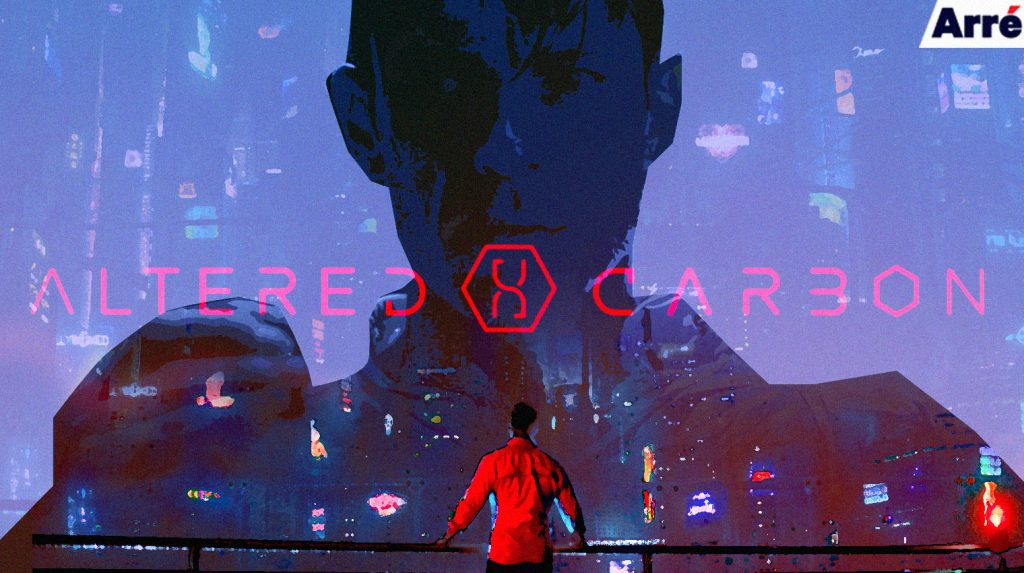
Created by Laeta Kalogridis, Altered Carbon, is Netflix’s most expensive show run solely by a woman. Image credit: Netflix
Besides being a superlative science-fiction show that goads introspection of our present, Altered Carbon is also possibly the most woke show we’ve seen in recent times. In the show, humans are shown to have broken down barriers of race, gender, and language; the narrative is comfortably multilingual as its characters are multi-ethnic. Takeshi Kovacs, the show’s lead, shifts between two bodies: He’s half-Slavic, half-Japanese but wakes up in a body of a white man almost a quarter millennium after being in cold storage. He is also surrounded by a diverse cast that includes Kristin Ortega, a Mexican police officer with a Muslim partner, and Kovacs’ former partner, a Black Envoy leader called Quell Falconer. For a sci-fi show with generous doses of technological interferences, (the sex here is obviously chemically enhanced), Altered Carbon ends up being a much-needed meditation on the cost of humanity. Now if only, that brought about some change in the dystopia we currently live in.Altered Carbon is what happens when Black Mirror comes to life; building a gripping world that’s as perverse as it is technologically drunk.