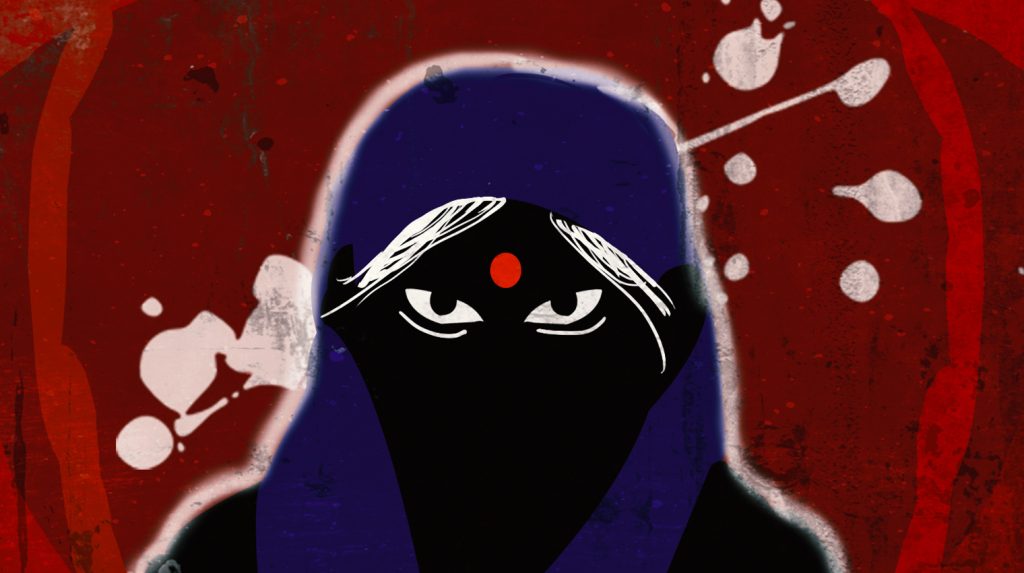

At 65 years old, a frail and arthritic grandmother (a terrific Sushama Deshpande), the eponymous lead of
Ajji, is the weakest link in her family of four. Like countless others in the country, her family occupies the lowest rung of the social ladder, living illegally in a claustrophobic slum. They’re an ordinary, hard-working family: Her son works 14 hours at a powerloom factory, her daughter-in-law cycles the whole day selling street food, and Ajji herself works as a small-time neighbourhood tailor. The only family member left untouched by the grim reality of their complete powerlessness in the social hierarchy, is Ajji’s nine-year-old bubbly granddaughter Manda. Until the night she is brutally raped, and tossed away carelessly in a ditch. Despite Manda almost instantly recognising her rapist – the son of a powerful local politician – the family is destined to find no recourse. The injustice meted out to them is as much a consequence of their social exclusion, as it is a result of the privilege enjoyed by Manda’s predator, such as having the cop investigating the rape on payroll. As Manda lies bedridden with excruciating pain, her parents are forced to embrace the only option accorded to them: Pretending that the rape didn’t happen and trying to move on. But Ajji, tending persistently to the bleeding Manda, is unwilling to accept this fate. The law might not be on their side, but Ajji is determined to ensure that Manda eventually gets justice. Ajji, Devashish Makhija’s directorial outing, is this year’s fifth rape-revenge drama, joining the ranks of the manufactured vigilantism of Kaabil, Maatr, MOM, and Bhoomi. But, unlike its predecessors, and the constraints of the genre it occupies, Ajji refuses to become a vehicle that only champions a problematic solution of self-styled vigilantism. Instead, what Ajji focuses on are the lamentable circumstances that encourage the dependence on vigilante justice.Nothing Ajji does can change the cold, hard fact that Manda will have to live her whole life with the memory of her body being battered.In the universe of these films, gory, self-styled revenge is a reaction to gross inequality and injustice. But most mainstream rape-revenge dramas casually discard the inequality to focus on a vulnerable mother, father, or a husband who simply transform into a murderous vigilante superhero overnight. It’s convenient, and it feeds the audience’s bloodlust and desire for quick resolutions. In Kaabil, the emphasis was on how a visually impaired Hrithik Roshan becomes a hero for avenging his wife’s rape that led to her suicide, the same way Raveena Tandon and Sridevi’s helpless mothers go against all odds to protect the dignity of their raped daughters in Maatr and MOM. Bhoomi, on the other hand, made no bones about the rape and revenge just being an excuse to give Sanjay Dutt a podium to exercise his acting skills after a hiatus. In all these films, not only do we see a romanticisation of lawlessness, but the rape and revenge are also reduced to supporting devices intended to induce the underdog lead’s heroic victory against monstrous offenders. Once the perpetrators have been eliminated, all is forgotten. This is where Ajji differs. The raw horror of a rape and its aftermath is imprinted in the brains of the audience.

The law might not be on their side, but Ajji is determined to ensure that Manda eventually gets justice. Image Credit: Yoodlee Films

At 65 years old, a frail and arthritic grandmother, the eponymous lead of Ajji, is the weakest link in her family of four. Image Credit: Yoodlee Films