
In my first job fresh out of college, three years ago, I sat sandwiched between two
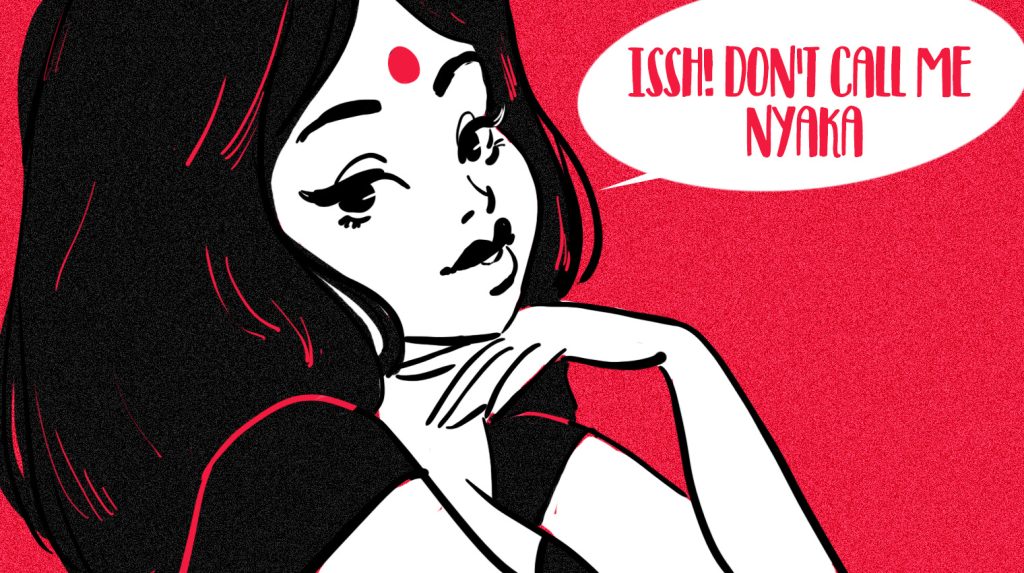
Bengali women co-workers and at an arm’s length from the third. Like countless other Bengalis, they exercised their fundamental right of launching into rapid and loud Bangla to converse with each other for most of the day, much to the disapproval of the rest of the (non-Bengali speaking) newsroom. From gossiping about long-lost college friends, giggling at the sight of Ranveer Singh’s shirtless body to opining about the significance of an aloo in biryani, and asking each other for suggestions while shopping online, this band of Bongs did it all, huddled up together in a little corner that inevitably ended up including me. All the while, never forgetting to generously accompany their communication with urgent chants of “E baba!”, “Issh”, and “O Maa!” As a probashi Bangali, living on my own in an alien city, becoming a reluctant eavesdropper to their daily bickering ended up serving as an unexpected cure to my occasional homesickness. As it turns out, there is something oddly comforting about basking in the company of your mother tongue in a setting where it doesn’t assume first preference. Their splattering of Bengali slangs – “aantel” (pseudo-intellectuals), “gobet” (dumb fool), “kyalane” (idiotic), and “pod paaka” (annoying prick) – in everyday conversations effortlessly reminded me of everything that was unique about being Bangali. It was a great time, except it came with a catch. The catch was tolerating their nyakami. Nyakami, for the uninitiated, is the art of pretend coyness, coquetry, scheming, whining, attention-seeking, and everything in between. Nyakami has been part of every urban Bengali woman’s identity, one that is kept forcibly in check through the year, but is unleashed like a ferocious leopard in Aarey Colony during Durga Pujo, Kolkata Book Fair, and Saraswati Pujo aka Bengali Valentine’s Day. Even all of Kolkata’s chaa and fish kabirajis can never make it charming. When indulging in nyakami, Bengali women metamorphose into the nyaka caricatures of themselves the same way John Green’s characters fall in love: slowly, and then all at once. To think of the Urban Nyaka Girl, think of Kareena Kapoor’s Poo from Kabhi Khushi Kabhie Gham… Only, she is no longer in a supporting role; she is now the lead. (And has a little bit more “kalchaar”.)Remember Sharmila Tagore in Safar, where she kept biting her lips while delivering her dialogues coyly, and the effect it had on the film’s lead and the audience? 10/10 nyaka.Nyaka is essentially the one-man army of Bengali slangs with no single English word coming close to capturing its flavour. This made nyaka the ultimate example of an untranslatable word, instantly elevating its existence into an exclusive secret passed along only among Bengalis near and far. For a long time, being labelled as a “nyaka meye” was considered a dreaded insult, one that was even worse than presstitute, libtard, and sickular, combined. It had the weight of a walk of shame. And, then it didn’t. Over time, nyaka saja (pretending to be nyaka) became aspirational and its value was heightened by Sharmila Tagore and Moon Moon Sen. The evergreen Bengali belles elevated the word and its mannerisms to an indispensable female accessory that complemented every laal paar saree and winged eyeliner, christening itself as a pick-up move. Remember Sharmila Tagore in Safar, where she kept biting her lips while delivering her dialogues coyly, and the effect it had on the film’s lead and the audience? 10/10 nyaka. In Anjan Dutt’s 2007 film, Bow Barracks Forever, Bengal’s pride (after Subhash Chandra Bose, of course), Moon Moon Sen, who was then in her fifties, essayed the older boudi iteration of the nyaka meye. In the film, she plays Rosa, a sexually frustrated wife who is embroiled in an affair with George Baker’s married “Bengali” insurance agent. (If there ever was a casting faux-pas moment, Bengal’s won that. We’re just that good at everything.) There’s a scene where the two take a go at each other with a ferociousness that Bengalis usually reserve for deboning a fish; one that’s meant to highlight the frustration and loneliness that is intrinsic in both their lives.

In the film, Moon Moon Sen plays Rosa, a sexually frustrated wife who is embroiled in an affair with George Baker’s married “Bengali” insurance agent. Anjan Dutt/Cinemawalle