
We are gathered in a corner of a ground in South Delhi’s Siri Fort, as we usually are on weekend mornings. It is a bunch of misfits or people past-their-time for the sport they are all dressed up to play – football. These are men with paunches and receding white hairlines: lives that begin and end behind the steering wheel of a car. They leave the field with bruised ankles and the growing sense that the day of hanging their boots is fast approaching. But try dampening their will to give up the extra hours they could sleep on their days off. This little time here, before we say goodbye and return to a world where we are all still strangers, is the time we discuss the Neymars and Pogbas of the world: An open, free-for-all conversation about European football and the second-hand football clubs we pretend to support. It is a bit strange to invest in something that occurs thousands of miles away. Constant with this gulf between the event and its audience is the bitterness that is always missing — a bitterness that can only really emerge for something you have an actual stake in. Something local, something you help build in some way. Only a handful of Indian football clubs offer this, and they have been long overdrawn for inspiration and reference. Nick Hornby wrote in
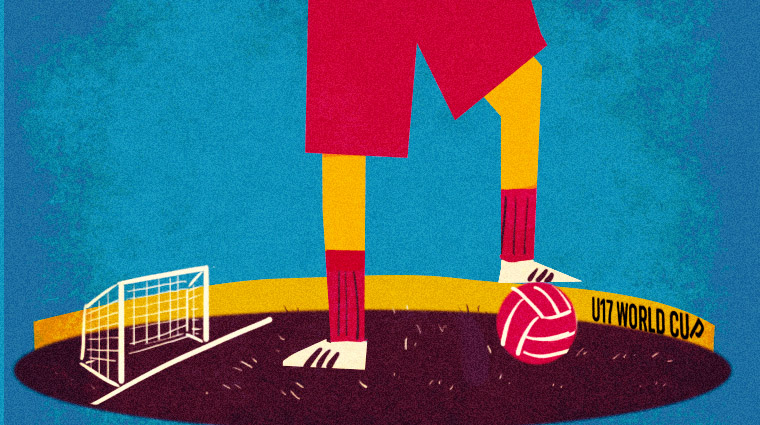
Fever Pitch: A Fan’s Life that “the natural state of a football fan is bitter disappointment, no matter what the score.” I couldn’t agree more. Of late though, our conversations have cautiously anticipated the arrival of this warranted bitterness. India’s U-17 team is prepared make its bow at a World Cup that the country is hosting. But will it change anything? Depends on how you look at things. Will it make our players better? Sure, it will. Will it establish India’s pedigree as a potential host? It will. But will it do anything for the sport in general, independent of the arena? I wouldn’t hold my breath. The likes of USA (1994) and South Africa (2010) have been down that road, trying to stir the game by bringing home the spectacle. It hasn’t really happened for either. Because the spectacle isn’t the process to build a culture. It is merely the climax.Much that is wrong with the state of football in India can be extracted from a summary of casual conversations.I’m not referring to problems with infrastructure and a weak national football league. But the fact that – with the exception of perhaps, Bengal, Goa, and the Seven Sisters – the rest of country is overwhelmingly agnostic toward the game. For any sport to flourish, not just financially, but take hold of the collective consciousness of its people despite confounding odds – think Brazil, Cameroon, Colombia, Mexico, most recently Iceland and so on – it has to start from the ground up, grow within communities, and channel, both identity and commonness. The way most continental football clubs are local entities, founded initially by people, even villages. But Indian football lags in two major arenas. First, football is bogged down by the perception of “violence” that originates in the heads of those who probably can’t or don’t want to play. Parents consider it too aggressive, the old reject it as nuisance, and the ones in between consider it too arduous an exercise. Hell, why not play a little one-tip-one-hand game of cricket at the curb instead, or badminton in the parking lot, or carom in the living room? It is the literary novel to the school textbook. Cricket’s popularity has grown through the years, not because of the hours people spent glued to televisions or radio-sets, but because at any point of the day, a family or a small community could step out and have a game of their own. You weren’t merely a bystander: You could touch, and feel, and participate, and consider yourself integral to the rituals of a religion that requires you to experience the bitterness of loss and the godliness of victory.

The second problem, sadly, is the doorstopper every other sport faces: a lack of places to play in. (Image Credit : Getty Images)