
O
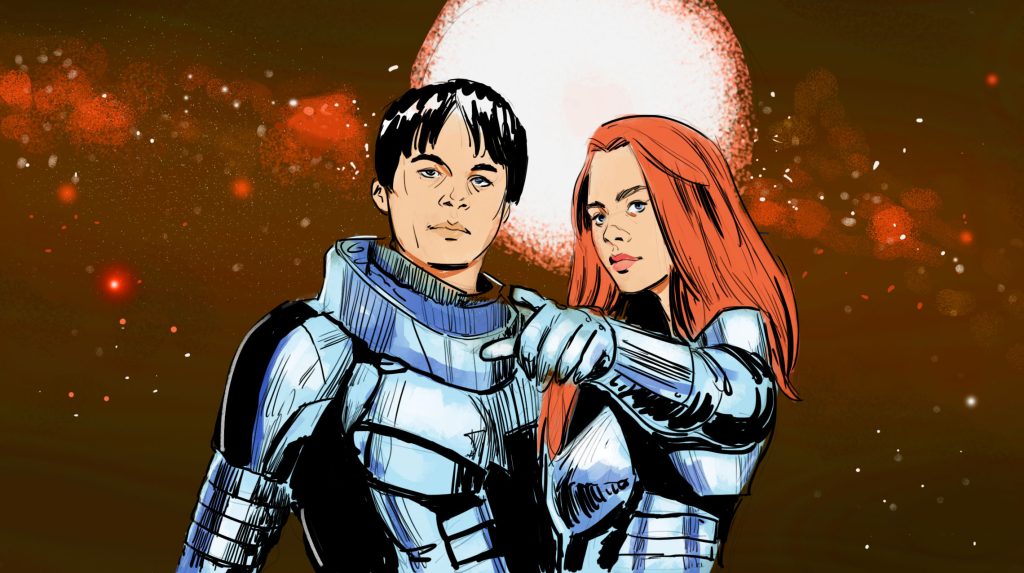
n July 9, David Wallace-Wells of New York Magazine published a cover story about climate change, which discussed the worst-case scenario of our ambitious curbing of greenhouse gases, and even a more terrifying scenario of how that might not be enough to save the planet. Laid bare in solid fact and interactions with the world’s best scientists, the piece sent a ripple through the American internet, just like the Urban Poor book here at home, spawned think pieces and conversation in abundance. Obviously, the genesis of the problem can be traced to the moment humans decided to first burn coal for energy, setting off the industrial revolution. The lifespan of an industrial civilisation, though, is only several hundred years, a problem most recognised, which is now trickling down to our culture. Hollywood is making more and more post-apocalyptic and dystopian movies like Interstellar, Mad Max: Fury Road, etc, an effect which is mirrored on TV with shows like The Leftovers. This week’s big sci-fi release, Valerian and the City of a Thousand Planets, isn’t a climate-change movie, but a healthy reminder of a collective anxiety artists feel about the future of the planet: Earth will not survive, but we will engineer some technology just in time to get out. The film begins with a montage of various nations coming together for an alliance in space, which then extends to aliens, and other living species in the far reaches of the universe. We are not explicitly told they are coming together for climate change, but recent scientific evidence makes it the only possibility. Well, apart from if aliens land on Earth and The Avengers aren’t able to save us.
The bigger anxiety about climate change remains the denial and ignorance of it, and the insistence of man to continue living the way we have over the last couple of centuries. An anti-naturalism subtext runs through Valerian, best exemplified by the greed of a white man, the commander of the human federation played by Clive Oven. Planet Mule, whose citizens live in harmony with nature, is destroyed because it is deemed irrelevant in the face of war. Its indigenous people, who give back to nature, are considered wild and stupid by the commander, showing a reckless arrogance towards naturalism. It’s reminiscent to the disregard the human race shows towards the indigenous Na’vi on the planet Pandora. It didn’t end for the human race well there, which is perhaps the great James Cameron warning us all. In Valerian, btw, time and time again the commander emphasises on the intellectual importance of the City of a Thousand Planets, where culture and information is shared, but disregards those outside it. It’s a recklessness which is a remnant of the past in the film’s timeline. The present we are currently living in, where the very idea of sharing is breeding conflict due to a new- found territorialism under conservative and ideologically led dispensations like those in the US, Russia, Great Britain, and India.Valerian is also a manifestation of Luc Besson’s continued obsession with CGI. It’s ambitious in scale and makes everything seem pretty.

The film begins with a montage of various nations coming together for an alliance in space, which then extends to aliens, and other living species in the far reaches of the universe.
Image: EuropaCorp / Fundamental Films

Planet Mule, whose citizens live in harmony with nature, is destroyed because it is deemed irrelevant in the face of war. Its indigenous people, who give back to nature, are considered wild and stupid by the commander, showing a reckless arrogance towards naturalism.
Image: EuropaCorp / Fundamental Films