Category: People

  • Naseeruddin Shah: A father figure for all seasons

    At one point in the recently released Prime Video’s Gehraiyaan, we see the back shot of a grey-haired gentleman with droopy shoulders, sluggishly crossing the road towards his daughter’s home. In the film, this is a father who literally is at a crossroads with his daughter, attempting to make amends. Though I knew it was Naseeruddin Shah who was walking that path, I watched closely to see a glimpse of my own dad in there. When he extends his shoulder for her to cry on, or when he pats her wrist to remind her that she’ll get through this, when he asks her to stay a day longer without meeting her eyes, or just the sight of him sleeping with his knees close to his chest- there are countless such moments in the film where Naseeruddin Shah displays his daddy-ness with such efficacy, that it makes you want to pick up the phone and say hi to your own paa.

    Shah is a master of his craft, and by his own admission, he’s done almost ‘everything’ as an actor in his 45-year-long career.

    Shah is a master of his craft, and by his own admission, he’s done almost ‘everything’ as an actor in his 45-year-long career. But for me, the kind of unstudied, open-hearted approach with which he plays the father, tops them all. The last decade has seen Shah mirror every kind of aging dad who yearns for a few good moments with his kids. The dad who carries a mountain of memories on his chest, but won’t burden his children with them. The dad whose eyes reek of unfinished conversations and unresolved conflicts, but smiles through it all. And it honestly breaks your heart, because Shah shows you exactly how your parent might be feeling, when you haven’t responded to a text, or even called in days.

    Countless moments in Gehraiyaan where Naseeruddin Shah displays his daddy-ness with such efficacy makes you want to pick up the phone and say hi to your own paa.

    It all began with Shekhar Kapoor’s Masoom in 1983 where I couldn’t help but fall in love with DK, the father. He was a perfect dad to his little girls, and the most imperfect one to his illegitimate son. He was guilty of both missing his son’s early years, and cheating on his own family. Torn between two worlds, and desperate to express his love to his boy, it was among Shah’s most nuanced performances; unafraid, vulnerable, exposing a side of his personality that most ‘heroes’ or male actors in that era chose to shun away from. I often re-watch DK’s final goodbye scene with his son Rahul, where he breaks down without shedding a single tear. It reminds me of super rainy schooldays when my dad would wait outside kindergarten, soaking wet, just to see me turn around and wave him one last goodbye. Plain, simple, pure parental affection, without an ounce of pretence. Effortless genius!

    Shah shows you exactly how your parent might be feeling, when you haven’t responded to a text, or even called in days.

    In his memoir And then One day, Shah talks about his own unfinished bond with his father, and how it was too late to turn back time when he wished to rekindle that bond. Shah had a complicated relationship with his dad “When I had my children, I realised how much I missed out on with dad,” I remember him mentioning in an interview few years back. Maybe it’s an outpouring of that experience, combined with technique, that makes it all so natural for him. The only other person I think can evoke similar feelings of fatherhood and seem so relatable in today’s day and age is Robert De Niro (read Intern/Silver Linings Playbook.) The goofy-faced father, who’ll mess up and look the other way- that’s De Niro for you. Which is why I really wished they’d cast Shah in the Hindi remake of The Intern, and not Amitabh Bachchan- AB just doesn’t break out of his mightiness as well as Naseer does. It’s more of a personality thing, than performance, I think.

    I could go on and on, and yet there won’t be enough ink to describe the many faces of Shah and how he paints the parent on-screen.

    To be so flexible that you disappear within a part, that’s Shah for you. RememberKabhi Haan Kabhi Naa? Shah played father to all humankind in that film. Father Briganza who always wanted something fixed, but was also ever-ready to fix the leaks in your life. When he convinces Sunil to confess about his mark sheet, or even when he hands Sunil that flute as a symbol of a new beginning, you really wish every kid had someone that cool to look up to. Someone who wouldn’t judge you for your wrongs, and celebrates your rights. Someone who is not just a father, but also a friend. Someone who is unafraid to tell you that he messed up, even if he’s the older guy. In Zindagi Naa Milegi Dobara Shah again played a flawed but ultimately earnest father. So much so I’m tempted to not pedestalize my own parent to the point that I leave him no room for error. We do that so many times, treat them like they can do no wrong. That’s too much pressure and it’s unnatural. Shah has over the years taught me otherwise.

    I don’t want to think of the day he will stop performing, because I’ll kind of feel like I lost an onscreen dad.
    The father figure in Iqbal, the intimidating stalwart father in Bandish Bandits, the lost father in That Girl in Yellow Boots, and so many more. I could go on and on, and yet there won’t be enough ink to describe the many faces of Shah and how he paints the parent on-screen. He embodies the feeling of being a dad with all his body and mind. It’s anything but perfect, and so real that he often lives with you like a member of your own home, even when the film is done. I don’t want to think of the day he will stop performing, because I’ll kind of feel like I lost an onscreen dad. I hope that day never comes.
  • A Working Mom is a “Soti Hui Sherni”. Don’t Mess With Her

    A Working Mom is a “Soti Hui Sherni”. Don’t Mess With Her

    T

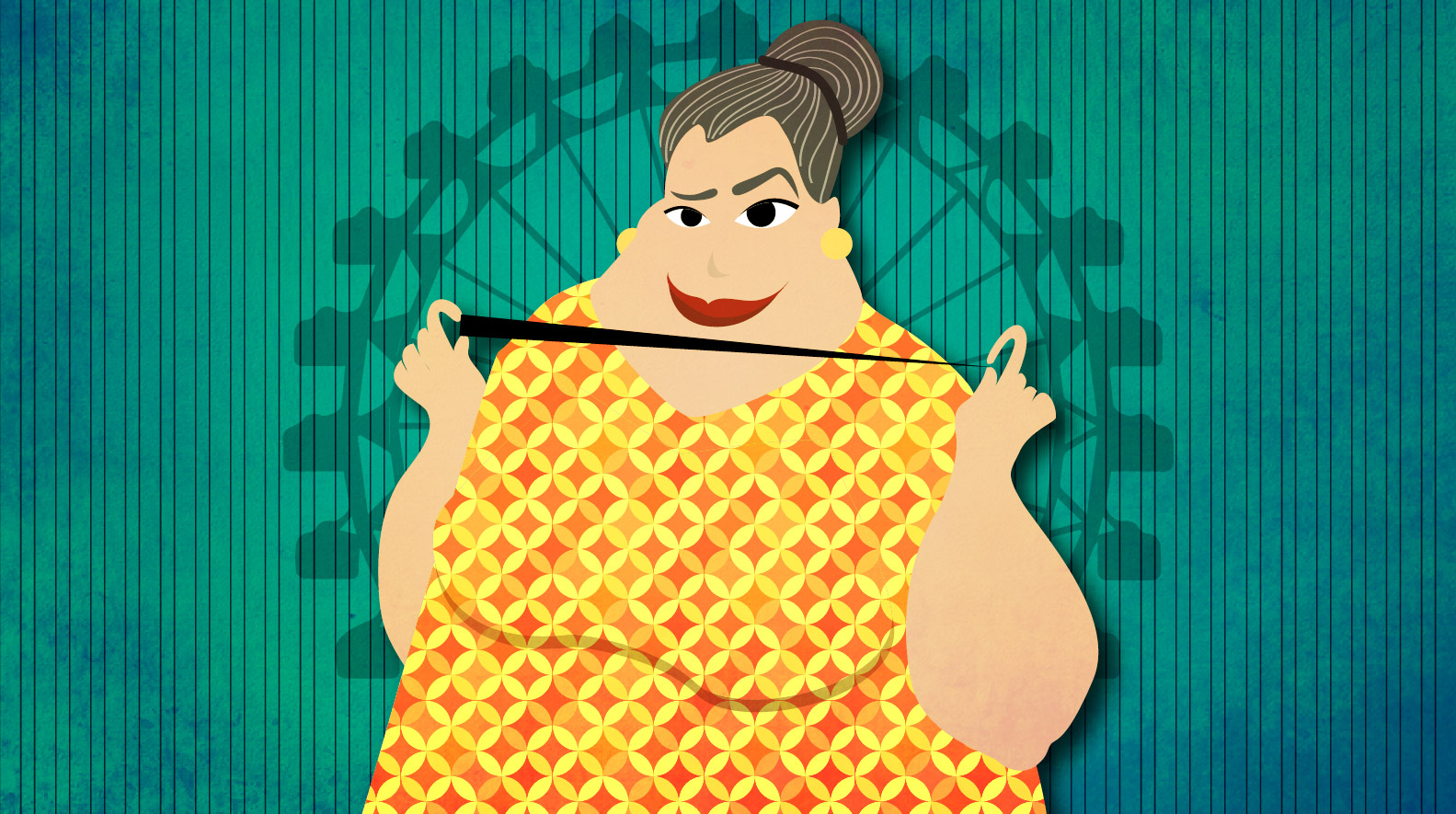
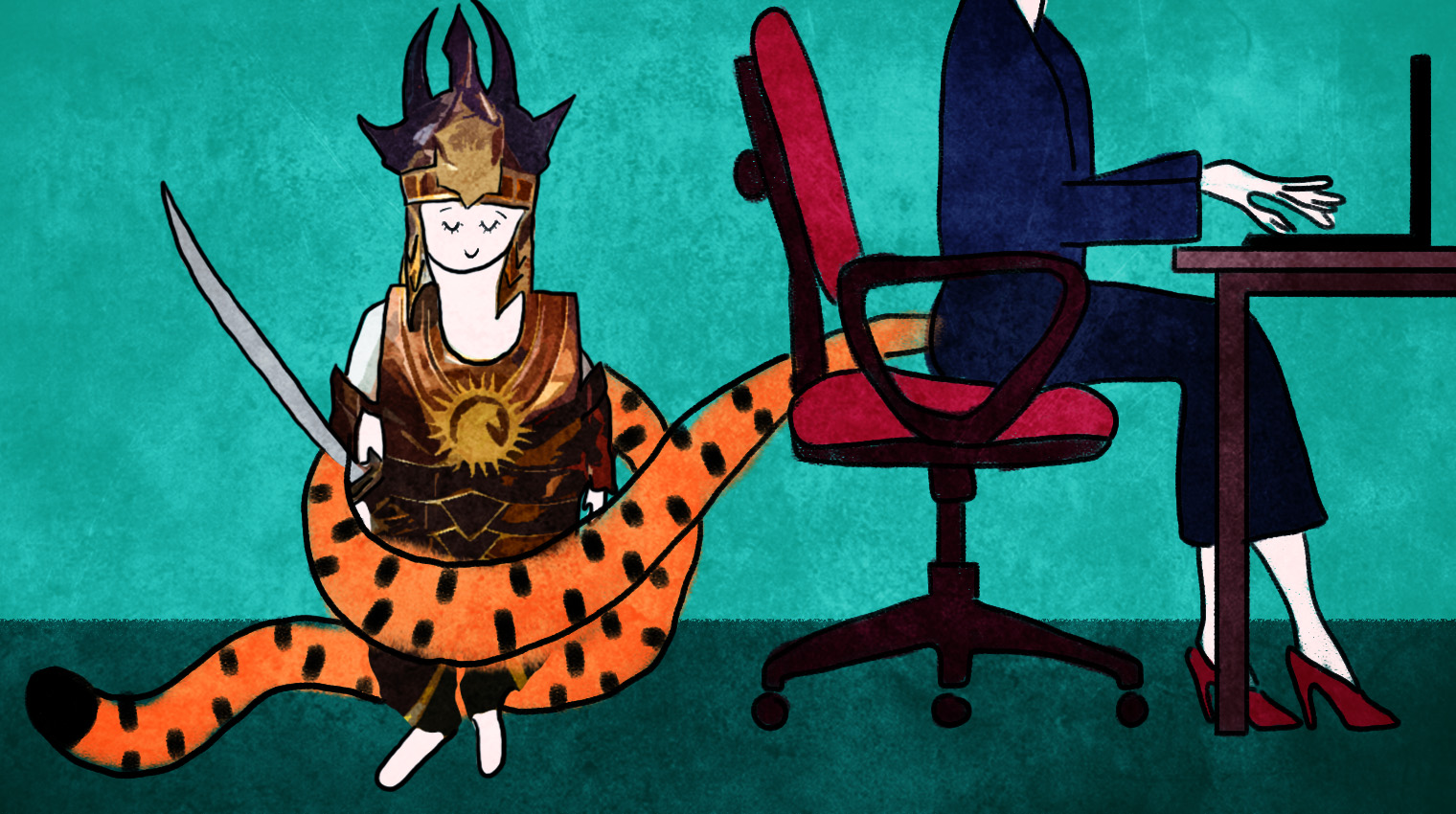
    here are two kinds of sleeping animals you should never, ever provoke for fear of tremendous reprisal: One is a lioness, the other is a working mom. If you do, however, make this grave mistake, then God alone save you from the wrath. I discovered the “soti hui sherni” in me a few weeks ago, when my humongous Mumbai society decided to have an annual cultural programme, where cultural and sport activities are organised with a degree of professionalism that would put IIFA and IPL to shame and everyone from zero to 100 years old is expected to participate. My son is three, and I was told that he would be participating in the fancy-dress competition, the only one he and his peers were eligible for. A group of moms decided that better than sending a young child on stage alone, with blinding lights and loud music, it might be a good idea to send them as a group. They’d feel confident and perform better. Sounds great right? I thought so too, considering I am a working mom who works a manic job at a TV production house. I am about as aware of these important intra-society milestones as my three-year-old is aware of the pros and cons of investing in cryptocurrency. A well-meaning neighbour mommy, aware of my plight, decided to pull me into the WhatsApp group consisting of six moms who had grouped their children together to perform under one highly original theme. In fact, it made me wonder why no one had ever thought of it before and made movies and sold merchandise around it. It was… superheroes! I was hardly in a position to snark at it – rather, I was happy my child would, for a change, be a part of something. At this point, it is important to introduce you to the WhatsApp group’s admin, Mrs C, a mother of two. As is the case with these responsibilities, Mrs C was under a cute misconception that being the admin equalled being the monitor of the mommy class, with unlimited power. I should have had an inkling about this the day she called for a meeting at her place to “discuss and decide” the order and music of the performance, how to prep our kids, just short of taking a workshop on “How to raise children to give Ted Talks by the age of two.” Anyway, the meeting was called with burnt French fries for the children and homemade laddoos for the moms. In the midst of the usual Batman, Spider-Man, Catwoman, Wonder Woman entries, my filmy Marathi + Hindi + Broken-English-speaking child only wanted to be one thing: Baahubali. This, however, did not pass Mrs C’s exacting standards. “I’m sorry dear,” she said, “but Baahubali is not really a superhero. If he wants to be a desi superhero, I don’t mind if he picks Shaktimaan or Krishh. But Baahubali, I cannot allow. I hope you understand dear.” Wait a second. Was I back in a conference room in office where my client was actually telling me that he does not approve my idea as the TG demographic is not right? I shook out of my reverie to see the words “I will not approve dear”, “I’m sorry dear” forming speech bubbles in a room full of kids fighting over the remaining French fries on the floor. Nope. We were still in a room discussing what a three-year-old should wear for a fancy fucking dress, which isn’t even a competition. Who made the rule book for this and why haven’t I read it? The “soti hui sherni” in me had finally been awakened. No one tells my child what he can or can’t become, especially not a hectoring adult with a class-monitor hangover. I held my polite face and told her that I’d come back with my decision, as my son didn’t want to become any other superhero although he loved all of them, thanks to his crazy father, who is also a child. I didn’t even know how the hell would I turn him into Baahubali. But. Challenge accepted.
    When you are a working mom to a three-year-old, life is divided between client presentations and meetings vs pre-school routines and PTA meetings.
    I withdrew from the group politely, saying I did not wish to disturb the group dynamics being a last-minute entrant, and that I’d send my child separately. By now the other mothers, realising the ridiculousness of it all, jumped to my defence and added me back, telling Mrs C that they’d love to see Baahubali as part of the theme. Not one to be slighted, Mrs C wrote a long essay and withdrew from the group, saying that she’d been working very hard on her kid’s costume and that she did not wish to be sabotaged by her own group. So, she’d send her kid separately. When we asked her who her child would be playing, she said, “I would not like to reveal that right now, dear, as other moms might steal the idea and I’m paying so much for the customised outfit.” If there were competitive Mommy-lympics, Mrs C would have walked off with the top prize for passive-aggressive pettiness, dear. Anyway, on D-Day, after five hours of labour, my husband and I were able to prepare our little Baahubali, who would be the final act. The act was a hit, met with thunderous applause and smiles. The kids were thrilled, and all the moms relieved, jonesing for a glass of wine. Just then, the host announced that there has been a last-minute entry. The youngest-ever participant was a four-month old cutie… Mrs C’s infant. This was going to be amusing. Mrs C walked on stage with the baby dressed as an apple. There were aawws and aahs from the audience and despite what had passed between Mrs C and me, I have to admit, it was a sweet idea. But I wasn’t prepared for the master-stroke. Mrs C, produced a few placards and read them out loud. Is it a superhero? No! Is it a Baahubali? No! What is it? This *dramatic pause* is the future of India! Wait what? First off, that made no sense. And second, had Mrs C just tried to slam the performance of thumb-sucking toddlers who had gone on stage for the first time? And last, “Is it a Baahubali?” was not even grammatically correct. Maybe, the joke was on us. I had just gotten schooled in mommy politics, where everything from potty-training to the number of classes you enrolled your child in was competition. The sticky marsh where working moms were judged for not being involved enough. But maybe, Mrs C had accidentally ignited an instinct I didn’t know I had buried. When you are a working mom to a three-year-old, life is divided between client presentations and meetings vs pre-school routines and PTA meetings. There is, of course, the added pressure of ensuring that the child doesn’t miss out on an social or cultural activities that other kids are exposed to. So, while I am very grateful to the mothers who take the lead in ensuring all kids participate in big or small events, it is the unreasonable, judgey ones that get my goat. If my kid is not happy, the “soti hui sherni” will awaken. And awaken with a vengeance.   For that alone, maybe I should send Mrs C a thank you note. I’ll have done my bit – but I suspect it will piss her off.
  • Naked Nariyal Man & Abstinence in the Time of “Fast” Politics

    Naked Nariyal Man & Abstinence in the Time of “Fast” Politics

    E

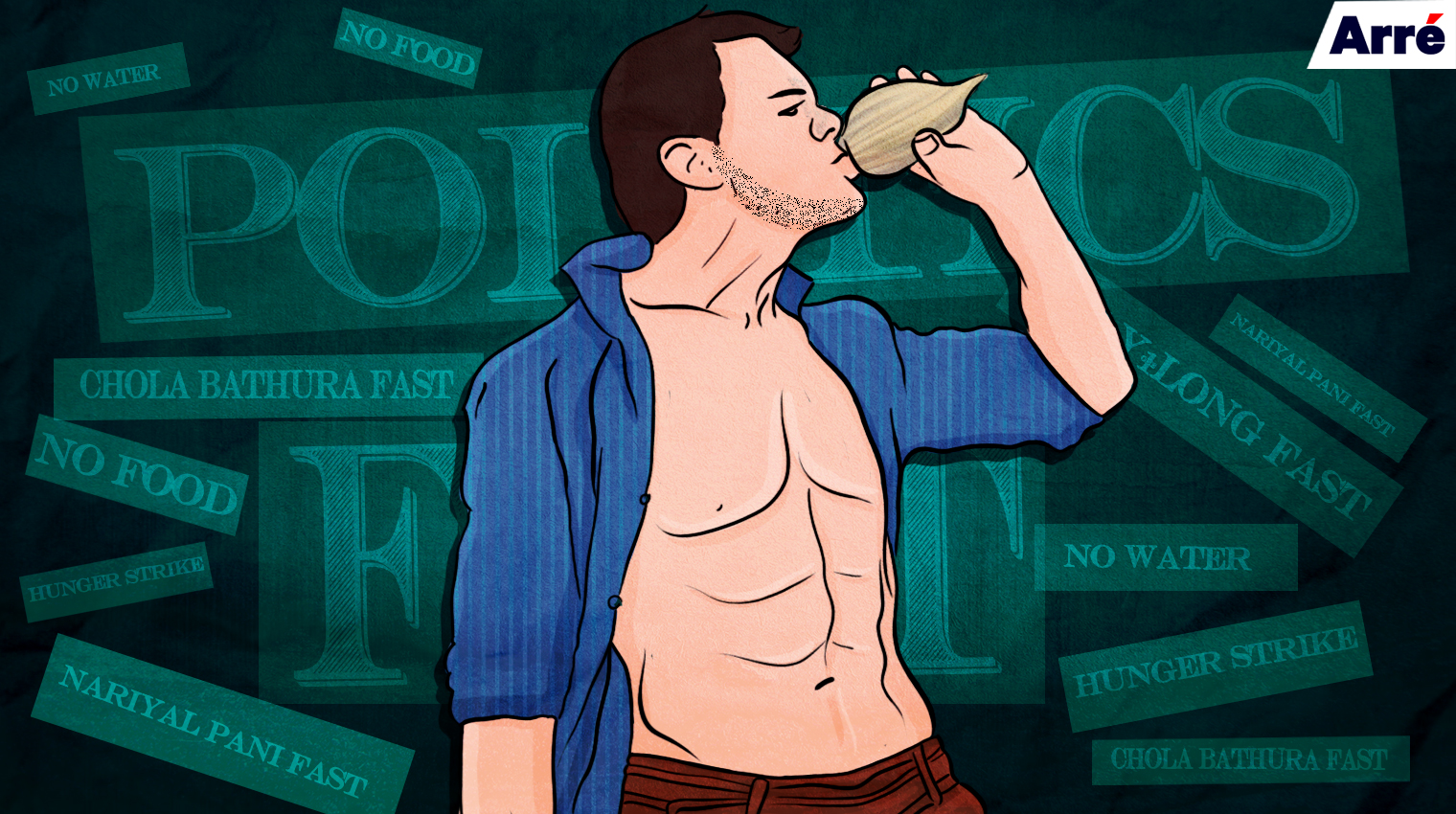
    very time I miss a meal, I complain that I am “starving”. Make that two, and I’m “ravenous” and promise to “die unless I eat”. Food is our ultimate comfort – in the language of the cool kids, who proclaim multiple times a day on Instagram, it is “bae”. Scrolling through images proudly accompanying #Foodporn gives us more of a happy ending than actual porn. Even the Congress and BJP have revised their fast goals from “fast unto death” to fast unto lunch or like a day. Anuj Khurana was just as much of a foodie as your next foodporner, but this year, he and his friends decided to do something completely out of their comfort zone. In the past, Khurana has planned several trips around food, but for his annual adventure in 2018, he was determined to survive a 30-day no-food-no-water-no-WhatsApp fast, on green coconut water. Naturally, that transformation was to be documented on Instagram. Each day of foodlessness merited a tasteful “sirf nariyal” photo: a picture of the fasters with nary a stitch of clothing, with only a coconut protecting their modesty. Whatever the outcome of the fast, Khurana will remain etched in public memory as the Naked Nariyal Man. If fasting without clothes were an Olympic sport, he would bring home the gold. Not only did Khurana survive the 30-day fast, but he did it while travelling around Odisha, surrounded by the sights and smells of delicious food. He was accompanied by Ishant “Lasted for Six Days” Sharma (who served as the litmus test to Khurana’s willpower by eating in front of him), and Rahul “Fasted for Three Days in Solidarity” Atri. Khurana and team are not the first ones to embark on this journey, and not in need of an intervention from the Freaky Eaters team. Coconut water fasts are a thing, believed to reset the immune system and help fight disease. As Khurana explained to his mom and grandmother in a presentation titled “I will not die, don’t worry”, others have done coconut water fasts before and have survived with claims of health benefits. Khurana did omit one tiny detail – most people observe the fast for only five-seven days. And they usually do it cut off from society, so the aroma of food does not exacerbate their cravings.

    As political tools go, the six-hour fast might not achieve much, but our netas never claimed it would.

    Khurana’s plan to fast for adventure and personal achievement was fraught with several challenges. “The biggest and most obvious being hunger that makes you doubt everything about yourself,” he told me. “But once you have conquered that self-doubt, you feel infinite patience and self-confidence. Phat gayi meri, bhookh se kam par hairani se zyada. You can’t help but marvel at the strength of the human body and spirit.” Each photoshoot was a challenge and an adventure, but the most memorable one happened one February evening in rural Odisha between Bhubaneshwar and Puri, when Khurana and Sharma were trying to take the perfect photo. Anuj was posing naked, holding a nariyal in front, grinning at the camera. So immersed were they in the shoot that they don’t notice the curious locals streaming in one by one. They got away on their bike, Khurana still buck naked. fast man

    On day 23 of the fast too, his digestive processes were on pause, but his ability to pleasure a woman had not taken a dent.

    Image Credits: Instagram/@sirfnariyal

    And if you think a guy consuming only coconut water would not be able to produce all bodily fluids, Khurana’s old school Tinder experience could prove you wrong. Anuj himself doubted his ability to engage in amorous congress, but a chance encounter with a girl at a traffic light led to long conversations and horizontal refreshments on the terrace of the room they were renting. On day 23 of the fast too, his digestive processes were on pause, but his ability to pleasure a woman had not taken a dent. Khurana’s experience neatly encapsulates that there isn’t a fixed rule to fasting – it is as subjective as self-serving. Especially in a country where fasting is as much a political tool as a lifestyle choice. Fasting food in Maharashtra for instance, is our hack against religious mandates of abstinence. God, you want us to skip a meal or two? Fine, but snacks don’t count as meals, right? We’ll abstain from the mundane poli-bhaaji or varan-bhaat but eat our weight in sabudana khichdi and potato chips. How then, can we blame our politicians for eating chola bhatura before starting their six-hour “symbolic fast”? In their defence, they never claimed to fast unto death, only unto 4.30 pm. I’d say it is an improvement over the political innovation of the sadbhavana fast that has been attributed to Narendra Modi, who fasted for three days for communal harmony in 2011. Why should every fast be as epic as Mahatma Gandhi’s 21-day hunger strike or Irom Sharmila’s 16-year protest fast? Why must every fast go the distance? As political tools go, the six-hour fast might not achieve much, but our netas never claimed it would. I’m sure they believed that they had managed expectations well, considering that they called it a “fast” and not a “hunger strike”. A hunger strike, like Swati Maliwal’s, involves specific demands of the world and vows not to eat unless they’re met. A hunger strike is indefinite; a fast can be for a predefined number of days (or hours). Every hunger strike is a fast but every fast is not a hunger strike. Hunger is, quite frankly, optional in our fasts today – although I am sure Khurana would disagree.
  • Dandiya Nights With Falguni Pathak: Every Gujjus First-Ever “Live” Concert

    Dandiya Nights With Falguni Pathak: Every Gujjus First-Ever “Live” Concert

    G

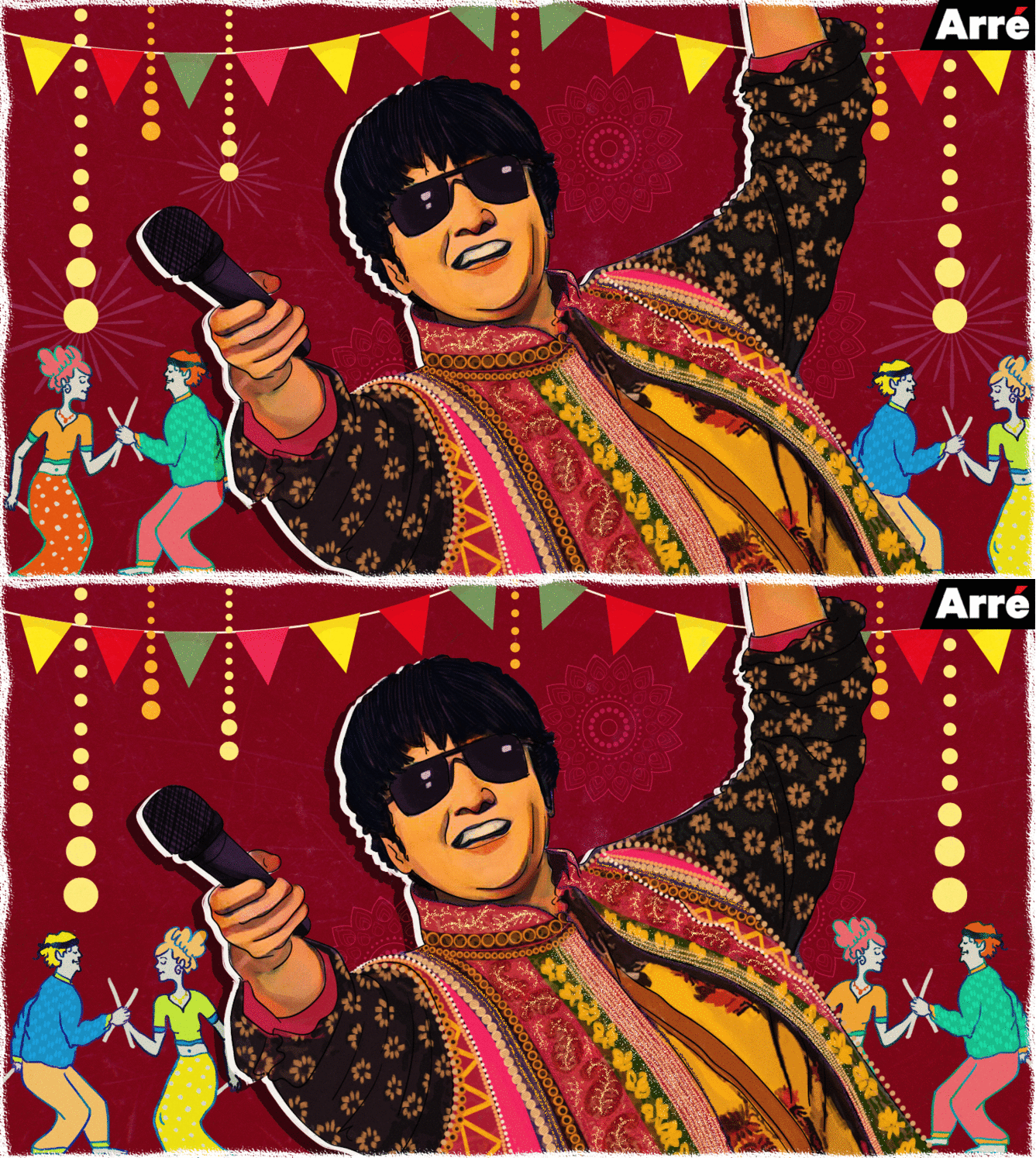
    rowing up in the ’90s in Vile Parle, I wasn’t exposed to English music like the other “cool kids”. My dose of pop culture came from music videos on MTV and Channel V and I gushed over locally grown stars like Alisha Chinai or Bombay Vikings. They were our homegrown popstars. But none among them had the appeal of Falguni Pathak.  If you were glued to music channels like I was, the background score to your adolescent years was in all likelihood, Pathak’s “Maine Payal Hai Chankai” and “Meri Chunar Udd Udd Jaaye”. My cousin and I would stand in front of our boxy Onida TV and try to match the dance steps – she’d borrow my mumma’s dupatta; I’d just follow her lead. We were six. Our little performance became a ritual of sorts. My uncles and aunts would ask us to do a Falguni and two of us would just need a bit of coaxing to dish out some moves. Even today when I meet relatives at shaadis, all my childhood tales begin with, “We still remember your Falguni Pathak performances.”  It’s been more than 20 years, but even today the place Pathak holds in our lives has not faded. Definitely not for Gujju families the world over. Pathak after all transformed the way we garba. Before she exploded into public consciousness, Navratri celebrations were a relatively low-key affair for middle-class families in Mumbai – restricted to dancing in the building compound to songs that were played on a screechy loudspeaker.  But sometime in the early ’90s that changed as the folk singer from Vadodara arrived and in no time had the city dancing to her tunes. Pathak had the power to draw crowds in Mumbai that perhaps no one could back in the day, with the exception of Bal Thackeray for his Dussehra rally in Shivaji Park. Garba culture peaked in the city’s western suburbs as this “Gujju” tradition became a fashion. Holding a season pass to the “Falguni venue” for Navratri meant immediate bragging rights.  With the advent of colour TV in many homes in the ’90s, Pathak’s live performances were telecast on cable networks across Maharashtra and Gujarat. It was these broadcasts, with their widespread audience, that truly catapulted Pathak into the league of larger-than-life superstars. For Gujjus, it was like tuning into our version of Coachella

    Holding a season pass to the “Falguni venue” for Navratri meant immediate bragging rights.

    Pathak became as synonymous with Navratri as the flamboyant dhotis, cholis, and decorated dandiya sticks. For suburban kids at the peak of their hormonal angst who viewed Navratri less as a celebration of song-and-dance and more as an excuse to meet their crush late at night, Pathak’s songs provided the soundtrack to their first brushes with romance. In this nine-day period of revelry, whether you were sharing iced lollies or riding pillion with bae on your papa’s Bajaj Chetak, it was Pathak playing cupid.  Her songs covered themes of teenage romance, forbidden love; her tunes always remained the epitome of desi femininity. Yet her androgynous style – mirrored shirts, jackets, trousers, and boots – was pathbreaking. Her greatest legacy as an artist remains in the fact that not only does her music empower countless teenage girls to embrace their femininity and backless cholis, but through her music videos and personal brand, Pathak has also empowered millions of conflicted teenagers to wear whatever the fuck they wanted without conforming to what society deems ok. At a time when heteronormativity defined the Indian pop music scene, it’s especially noteworthy that Pathak never chose to reinvent herself or her music. By the late ’90s, Pathak had become a huge star, the undisputed Queen of Dandiya. I’d hear older cousins and neighbours speak about dancing the night away to her intoxicating singing. And I wanted in, but I knew no amount of pestering would make my parents buy me a ticket. I was too young.    And then it happened. In 2000, my school announced that the annual dandiya night would be graced by Pathak. (Her sister-in-law was one of our school’s senior staffers.) At eight, I was going to attend my first-ever “live” concert and the hype was real. 

    At a time when heteronormativity defined the Indian pop music scene, it’s especially noteworthy that Pathak never chose to reinvent herself or her music.

    Dressed in her trademark shirt and trousers, Pathak was unabashedly herself. The head-banging between verses was Ozzy Ozbourne-like and she genuinely looked like she was having a blast up there. My friends and I had the time of our life, dancing, swirling, and twirling as Pathak sang one hit song after another. It was like being in an open-air disco. What a night that was; I remember it like it happened yesterday.     A classmate recently shared a Facebook memory of being handed a Best Solo Dancer award at our school’s garba night by Pathak. You’d think after so many years, with so much exposure to international music, the Pathak craze might have died down. But his comment section was rife with Gujjus tagging their relatives – “Falguni ne jo! (Look at Falguni!)”. That Polaroid is for keeps and my friend will probably make a killing if he decides to sell it on Amazon.  Today, organisers are rumoured to pay the veteran singer crores for one night. Yet, Pathak’s legacy transcends mere numbers. A show headlined by Falguni Pathak doesn’t just guarantee dancers moving with more furore or the dandiya sticks clashing with a crisper thud, it’s something more intangible. It’s got something to do with the audible buzz around the garba ground when she isn’t on stage or is pausing between songs to down some water. It’s the anticipation that builds just before the stadium realises the Queen is about to take the mic again. It’s the number of older spectators, our baas and dadas, who will choose to sit on the dusty red mats on the ground, just because it’s “aapdi Falguni”. Her legacy reverberates at every golawala’s stall in the catering shamiana, where enthusiastic Gujju teens exclaim just like I did when I saw her on stage years ago: “Teh Falguni ne joyu? Su mast lagey chhe na? (Did you see Falguni? Doesn’t she look great?!)”  Perhaps there is no way of gauging the overall impact Falguni Pathak has had on pop culture. But to me, she will always remain one of the great unifiers of Gujaratis from Andheri to America. A little less than Modi ji. But just a smidgen above dhoklas.
  • The Seat Mafia of Mumbai Locals

    The Seat Mafia of Mumbai Locals

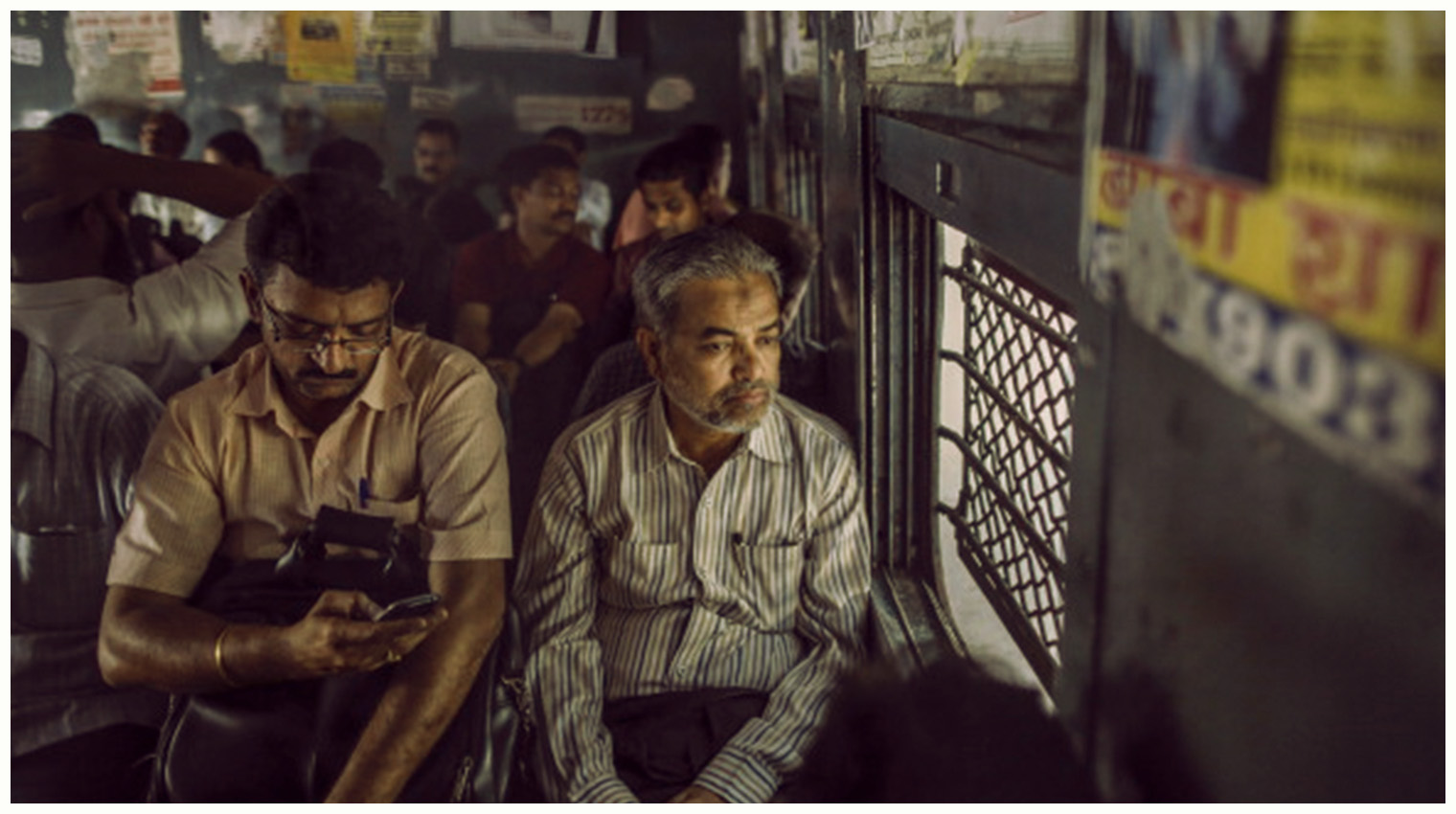
    Getting into the 7.24 am Churchgate-bound local at Nallasopara is like getting a deep tissue massage from a bunch of sweaty men, instead of the usual hot (Asian) masseuse. Inside, everybody seems fused into one homogenous mass that doesn’t want you in it. Your options are limited to either cramming yourself into any available space, or hanging on for dear life on the footboard of the train. I wanted neither, so following friendly advice, I used the “ulta chado” system. Literally translated, it means climbing on backwards. Sounds crazy, right? What it actually means is taking a train going in the opposite direction, and riding on it back to your destination. This way, the trains are less crowded and you stand a fair chance of actually getting a seat. This quest for achieving 100 per cent ass-to-seat contact rather than the usual 50 per cent or lesser might seem daft. But hey, welcome to Mumbai. Anyway, I climbed on without any hassle, and entered the belly of the beast. I was greeted by the sight of a few scruffy-looking men, obviously night shift workers heading home, Gujarati businessmen, all set for work, college students, and the usual token beggar. Despite the availability of vacant seats, people were standing around, as if some invisible entities occupied them, replete with bags, handkerchiefs, and newspapers. It was a scene straight out of

    The Twilight Zone. Heading toward an empty seat, I removed the newspaper occupying it and plonked my ass down, hoping the seat wasn’t already occupied by Kevin Bacon from Hollow Man. I had achieved contact when I was tapped on the shoulder by someone behind me.

    The calm before the storm on a Mumbai local.

    Dhiraj Singh/Bloomberg via Getty images

    On turning around, I was asked whether I was headed to Virar. “I wasn’t,” I said, and then came the words, “Seat reserved hai, tumko uthna padega.” Reserved seat? On a local train? I said, “Nahi.” The same words again, this time in a slightly higher pitch. I replied with an equally high pitched, “Jaa, nahi uthega.” Here I was, a massive 140-kilogramme fine male specimen, being told to vacate my seat by a scrawny, dark five-foot something I’ll call Kalpes. Kalpes was now joined by an older, pudgier companion who I’ll call Shrek (same bulbous nose). Shrek took a different approach, trying to explain that this seat was “reserved for members of his group”, and that I could sit anywhere else, except there. I politely told him that I wouldn’t vacate this seat and if the newspapers, bags, and handkerchiefs were an indicator, there weren’t a whole lot of places I could relocate to. Shrek went on to say that they were regular commuters and this was how it worked.
    In this dog-eat-dog world, you either claim your territory or have it claimed by someone else.
    Finding the right words and keeping a level head, I told Shrek, Kalpes, and everyone else who was now looking in our direction, intently waiting for a fight to begin, that they could go fuck themselves. My ass wasn’t leaving this seat. Now, things began to get interesting. As the train was pulling into the station, this duo was joined by a more muscular, meaner-looking companion. Let’s call him No Neck because his face began where his shoulders ended. The train stopped and it was as if flood gates were opened, and a torrent of bodies gushed in. The men, mostly Gujaratis, Marwaris, and Jains, occupying the previously reserved seats, exchanged pleasantries with others from their gang; another group huddled at the doors, making it difficult for commuters to get on. Meanwhile, No Neck and I were engaged in a verbal duel, which was basically him telling me to vacate the seat, and me telling him to fuck off without actually using the words fuck and off. I prepared for a throw down. The stand-off came to a head, when about five men from this group got on, and I found myself in a verbal exchange of swears and slurs with a gang of eight. I remember asking No Neck in Hindi whether I was interrupting their daily circle jerk, which seemed to wind him up a bit more. Suddenly, everyone fell silent and a bespectacled middle-aged man, most probably an accountant or a money man, and obviously the leader, walked up to me, and said in broken English, “This our place. You sit here, your journey is not comfortable. I find place for you, you don’t sit here.” My plan of action, inspired by Bruce Lee, was to push Shrek out of the way, slap Kalpes, punch the accountant, and then fight No Neck, in an epic one-on-one battle. But, what after No Neck? How many more would I have to take on? Common sense prevailed, I swallowed some of my pride and said to the accountant, “Okay, then find me a seat.” Immediately, a seat occupied, no doubt by one of the accountant’s underlings, was vacated and offered to me. No Neck and Shrek, said out loud, “Acche se bola to nahin samjha.” Now, I’d usually fall back on my upbringing in a rough neighbourhood and get ready to throw down, but I was somewhere between Mira Road and Dahisar, alone, and pretty outnumbered. Swallowing the words,“maa ch**a”, I moved to my new seat, saying I would go to the railway cops to lodge a complaint. Laughing, the accountant shot back, “Go. Lots of people have tried it before.” After that, all was well with the accountant’s ragtag bunch. They settled into a game of rummy. No Neck and Shrek would occasionally shoot nasty glances at me; Kalpes would make a joke in Gujarati, undoubtedly at my expense, and everyone would sneer. The group melted into the crowd alighting at Andheri as did most others. Only two more groups remained, one of middle-aged kakas and another comprised shopkeepers from Lamington Road. (You could tell from the loving way they spoke about the prices of motherboards and graphics cards.) I alighted at my stop, determined to complain to the police. The plan was to scream bloody murder. After all, I had paid for my ticket; I had the rights. I knew, of course, that with 7.5 million passengers, pickpockets, druggies, and, serial molesters freely roaming the trains, this could come off sounding something like, “Help, someone stole all of my monopoly money,” but I plodded on. I reached the door, only to be greeted by the sight of an empty police station, its occupants probably out role-playing CSI or CID. I think that’s when it struck me – sure the trains have a seat mafia, but so does my favourite bar, and this evening some idiot would probably be occupying my favourite seat. In this dog-eat-dog world, you either claim your territory or have it claimed by someone else. Here’s looking at you seat stealer, the seat next to the mirror at Yatch is mine. Move or be moved.
  • Part-time Businessman, Full-time Gaurakshak

    Part-time Businessman, Full-time Gaurakshak

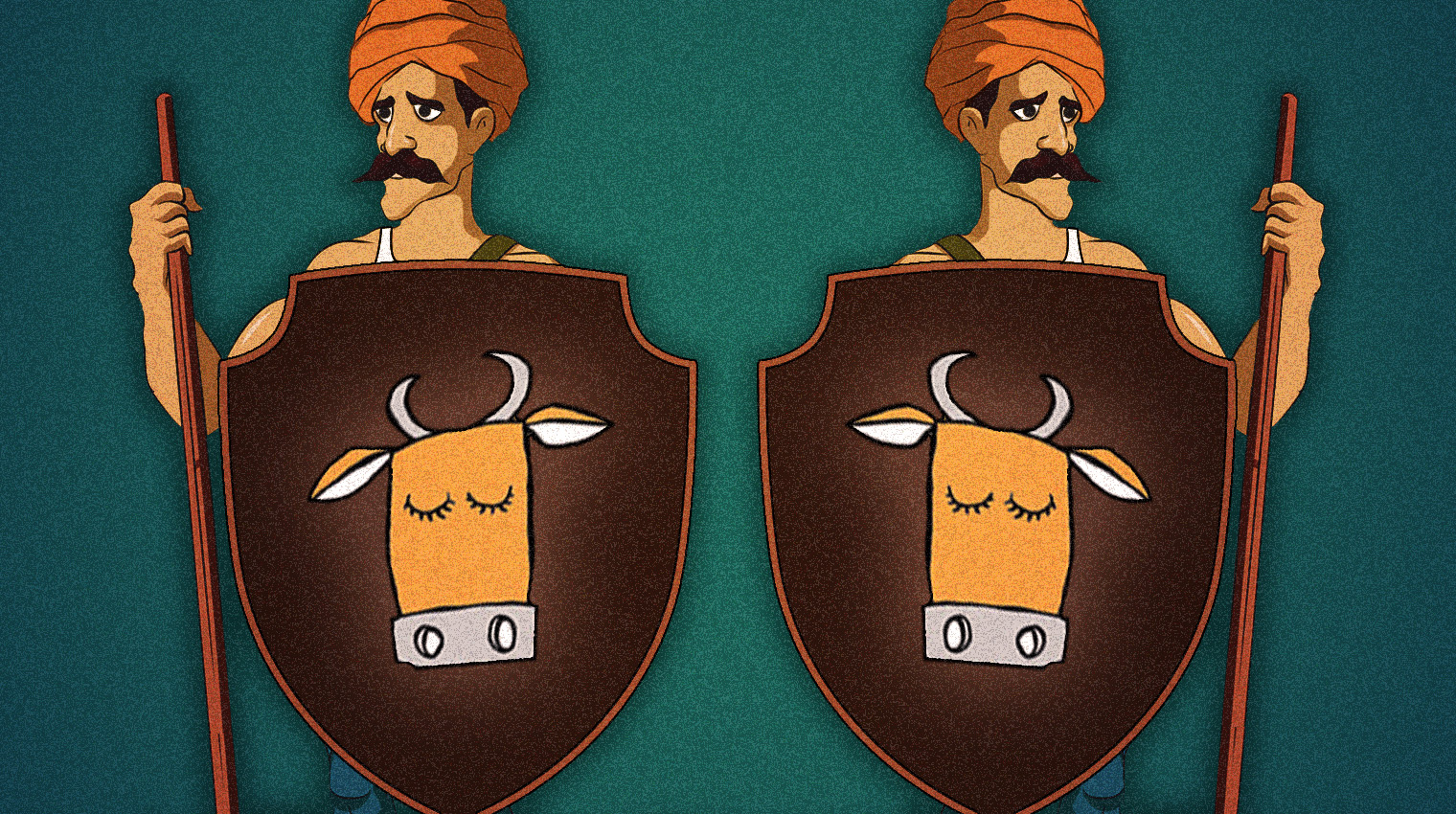
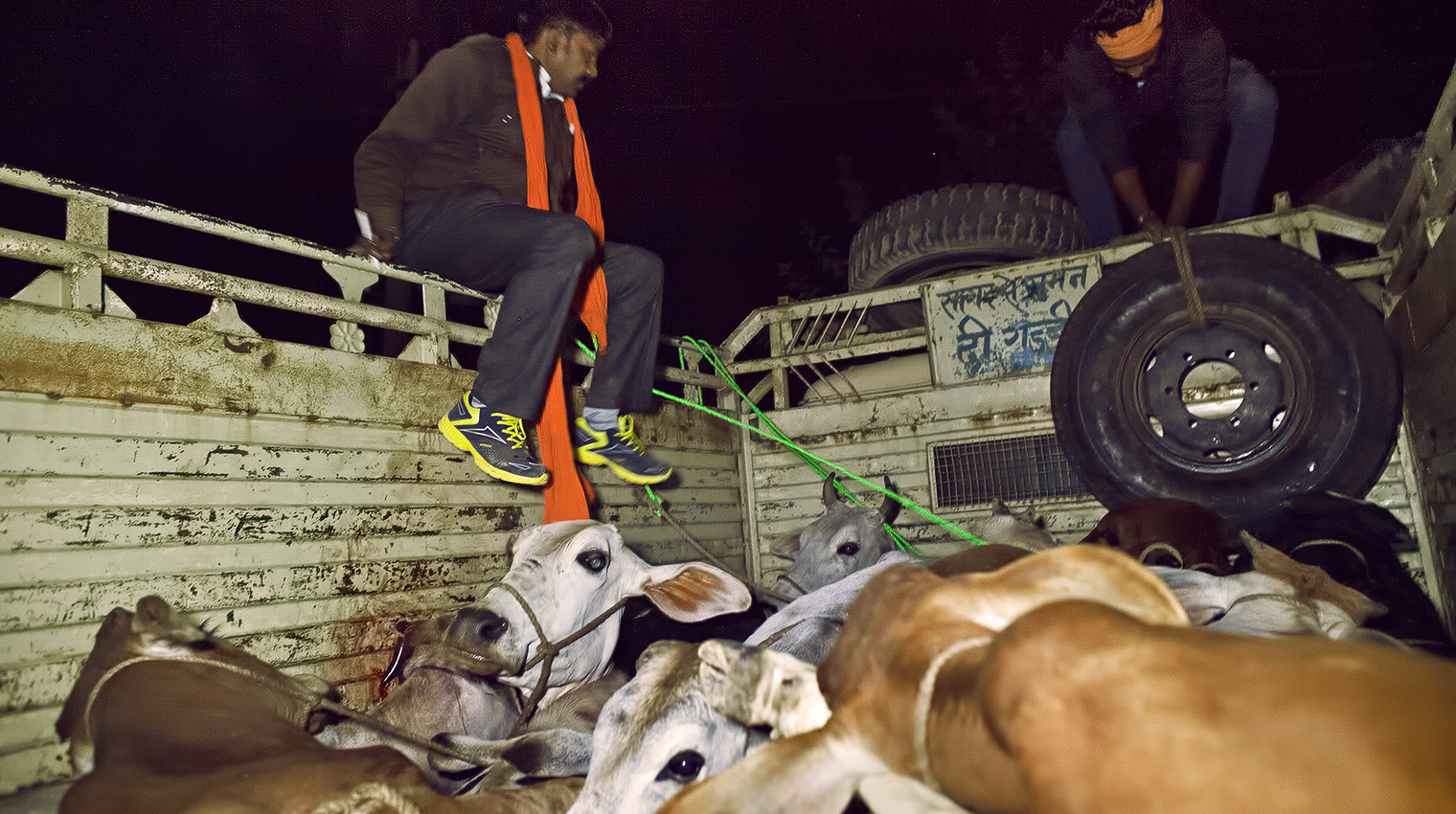
    Kapil Prabhakar was in his IP Extension office in East Delhi, sorting some papers related to his milk-distribution business, when his phone rang. He ignored it. It had been a busy morning; he was tired and hungry. He reached for the stainless-steel lunch box his wife had packed for him when the phone rang again. It was 1:50 pm. He answered it reluctantly. The lunch box remained unopened that day. A volunteer from Punjab was on the line. Three truckloads of cows had left the state that morning. They had been driven through neighbouring Haryana and were heading towards East Delhi. Prabhakar was being called to the rescue. Time was of the essence. Prabhakar knew that despite a ban on truck movement during the day, the Delhi Police allowed lorries to go through. He reached out to his core team, and about 37 swung into action. They asked volunteers to spread the word and get people out to Shastri Park close to the main road towards Ghazipur. In less than an hour, about a 1,000 people were squatting in the middle of the road. Around 3:30 pm, the trucks were spotted. Two ambulances, fitted with cranes, were already in place. Nineteen cows and 12 bulls were “rescued”. The police asked the crowd to disperse. The operation was a success, but Prabhakar was not satisfied. “The police allowed the drivers and their helpers free passage,” he said. “They should have been put behind bars.” According to him, the truckers were armed with country-made guns, talwars, and knives. Prabhakar admits, sometimes the chase can be in vain, as the police may be on the take and allow drivers to get away. “We are getting them to co-operate more.”

    “The government spends crores on saving the tiger, why can’t it spend that money on cows?”
    The East Delhi head of the Vishwa Hindu Parishad’s Bharatiya Gau Vansh Rakshan Evam Samvardhan Samiti (cow-protection and improvement organisation), is a man on a mission. The 52-year-old, self-employed graduate, who owns a Mother Dairy dealership and foundry, believes it’s his life’s calling to protect cows. Aside from a countrywide ban on cow slaughter, he also wants the cow to be declared India’s national animal. His argument is flawless. “The government spends crores on saving the tiger, why can’t it spend that money on cows,” he asks. The idea of extinction has never crossed his razor-sharp mind. But then logic has never had any place in fanatical ideology.

    ***

    Born into an orthodox Brahmin family from Himachal Pradesh, Prabhakar grew up in Delhi. His father, who worked for HSBC, was a devout Hindu, who ensured religion was an integral part of the upbringing of his six children. Although the elder Prabhakar wasn’t a member of the Rashtriya Swayvamsevak Sangh, he believed in the organisation’s ideology. As the youngest in the family, Prabhakar began visiting RSS shakhas when he was eight, playing around and observing the adults.

    This group of vigilantes in Rajasthan’s Ramgarh is just one of dozens of such groups that have emerged since the beef ban.

    Allison Joyce/Getty Images

    It’s a tradition that’s being passed on. One of his sons is an engineer, and his nephew is an aspiring model in Mumbai – they are both members of cow-protection groups. Prabhakar sees no contradiction between modern pursuits and traditional beliefs. “I have been to five-star hotels… also to discotheques,” he says earnestly, sitting cross-legged at a temple in South Ganesh Nagar. “I was a good break-dancer in my youth.” Over the course of the evening, he spells out how groups like his are successfully rescuing ill and ageing cows across India, through a zealous network of volunteers and informers. They are ordinary people: shopkeepers, cobblers, house help. Women working in housing societies are especially valuable in keeping tabs on meat-eaters. “Close to 10,000 people have our numbers,” Prabhakar says. “We take their call anytime of the day or night. We rescue 20-25 cows every month.” The demand for a ban on cow slaughter is not new. Soon after Independence, the first president Rajendra Prasad had made the same appeal to Mahatma Gandhi. Since the Narendra Modi-led BJP came to power in 2014, the cow slaughter issue reached a fever pitch with cases as extreme as the Dadri lynching. But according to Prabhakar, Modi is not the reason for their pro-bovine activities. “The move began eight years ago when the VHP decided to take a decorated cow around localities on festive days, to promote respect,” says Prabhakar. But he admits that it helps having a pro-cow government. “We have a cabinet where, from the prime minister downwards, all have a special place in their heart for cows.” Flattered by the interest in his favourite subject, he now launches into a listing of its virtues. “Every part of the cow is useful to us,” he says, insisting high blood pressure can be cured if a patient runs his palms over a cow’s body. “If that doesn’t work, I’m ready to pay for doctors and medicine for a lifetime,” he says grandly, sweeping modern medicine aside with one dismissive wave of his hairy hand. And he is hardly alone. This line of thinking is embraced by the old, the young, the unlettered, and the highly educated. Akilesh Vishwakarma, for instance is a bright 34-year-old science graduate from Allahabad University, who uses science to justify politics. “All farmers believe that unless they use fertilisers and pesticides filled with chemicals, their plants will not be healthy,” he says. “My mission is to teach them to use cow dung as fertiliser and pesticides made from cow urine.” The East Delhi gaurakshaks are planning to promote soap, phenyl, and agarbattis made from cow urine and dung, under the brand name “Goband”. When asked about the violence vigilante gaurakshaks and self-proclaimed defenders of Hindu dharma have unleashed on Muslims, Akhilesh says blandly, “They are not true followers of religion. Many of them are uneducated and get misled. My religion respects every other religion.”

    Members of a vigilante group try to free cows from the back of a truck in Ramgarh.

    Allison Joyce/Getty Images

    Prabhakar agrees, with the infallible logic and conviction displayed most often by right-wing bhakts on social media. “First, we Hindus don’t want to kill. We don’t want to hurt anyone. But please respect our sentiments. If you don’t, we can’t help some of the hotheads.” With this convenient “we-can’t-help-it” disclaimer, Prabhakar signs off and gets back to work, glad to have delivered his views on the subject. The more people he converts, the higher the chances of his cows becoming part of currency, stamps, and maybe one day, the symbol of the Indian government. The sky is the limit.
  • Jagjit Singh, Our Saint of Endless Sorrows

    Jagjit Singh, Our Saint of Endless Sorrows

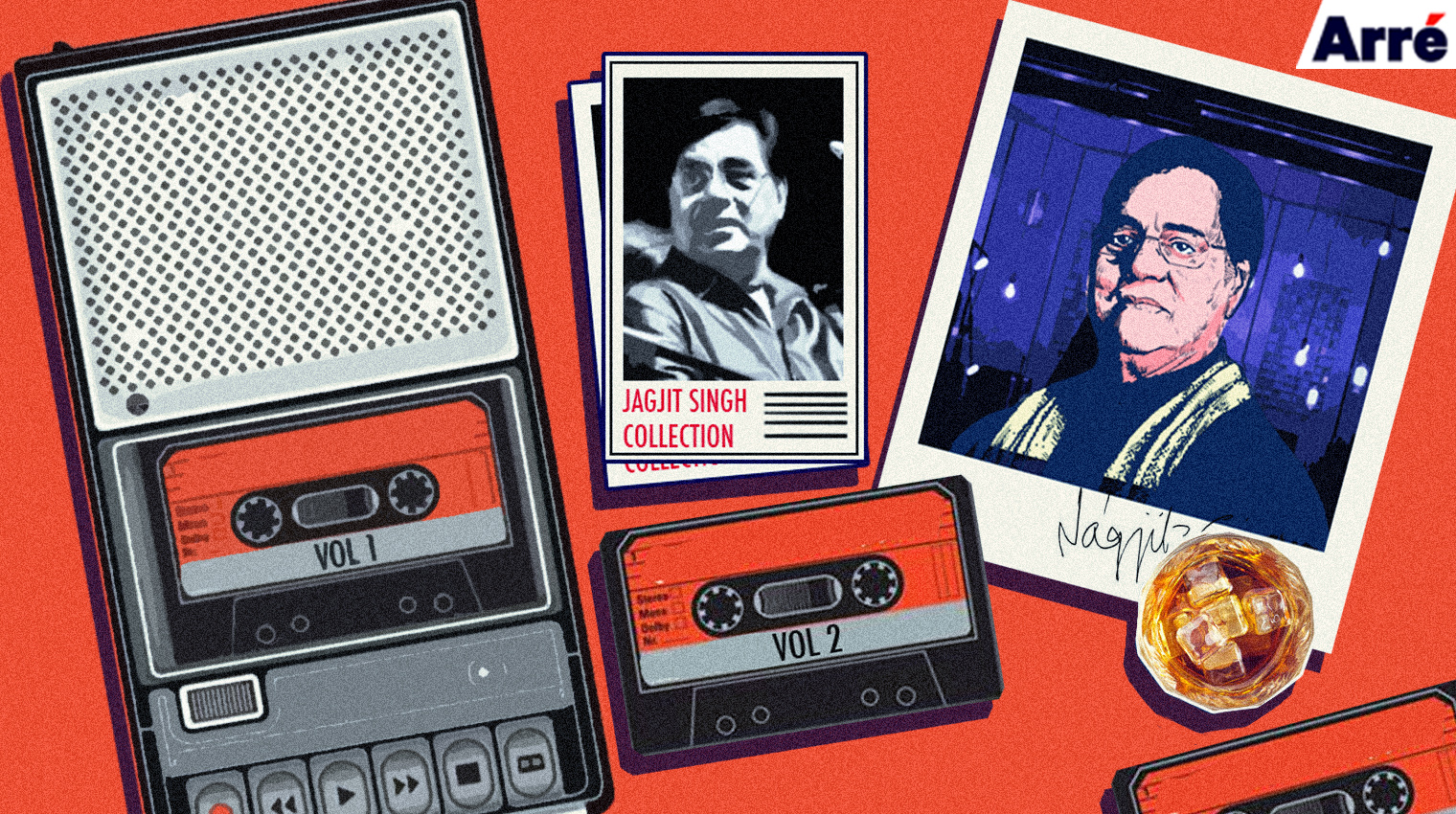
    Ispent three years of my life watching the sun set on not just the day, but also my life, as I sat by the seaside, sipping on Jim Beam mixed with water, from a plastic bottle. My lone companion on these evenings would be a coconut tree at the promenade, that stood testimony to the cacophony of my heart,

    crashing into a million pieces as the waves met the rocks every evening. The only thing that made it all bearable – and impossibly cinematic – was listening to Jagjit Singh ghazals. Yes, I dealt with heartbreak in the most Bollywood way possible. If it weren’t for the discovery of the warmth that his music brought to my heart, I sincerely believe I would have offed myself by now. Every time, I missed the home that wasn’t, I would find myself at my favourite spot on Carter Road, drowning my sorrows in the ghazal maestro’s voice. Often, I’d drink a quarter of whisky neat from the bottle, and call it a night only after I’d cried myself to sleep with my headphones still on, wallowing in the fresh pain of my very first real break-up, my marriage. “Baat niklegi toh bahut door talak jaayegi,” would play on loop like a lullaby and give me hope in those trying times, Jagjit’s voice fleshing out the visual details of my sorrow. It was a strange feeling – his voice pacifying my anger, slowly casting its spell on me through the evening, and then eventually calming the storm within me. I’d discovered Jagjit Singh rather late in life, when I was about 19, thanks to my then boyfriend, now separated husband, who had gifted me his album Life Story CD 1 when we’d just started dating. A small note inside it read, “‘Yeh daulat bhi le lo’ se shuru karna, dheere dheere puri album sunne ka mann karega (Start with ‘Yeh daulat bhi le lo’; you’ll want to listen to the whole album with time.)” At first, I listened to the song only in the hope of impressing my boyfriend, but only ended up being enchanted by his voice. By the time I was married, I knew almost every anecdote Ghazaljeet Singh (as Gulzar once referred to him) shared about his life while singing in live concerts. Watching the concerts over a quarter of Old Monk had become the only saving grace of my already doomed marriage. Among other things, I gleaned from Jagjit’s own battles, his struggle, and how broken his own life was after the death of his son.
    He rewrote the way traditional ghazals were written, composed, and sung, even in his movie ventures, not once compromising on the nuances of the poetry
    All of this context completely changed the way I listened to his tunes. I made mental notes of the lovely stories he told; of his first big break with the bhajan “Laagi Ram bhajan ni lagni” in a Gujarati movie called Bahurupi; how it took him almost a decade to record “Baat niklegi” when HMV gave him his first LP deal. I learnt that even in the deep throes of sadness and in the most serious situation, Jagjit retained his sense of humour. I didn’t know it then, but I would draw on this quiet strength later in life. As someone who had grown up on a staple diet of boy bands (not very proud of this) – white folks who spoke the same language as we aspired to – Jagjit Singh offered an insight into a familiar, yet remote world. He made ghazals and Urdu poetry accessible to those of us who had never entered a mushaira, in the form of live concerts. He rewrote the way traditional ghazals were written, composed, and sung, even in his movie ventures, not once compromising on the nuances of the poetry. Even now I wonder if there is a love song greater than “Tumko dekha toh yeh khayal aaya,” which seeks solace even in the presence of the beloved? But the greatest beauty of listening to Jagjit Singh, as with any great artist, is that it was easy to believe that he spoke to you, and only you. You could find a song that fit only your situation.   “Main kaise kahoon jaaneman,” a not-so-popular movie song even now reminds me of the good times, the ones that were few and far between, that my husband and I shared. I still remember the day I walked out of my marital home. Headphones plugged in, I listened to, “Unko dekhe se jo aa jaati hai munh par raunak” on my way from Worli to Colaba on loop. I dropped my bags home and rushed to the seaside because only the waves and Jagjit Singh understood me. After my first evening of crying inconsolably, with a quarter of liquid courage, I went back home with renewed energy. On days when I felt like I had reached the point of no return, I listened to Jagjit give soul to Ghalib’s words in “Dil hi toh hai na sang-o-khisht”. My heartache found new meaning and I reached out to myself in ways I never knew I could. If I were to compartmentalise my heart into different rooms, all the vacuum left behind by my last heartbreak would probably be filled by Jagjit Singh’s haunting voice. The voice that assured you, even when it broke your heart, that everything would be alright. I moved on. I lit the pyre of my relationship. But Jagjit Singh still stays with me. Break your heart once and let Jagjit Singh’s voice take over – it’s worth it.
  • My Mother, Citizen Cane

    My Mother, Citizen Cane

    “I

    have a cane. I have a daughter. I have a brat. I have a daughter. Cane daughter brat cane.” If the ridiculously annoying pen-pineapple song had released when I was a kid, I’m sure this would have been the version my mother sang. My fondest memory of my mother is the one where she’s chasing me around our building compound with a fresh cane (read: sticker intact) in her hand and I’m running around in circles, trying to save my ass from a walloping. Or maybe it’s the one where she’s standing below a wild almond tree, cane in tow, and I’m threatening to jump off the tree a lā Dharmendra from Sholay if she beat me in public. My friends had scurried off at the sight of her of course. Jump, she dared me. Of course I didn’t. I sneaked out later, knowing full well I’d meet my nemesis when I’d get back home. My mother’s fascination with the cane started when I was about 11 years old. She first laid her hands on one courtesy a generous Catholic neighbour aunty who seemed to have found a solution to all of her son’s antics in the cane. “Arre, just give them a whack of the cane, men. All their masti will go in one minute. See Dominic na. Go to the Bandra Fair, nice ones they have re,” she had told my mother. Suddenly, the fair didn’t seem as much fun. Bandra Fair was a ritual we had come to love. Our four-hour vacation would start with us lighting candles at Mount Mary church. Then we would gorge on guava cheese and kadio bodio along the steps, and finally queue up for the various rides. While our father would accompany us on our ritual giant wheel (sit down hipsters, there’s no such thing as a ferris wheel at Bandra Fair) ride, the mother would wait for us with bowls of Maggi and cups of hot coffee. That year, every bit of the Bandra Fair was the same, except that this time, my mother had a different ending planned. Little did us fools in paradise know that we were going to be brought down from cloud nine at our last pit-stop. She found the young man who sold those magical canes that had transformed Dominic, and right there, as the three of us stood with mouths full of guava cheese, she jumped upon him with glee. The young man slid into his sales pitch, and cane after cane was presented to his eager customer. Her method of testing was both efficient and terrifying. She would whip the cane in the air to check its worth. The louder and sharper the sound, the better it was. “Aunty ek naya patla variety aaya hai. Dikhau aapko?” the young man asked, presenting a whip thin cane with aplomb. My mother is no Lalita Pawar. She’s every bit the Nirupa Roy, more so when it comes to her children. But I think she found her expression in the cane. As we watched her pay the cane seller, our guava cheese got stuck in our throats, refusing to move either up or down.

    As we grew older, we found our way around the cane. We hid it in outrageous places and watched as our mother spent days frantically searching for it.

    That whip-like cane became her version of having a nanny to take care of her children when she and my father were at work. When one of our neighbours complained about me destroying her custard apple tree, I got a good pasting. When my brother decided to bunk school to loaf around on Carter Road, the cane came to her rescue. And so it went. The cane and us. Us and the cane. As we grew older, we found our way around the cane. We hid it in outrageous places and watched as our mother spent days frantically searching for it. The last cane our mother bought was found lodged behind the parents’ wardrobe and discovered the night our house was being painted about five years ago. That night my mother sat with the cane on her lap at the dinner table. There was a twinkle in her eye as she thrust it in our now grown-up faces. When we protested that we were too old for her to use it now, she burst into peals of laughter. After she’d stopped giggling, her face became pensive. “Yes, what’s the use now? My children have grown up,” she said with moist eyes. Modern parenting frowns upon caning and encourages a healthy discussion, where you patiently teach a child to say “No” as he throws a tantrum in the middle aisle of the supermarket while his hapless maid/nanny watches from the sidelines. My mother was 19 when she had my elder sister and 21 when she had me. Three kids (two of whom would constantly channel Dennis-The-Menace), no help, and a full-time job didn’t provide her with many modern parenting options. She worked her ass off, both at home and outside, to ensure there was food on the table and that we got a decent education. And we’d reward her every evening with a book full of complaints from the neighbours. In her place, I’d probably have used three canes instead of one. It’s been seven years since I last met the cane but I think she still has it hidden somewhere in memory of the children she raised.
  • Why I Hated Being Sindhi

    Why I Hated Being Sindhi

    “D

    o you remember the 1975 blockbuster, Sholay?” my father asks me. “Of course, you know that the director was Ramesh Sippy.” I hmmm along knowing fully well that he’ll boast about the director being a Sindhi man. But he goes in another direction. “Beta, do you know that Ramesh’s father used to sell carpets to make a living after the Partition?” This is a new dimension to our Sindhi identity and one that I have tiptoed around, unwilling to be a part of this second-hand Partition grief. For me, being Sindhi was growing up in a household of Sunday lunches that alternated between the heavenly crunch of dal pakwan and the loud voices of my father or aunt or grandmother passionately discussing which shop in the market had the cheapest potatoes, that buying spices from wholesale was much more sensible than 100 gm packets, and borrowing money from a Sindhi lender was wiser than going to a bank, because they are all out to loot us – and we know our math better than any national institution. Not a single communal space, be it the dining table, the kitchen or the bed on which all the fathers played rummy was devoid of the mechanics of bookkeeping and accountancy. I have made peace with the Sindhis as the “kanjoos-makhichoos” stereotype. I had no choice. Lunch breaks at school were a game of quips: “If you’re caught with a Sindhi and a snake – befriend the snake.” “Do you know why Sindhis have such big nostrils? Because air is FREE.” The more familiar I became with these cultural stereotypes, the more deeply they settled within me. I never hung out with a Sindhi boy in fear that I’d be covered in a sweater of his hair if our bodies just touched for a second. Over the years, my hatred of Sindhi boys was intellectualised to the generalisation that they were ambitionless and could only be found snoozing in their dad’s offices with iPhones coated in diamond covers. I didn’t want to be a kitty-party wife who made kokis by day and wore kilos of gold to bed. Dalip Tahil in Hum Hain Rahi Pyar Ke as the irritating, “vari saai”ing Mr Bijlani scarred my childhood. On the one hand, I was defending myself in school with “not all Sindhis”, sharing my kheecha-papad as peace offerings. And on the other, I was yelling at my father every time he wanted to claim Juhi Chawla or Akshay Kumar’s success as his own. But dad, you haven’t achieved anything – I’d yell when I was 12, channelling my rebellious urge to unbelong. In History, we learnt that the word Sindhi came from the river Sindhu. In life, I struggled to swim between the banks of a generous water body and the body of stingy businessmen who apparently drowned in profits. I never felt as proud as my father about our past and history and culture and heritage. Maybe, it was because I never took the trouble to know it. My grandfather was born in 1930 in the Nawabshah district which is now in Pakistan. It was a pre-Partition Sindh where 96 per cent of the population was Muslim and 75 per cent of the people spoke Sindhi. They were a colony of what can loosely be termed as literary professionals. He grew up around teachers, publishers, writers in a lane called “vichejo rasto” (an in-between road) with still no roads to “business/entrepreneurship” in sight.

    My parents, in their telling and retelling of our story and their “ideologies”, are still wearing their parents’ losses like ancestral jewels.

    Being rendered stateless, forced to run away from the violence that followed, he came to India with my grandmother. With two hawaldars as bodyguards, summoned by the district collector, he arrived in a train to Ajmer with some basic belongings and a handful of other Sindhis. A year later he started making a living in Bombay by folding sarees at Shop No 8 in Mohatta Market until his industriousness and prudence got him to buy his own shop and become an owner. This story has come to me in several instalments and after a full decade of me having mocked all the men in my family for what lowly jobs they do, how they are a lot of wasted potential and could have been so much better with more education. If my grandfather’s first chapter of sorrow starts at the Partition, my father starts writing the textbook with a renewed fever from the wounds of 1992. For an entire week, when I was six, I am told I was lined up on our building’s terrace with all the other kids yelling “Jai Shree Ram” in chorus and was put to sleep to the lullaby, “Garv se bolo hum hindu hain”. While my dad works in what is now a predominantly Muslim market (next to Masjid Bandar), has friends he breaks iftar with, eats haleem out of their plates, is acutely aware that the communal rift is the doing of the notorious political houses, he still burps uncomfortably every time a terror attack hits the news channels. It breaks my heart to hear the confused tension in my grandfather’s grammar when we speak about Hindus and Muslims. The lines of us, them, we are uncomfortably elbowed into the paragraphs of old friendships and a half-forgotten childhood. I am possibly the first generation in my family to remain untouched by a big dent of separation and displacement. My parents, in their telling and retelling of our story and their “ideologies”, are still wearing their parents’ losses like ancestral jewels. Given the privilege and shelter I was raised under, this grief, this idea of constructing homes from nothing, comes to me as secondary text – or an optional reading list. And when I do read its pages, they are fractured, the stories incomplete, their skies clouded with emotions. How does your history come to you? As a remixed song with misplaced lyrics, as a lifetime of Khar Gymkhana membership, as a desire to save lest everything be taken away from you again, as a loaded Lakshmi envelope every Diwali, as a daily WhatsApp forward that mixes Sindhi pride like sugar into your morning cup of chai, as a much-debated mention in an anthem. Or is your entire history now simply a giant, gentle snore, slumbering in the afterglow of kadhi chawal? I’ve come to understand that the Sindhi identity is deeper than all of this. It is about accounts and bling and money, but only at the surface. Its roots are about being rootless. About restarting life from zero. It’s like the director Rohan Sippy says, “Since we don’t have a region, the new Sindhi identity is the spirit of entrepreneurship. It is about resilience and an optimism to survive anywhere.” Through my history, I have finally made my peace with my present. Yes, I’m Sindhi.
  • What Were You Doing at 16? Ayesha Aziz Became India’s Youngest Pilot at That Age

    What Were You Doing at 16? Ayesha Aziz Became India’s Youngest Pilot at That Age

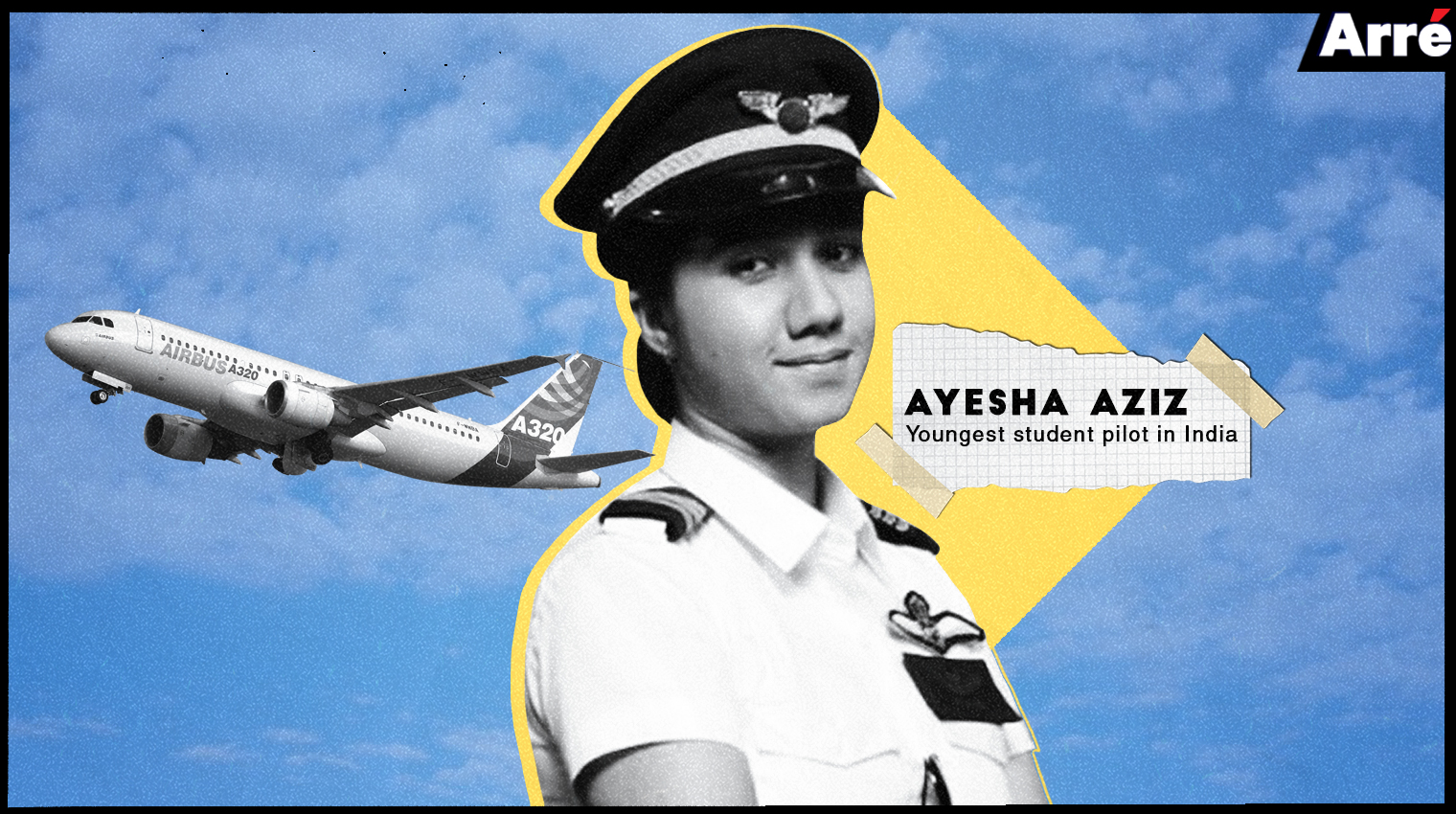
    At the age of 16, most of us are either dealing with a college dilemma, heartbreak, a wave of teenage angst or all of the above. But 16-year-old Ayesha Aziz was adding wings to her dreams as she became the youngest student pilot in India in 2011. Born in Kashmir, Aziz, now 23, later moved to Mumbai with her family. However, somewhere between catching flights to Srinagar with her mother, a resident of Baramulla district in J&K, a young Ayesha fell in love with the idea of flying away. The frequent air travels to the Valley only further added to her curiosity and obsession with airplanes and pilots. Soon enough, she found herself enrolled at The Bombay Flying Club. While the news about her young achievement was much celebrated, a few naysayers were less than impressed by “a Muslim girl without hijab” reaching new heights. Her professional pursuit was deemed as “not perfect for a Kashimiri girl,” Ayesha shared in an interview with Times Of India in 2017. But Ayesha Aziz was not one to back down or be discouraged by the sexist words of a few. It was important to her that women weren’t deemed as imperfect for a job just because of their gender. “We have to change our attitude and do justice to girls,” she stated.
    Constant support from her family, especially her father Abdul Aziz, a Worli-based businessman, motivated Ayesha’s dreams to become her reality. “I have always believed that knowledge and enquiry are keys to human progress,” Abdul Aziz told TOI. “If my child had a dream which was achievable, I had to be part of the process and see that she realised this dream.” With the supportive people in her life, Ayesha let her passion and credentials speak for themselves. Aziz graduated in aviation from the Bombay Flying Club in 2016. The following year, at the age of 21, she bagged her commercial pilot’s license.
    Her perseverance and determination are both awe-inspiring and courageous. While preparing for her graduation, she also undertook a two-month space training course at NASA in 2012 where she met her idols Sunita Williams and Jon A McBride. #LifeGoals At NASA, Ayesha went on to complete her training in Space Shuttle Mission, microgravity, manoeuvring unit, multi-axis training and extra-vehicular activity. In the same year, she also underwent training at Russia’s Sokol airbase to fly a MiG-29 fighter jet.
    Aziz also had the privilege to meet Rabia Futehally, the first Indian woman to pilot an aircraft as a private pilot’s license-holder in the 1960s.
    Adding another feather to her cap, in January 2018, Aziz was felicitated by the Army Chief and President of India under the “First Ladies” title at Rashtrapati Bhavan. Inspired by the many women she has come to learn about through her love for planes and space, Ayesh Aziz herself is now an inspiration for the next generation. A role model to look up to, she is often called upon to speak to young aspirants at educational institutions.
    If you can dare to dream, you can dare to fly and Ayesha Aziz is the embodiment of this belief. May your flight never end!